
The Northernmost Point Of The US Is A Historic Gem With Breathtaking Ocean Views And Unique Wildlife
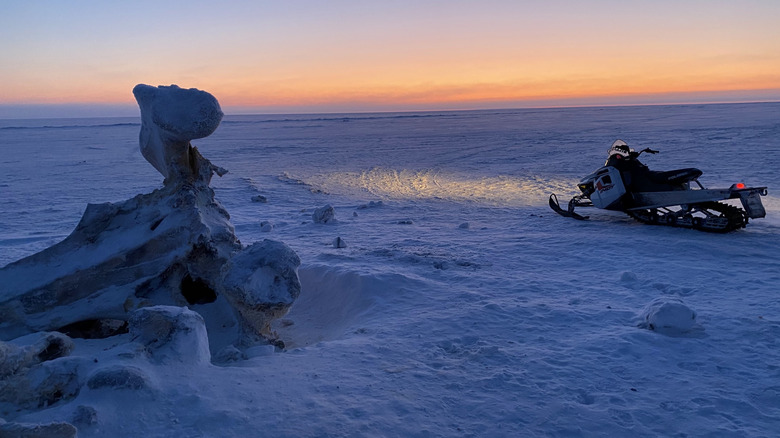
Only one place gets to call itself the northernmost point of the United States. Naturally, it sits on the coastline of Alaska, where roads and towns give way to Arctic tundra and the open sea edged with drifting ice. Here at Point Barrow – also known by its Iñupiaq name, Nuvuk — you can stand at the farthest north edge of the country, a narrow split of land between the Chukchi and Beaufort Seas. Though far removed from busy cities, Point Barrow has long sustained life — whales pass along the coast, while seals and caribou have provided food for generations of Iñupiat people. In fact, people have made use of this remote place for centuries, with archaeological evidence of occupation dating to roughly 500 A.D., per NASA.
Point Barrow, about 10 miles northeast of Utqiaġvik, Alaska, the northernmost city in America, teems with a variety of wildlife. Springtime brings millions of migratory birds, including snowy owls, geese, ducks, and the rare Steller's eider, per the Alaska Department of Fish and Game. Offshore, bowhead and beluga whales glide by during seasonal migrations, while seals and walruses inhabit the coast. On land, caribou, polar bears, and foxes traverse the snow.
Wildlife has sustained communities around Point Barrow for up to 1,500 years. At the nearby Birnirk National Historic Landmark, which is not open to the public, archaeologists have uncovered many artifacts dating to sometime between 500 A.D. and 900 A.D., including tools, hunting weapons, stone lamps, and a boat. Whaling became popular in the later Thule tradition, descendants of the Iñupiat community that continues to inhabit the area today. Visiting gives you a chance to not only see the diverse Arctic landscape, but also to observe a longstanding Iñupiat homeland.
How to get to Point Barrow and its striking views
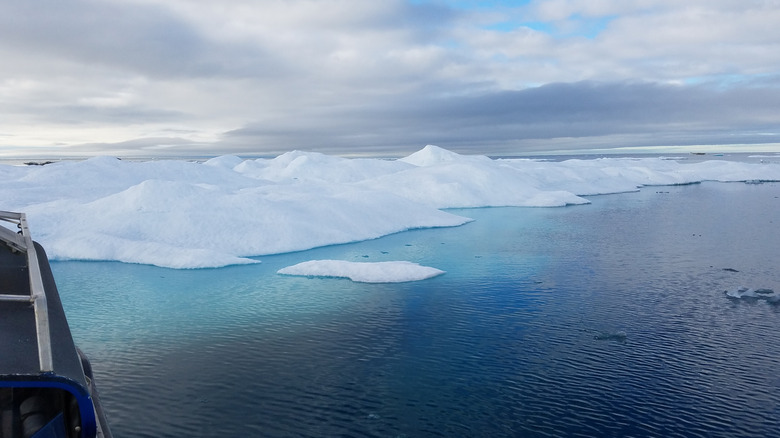
To get to Point Barrow, you'll first need to reach Utqiaġvik by air. The Arctic community is one of America's remote towns only accessible by plane, with no road connections, but regular flights run from Anchorage and Fairbanks. Once you've made it into town, the final stretch to Point Barrow is an added undertaking, as there's also no public road leading to it. Your best bet is to arrange a guided trip with a local operator, not only to help navigate the rugged terrain, but also to watch for potential polar bear encounters. Kiita Tours and 71 North Tours are two guide options that offer excursions to Point Barrow, both based in Utqiaġvik and led by Iñupiat people. Note that 71 North Tours operates seasonally, with tours offered during the warmer months, while Kiita states that its tours are offered year-round.
Despite its isolation, plenty of travelers have shared accounts of their visit to Point Barrow in online reviews and blogs. Once at the point, you won't find any visitor center or developed trails. Many reviewers have recounted polar bear sightings, but even if you don't see any wildlife, you can admire the views of the stark, windswept strip of coastline. "I like how far you can see ... the harshness and the austere beauty. The only thing forming the landscape here is nature," described station technician Ross Burgener of the National Oceanic and Atmospheric Administration. To see more of Alaska's wildest destinations, check out the Gates of the Arctic National Park, America's least-crowded national park.