
4 Japanese Izakaya Rules That Can Surprise First-Time Visitors
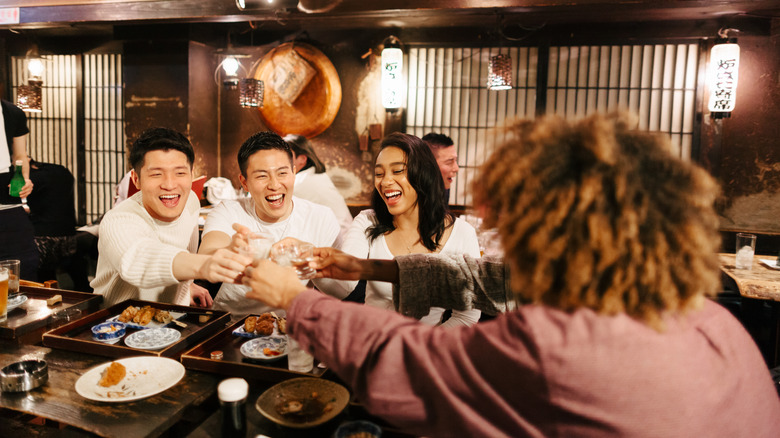
Heading to Japan? Chances are, food ranks high on your must-try list. With a smorgasbord of flavors and specialties to choose from, it's easy to overplan. Amid Michelin-starred restaurant splurges, late-night street market eats, and guided food tours planned months in advance, there comes a night when all you want is a cold beer and something to snack on. That's where the izakaya — relaxed, unfussy, and seemingly on every corner — enters the picture.
It's hard to capture an izakaya in a single English word. It sits somewhere between a pub and a restaurant, and is perhaps best described by tourism company Travel Japan Together as "a tapas bar with Japanese food and a louder room." But there's more to these easygoing spots than meets the eye. Izakayas run on their own set of rules, which don't always translate for first-time visitors.
These rules kick in as soon as you're seated, and first-timers are bound to have some questions. Food or drinks first? Is the guy at the next table really allowed to light up that cigarette? Do you tip? And what's this little dish of food that nobody ordered doing on my table? Here are the ins and outs of the izakaya, so you can confidently pull up a stool like a regular on your next trip to Japan.
Mistaking otoshi for a free appetizer
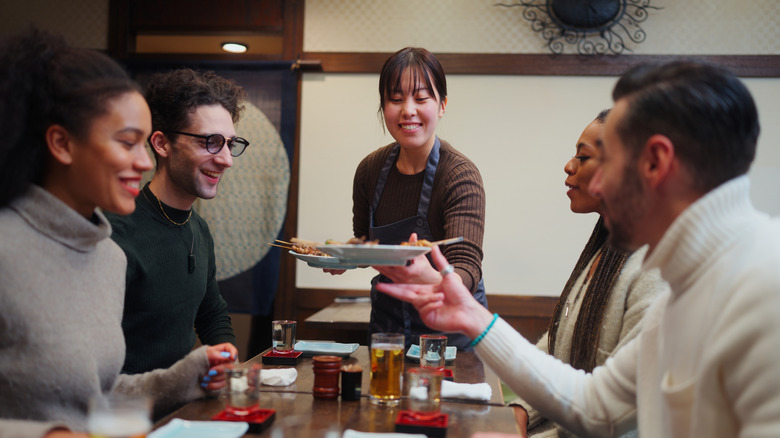
First-time visitors are often baffled by the otoshi, and understandably so. It's a dish that lands on the table before you've even glanced at the menu, and it's usually something simple: tofu, edamame, pickled radishes, nuts, or even a bowl of miso soup. But don't chalk it up to warm Japanese hospitality alone. If you think you've seen the last of that little dish, think again: it will reappear on your bill at the end of the night.
Think of otoshi as a seat charge with a side of history. In the Edo period, sake shop owners would offer whatever snacks they had on hand to their customers, usually merchants and workers who stopped in after work to nurse their drinks right there in the shop. That tradition lives on in today's izakayas, albeit with a fee that varies by venue: expect roughly $2 to $4 per person at most spots, and up to $6 at fancier ones.
Sound unfair? Not really. In a country where gratuities aren't expected, the otoshi charge is unlikely to leave you with tip fatigue — it's a far cry from the 20% expected of you in the United States. That said, Tokyo Weekender reports that some izakayas are being more transparent about otoshi by labeling it as a table fee or cover charge, making the practice "technically accurate, and far more palatable" to confused foreign customers.
Skipping the drink order
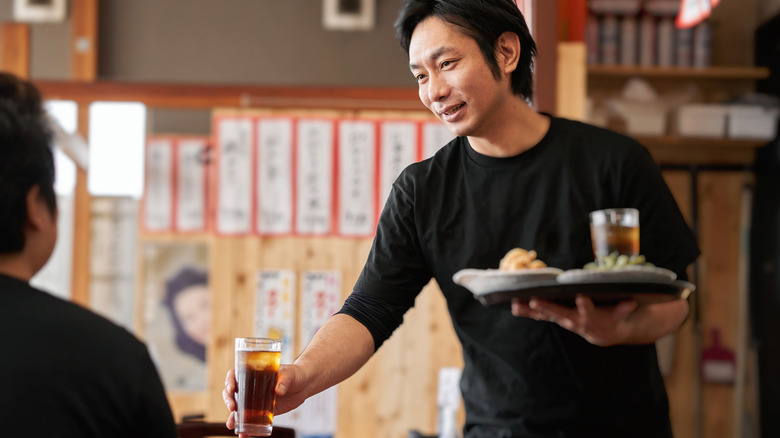
The otoshi starts to make sense once you know how an izakaya meal begins. A server swings by your table with the otoshi, the menu, and moist hand towels (oshibori), then leaves with your drink order. A clink of glasses and a rousing "kanpai!" kick off the night. Most diners start with beer right off the bat, then branch out into sours, highballs, or cocktails as the meal progresses. Not a drinker? No worries — the menu will have non-alcoholic options, but most izakayas expect each person to order a drink.
The same goes for food. Some izakayas expect each diner to order at least one dish, with plates commonly shared around the table. Start slowly with smaller plates, then take your cues from your tablemates as you work your way up to heartier dishes. To order, politely call out "sumimasen" (excuse me) to catch the server's attention, or place your order using the tablets available in larger chains. Expect dishes to arrive at different times, straight from the kitchen as soon as they're ready.
Keep your table manners in check by brushing up on the Japanese restaurant rules that escape American tourists. Avoid missteps like wiping your face with the moist hand towel handed out by the servers or reaching into a shared dish with your used chopsticks. Instead, use a serving utensil or the clean ends of your own chopsticks to transfer food from a shared dish to the provided torizara, a small plate meant for personal use throughout the meal.
Smoking is still allowed in some izakayas
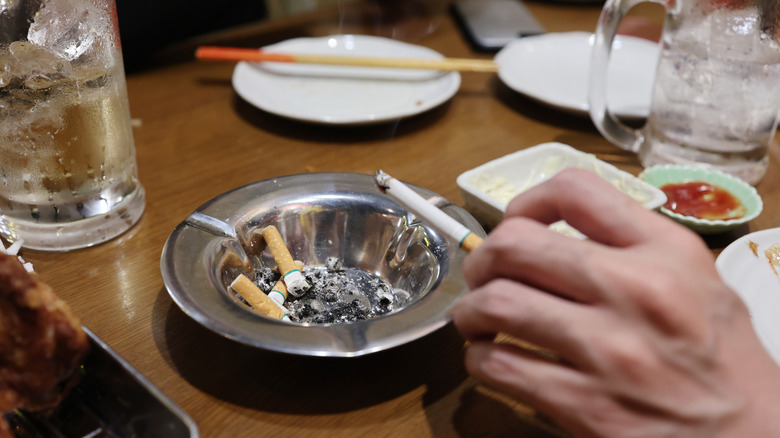
While nary a cigarette can be lit in bars or restaurants in 28 U.S. states, including California, New York, and Washington, American tourists may be surprised to learn that people are still lighting up in an izakaya. That's because of a loophole in Japan's revised Health Promotion Act, whose 2020 nationwide ban on indoor smoking in restaurants, izakayas, and bars carved out an exception for "pre-existing small-scale restaurants and bars," according to researchers at the University of Tsukuba. And guess what? Small izakayas slot right into that category.
Local Japanese governments have handled the ban differently. In Tokyo, bars, restaurants, and izakayas must display a sign showing their smoking policy, even if they are smoke-free, and anyone under 20 is barred from smoking rooms, according to the Tokyo Metropolitan Government's Handbook for Facility Managers. Meanwhile, size matters in Osaka: stroll into an Osaka eatery with 30 square meters of seating or less, and you may end up having your yakitori with a side of cigarette smoke.
Forgetting to bring cash
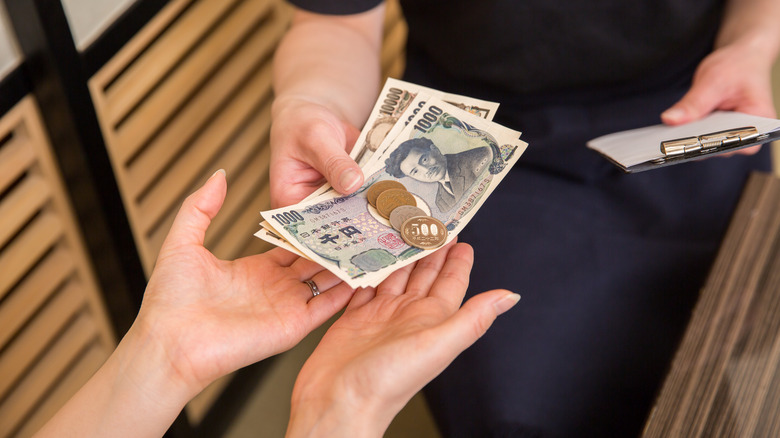
Japan hasn't joined the cashless frontrunners like Sweden, Finland, or China just yet, but no one can say it isn't keeping up with the times — and 2025 figures from Japan's Ministry of Economy, Trade and Industry prove it. Cashless payments climbed to 58% of spending in 2025, up from 52.8% in 2024.
But when the meal winds down in a lively izakaya, Americans quickly discover that carrying cash still has its benefits. While bigger izakaya chains accept credit cards, cash still changes hands at many smaller ones. Fortunately, even neighborhood konbinis have bank machines — just make sure you avoid those ATM fees that sneak up on you when traveling overseas. A tally of your orders, scribbled on a piece of paper or clipboard left at your table by your server, will have to be brought to the register by the izakaya's doorway at the end of the meal.
With staggered orders and multiple rounds of drinks, izakayas usually tally the bill per table. There's an unspoken understanding that the group splits the bill evenly, unless you've ordered more than the others and insist on chipping in for the extras. Should you want to pay solely for the items you ordered, tell the cashier "betsu-betsu de," which translates to "separately, please." A "gochisosama deshita" (thank you for the meal) to the staff rounds off the evening, though it might as well mean "see you soon" — once you've tried an izakaya, you're bound to be back.