
5 Japanese Restaurant Rules American Tourists Break Within The First 10 Minutes
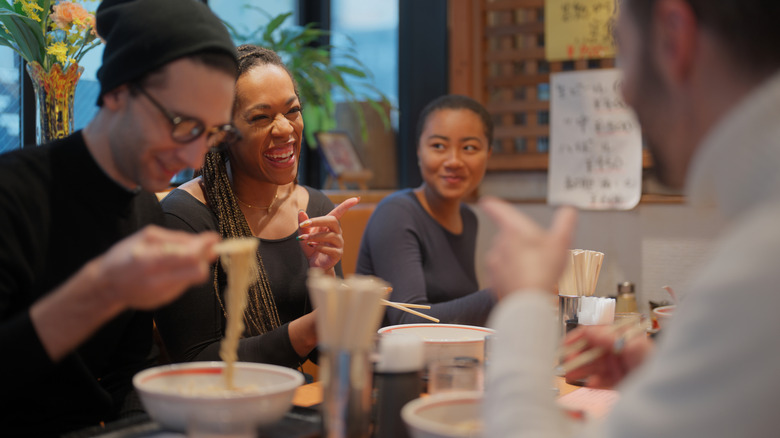
Between the neon jungle of Tokyo, the temples of Kyoto, and the turquoise beaches of Okinawa, Japan is a tourist's playground that caters to any type of vacation you're pining for. And Americans aren't immune to the hype: Japan National Tourism Organization (JNTO) statistics ranked U.S. travelers third for visitor numbers among all international tourists in Japan in March 2026, per JTP Tourism Research & Consulting Co. Between temple hops, cherry blossom viewings, and hikes up Mount Fuji, stopping to indulge in Japanese cuisine is a destination in itself — and with it comes a set of rules which, to the uninitiated American tourist, can be broken within the first 10 minutes of stepping inside a Japanese restaurant.
Omotenashi — what JNTO describes as "the Japanese mindset of hospitality centring around care rather than expectation"— means staff will be inclined to look the other way for minor etiquette mistakes. Still, wouldn't it be better to educate yourself on the do's and don'ts of dining etiquette before booking that formal kaiseki banquet or heading off to a casual izakaya? As Japanetic, a Japanese etiquette resource, puts it, "Japanese people notice. They remember. And they deeply appreciate when foreigners make the effort to understand not just what to do, but why it matters."
Not sure what that wet towel in your place setting is for or how to catch your waiter's attention? Curious about sake-pouring rituals or navigating your way around any chopstick taboos? Here are five Japanese restaurant rules that can catch you off guard — and how to sidestep them in the future.
Using the wet towel, or oshibori, to wipe your face
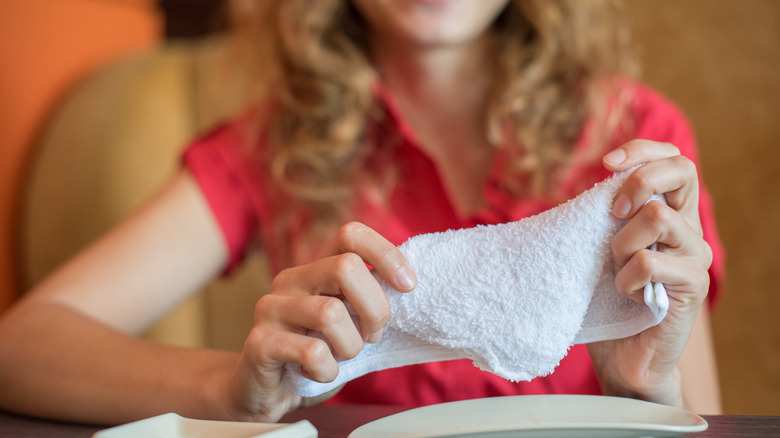
Picture this: You enter a restaurant and you're handed a cool towel — or a warm one, if it's winter — by the restaurant staff. If your first instinct is to wipe it across your face or neck, you've just committed your first Japanese restaurant blunder, even before you've placed your order. This towel is called the oshibori, and it's made for wiping your hands — and hands only — before eating.
From exclusively being offered to noble guests during the Heian period to being a staple in restaurants around Japan today, the ubiquity of the oshibori shows how deeply this centuries-old hand-washing ritual is ingrained in Japanese hospitality. The rules, as noted by multiple Japanese etiquette guides, haven't strayed from their origins: Wipe your hands clean with the damp towel, then fold it used-side in before placing it on the dish it was served.
But the oshibori isn't just a restaurant ritual. In hotels, ryokans, airplanes, and trains, oshibori are used for freshening up during a journey and upon arriving at one's destination — and in these settings, wiping your face and neck with the towels is acceptable and encouraged. But keep in mind that there is a different set of norms when dining out.
Pouring yourself a drink instead of serving others first
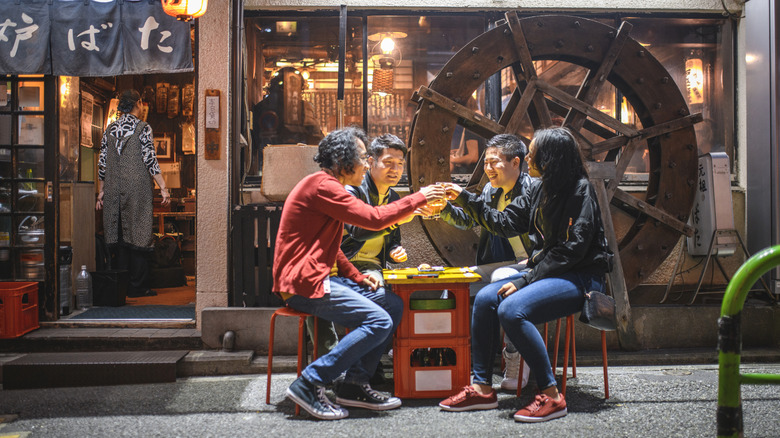
By Western social drinking standards, filling your own glass wouldn't raise an eyebrow. However, it's a surprising etiquette mistake you'll want to avoid in Japan. Tempting as it is to pour yourself a glass from that freshly delivered bottle of sake or beer, divert that pour to your dinner mate's glass instead. This custom is known as oshaku, one of Japan's unspoken rules when it comes to drinking: Serve others first, and let others serve you.
This practice holds whether you're at a formal occasion like a wedding or a casual dinner with friends. Oshaku is a reflection of attentiveness and respect in a social setting — a reminder, as Palace Hotel Tokyo guide and etiquette expert Michiko Sato tells AFAR, that "Japanese people strive to look after their guests without their guests needing to express their desires verbally."
So, how should social drinking work in practice? Being mindful of other people's glasses is key. Top up another person's glass if it's running low — a half-filled glass is your cue — and graciously accept someone else's pour with a thank you. Remember to use both hands when serving or receiving a drink. "If you are sitting at a table and you have 11 guests, your job is to serve the 11 guests. But the job of these 11 guests is to serve you," sake expert and European Sake Show organizer Sylvain Huet tells EuroNews.
Muddling through the chopsticks conundrum
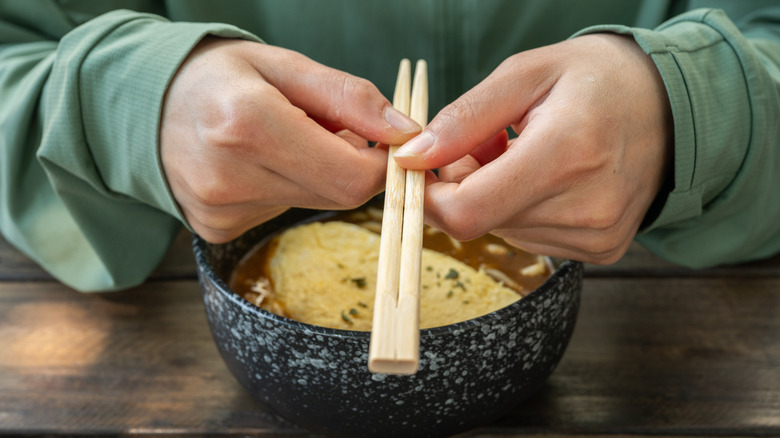
Breaking chopsticks etiquette is one of the most common tourist behaviors that rub Japanese locals the wrong way. We get it — not every tourist can work their way around a pair of chopsticks. But there's no avoiding them, so getting to know the ins and outs beforehand goes a long way toward being a respectful visitor.
Some of the most serious chopstick offenses you could possibly make as a tourist in Japan are those that mimic Japanese funeral rites. Leading the offending taboos is tatebashi — the act of sticking a pair of chopsticks upright in a rice bowl— which is only done when sending off loved ones. "This tatebashi is really frowned upon and can be seen as inviting death to someone. At the very least a bad omen," says Uncanny Japan podcaster and author Thersa Matsuura. While sharing food isn't taboo, passing morsels from one pair of chopsticks to another is. Similar to tatebashi, the act resembles the post-cremation rite "when close friends and relatives gather around and use these very long chopsticks to together pickup bones and move them into the urn," Matsuura says.
Stick to the proper use of chopsticks, and you'll be fine. JNTO gives a rundown of chopstick oversights: Don't use them to move bowls around, to point at things, or to stab food with. But don't let your sloppy chopstick skills get in the way of enjoying a great meal in Japan — when all else fails, rest assured it's usually just fine to ask for a fork.
Expecting the waiter to come to you
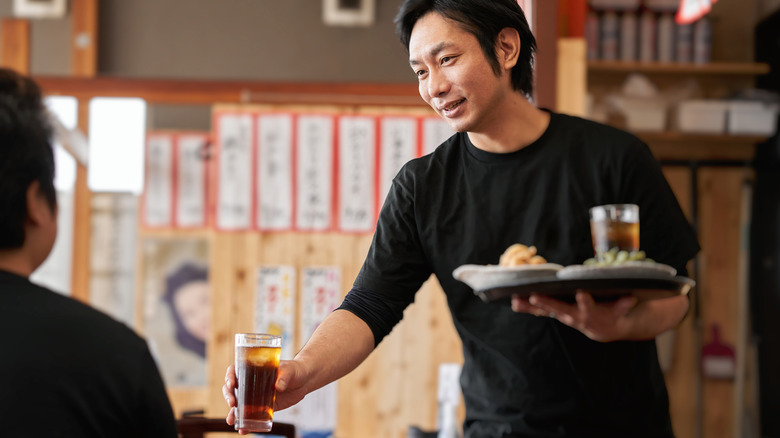
Powered by tips, servers in the U.S. are usually enthusiastic, attentive, and amenable to patrons, often stopping by tables unprompted to see if anything needs refilling or if another round is in order. But for Japanese servers, the initiative to swing by mid-meal isn't the norm.
Translation firm Local Concept puts it well: "In individualistic cultures like the U.S., businesses compete to make every customer feel special. In collectivist societies like Japan, the focus is on harmony and respect, avoiding behavior that might disturb others." While it may seem counterintuitive in a country as famously polite as Japan, calling out to a waiter in a Japanese restaurant is the way it's done. Staff won't come to you until they're signaled, out of respect for your table's privacy, so it's up to the customer to get their attention.
When you're ready to order, calling out "sumimasen" ("excuse me"), paired with a raised hand, is all it takes to bring the staff over. And don't be afraid to raise the volume, too. "In a busy ramen shop or izakaya, a quiet voice will be drowned out. Local Japanese people shout it quite loudly. It is the magic word to get water, order food, or get the check," confirms Japan Up! Magazine. Forgo this step if you notice a button on your restaurant table, which a number of Japanese establishments have — pressing it calls your server over to your table.
Arriving late for a reservation
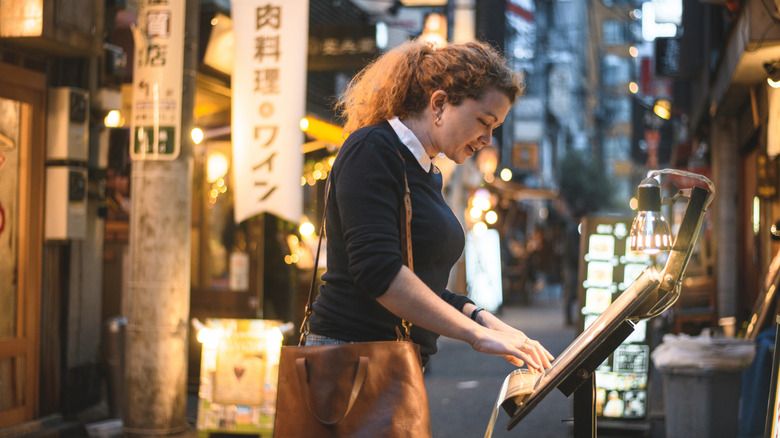
When it comes to popular Japanese fine dining establishments — think multi-course kaiseki restaurants or Michelin-starred establishments — nabbing a table can be a challenge, as they typically come with limited seating and lengthy waitlists. So if you've managed to secure your reservation but arrive 10 minutes later than scheduled, you've already committed a misstep before your meal has even started.
When you finally get that coveted reservation, don't waste it by showing up late. While latecomers in the U.S. usually get away with a grace period of several minutes, the opposite rings true in Japan, where arriving before your reservation time is a sign of respect in a country that holds punctuality in high esteem. Restaurant reservations site Omakase Japan Eatinerary makes a case for arriving earlier: Doing so is a courtesy not just to the chef's carefully timed preparations but to your fellow diners as well.
Unless you're willing to pay a cancellation fee or have your reservation scrapped altogether, allow yourself a five-to-10-minute head start. And if circumstances beyond your control keep you from making your reservation, inform the establishment as soon as possible. Fortunately, Japan has a slew of restaurants that don't need reserving, such as affordable yet exceptionally tasty meals at a local convenience store or cozy dinners at a neighborhood walk-in izakaya. While you're at it, remember to keep your eating indoors: Eating while walking will most likely earn you a side-eye from Japanese locals.