
Near The Belgium-German Border Is An Unspoiled Forest Wilderness Brimming With Wildlife And Idyllic Lakes
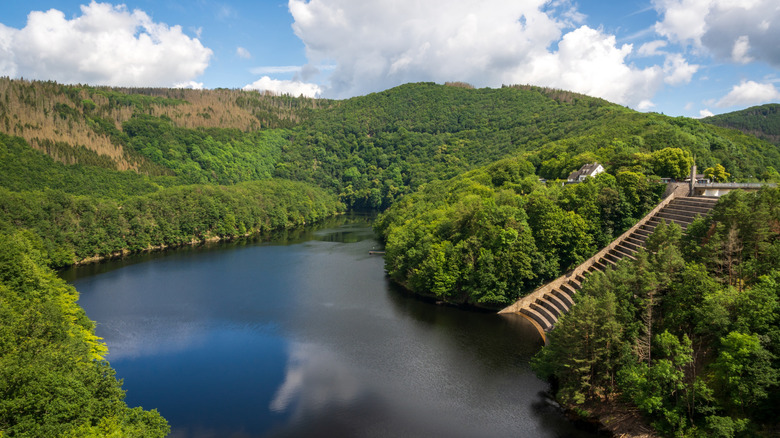
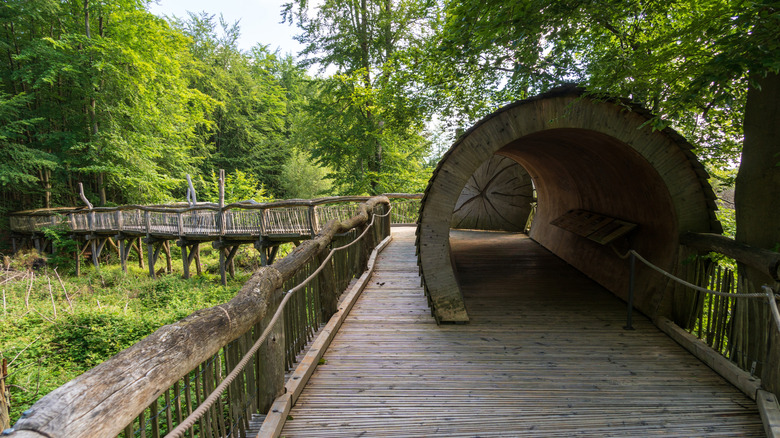
Forest trips have a way of making travelers feel a little removed from civilization. A path disappears beneath a tree canopy, a stream trickles through undergrowth, and the sudden flash of a bird or a wildcat watching from nearby can offer adventure and relaxation. In western Germany, near its border with Belgium, the roughly 42 square mile Eifel National Park combines regenerating forests with rocky landscapes, open grassland, and a collection of reservoirs. Despite all its wilderness, Eifel is hardly inaccessible: Visitors can reach the park in just over an hour's drive from Cologne or Bonn. You could escape from those cities and explore Eifel's hiking trails and lake vistas on free, guided walks with rangers.
Eifel National Park is unique because it's still a work in progress. Though it was officially established in 2004, its website classifies it as a "park in development," with nature left to return gradually to a pre-industrial state. Already, fallen trees and shares of surviving, native beech forest allow wildlife to thrive.
In 2025, the park tallied more than 11,400 species in its ecosystem, including more than 2,600 listed as threatened — compared with 230 endangered species when the park was established. The park's wildlife ranges from red deer to notoriously elusive European wildcats. More than 120 of the latter have been documented there, making the park part of Central Europe's largest continuous wildcat population. Meanwhile, rare black storks — which were once near extinction in Germany, according to the park's website — have made new nests there. As the storks are sensitive to human interference, stick to the paths to ensure you have an ethical wildlife tourism experience.
Swimming, boating, and trails in Eifel National Park
In Eifel National Park, water activities abound around several reservoirs. The Rursee, Obersee, and Urftsee reservoirs form a snaking chain of broad, blue-green water, their shorelines folding into innumerable bays and coves. Around Rursee, visitors can paddle and swim at designated spots. Badebucht Woffelsbach, in the lakeside village of Woffelsbach, is a reliable choice with a 4.8-star rating on Google Maps, as of this writing. It's a natural bathing area right on Rursee, with terraced grassy sunbathing areas and water consistently rated excellent quality, per Eifel Tourismus GmbH. Meanwhile, electric boats run across Rursee and Obersee from April through October, while ranger-led boat trips offer a roughly one hour, 45-minute ride with commentary on the park's wildlife and landscape.
Hikers can tackle various walks that come with reservoir views. The park's longest track is the Wilderness Trail, a route broken into four stages. The route's second stage, which is just over 12 miles, receives many positive reviews on AllTrails, holding 4.5 stars, as of this writing. It follows the high slopes of the Obersee reservoir before reaching the Urft Dam and abandoned village of Wollseifen. The water stretches between wooded hills, with the forested Kermeter ridge rising beyond it. You might also spot birds skimming the water, as the national park describes the Urft reservoir as an important waterbird habitat.
If you're looking for a place to stay by Eifel, the picturesque, cobblestoned resort town of Monschau sits close to the trailhead of the Wilderness Trail's first section. Otherwise, there are several park-certified stays around its borders. You can reach Eifel National Park Center — the main visitor center, and an exhibition space – in about 90 minutes by car from Cologne Bonn Airport outside Cologne, which is one of Germany's best destinations you can't skip.