
Between Portsmouth And Winchester Is A Charming Market Town With Shops, Medieval Ruins, And National Park Access
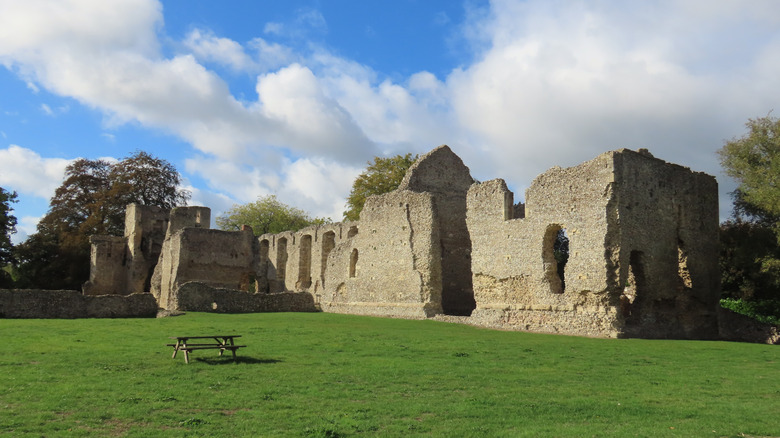
The ruins of a medieval palace stand, framed by a cloud-filled English sky, silent despite their centuries of history. They're cold and crumbling stones now, but they once held some of England's most famous figures: Richard the Lionheart, Queen Elizabeth I, and Henry VIII all once strolled through these halls. No, this isn't the start of an anachronistic historical drama: This is Bishop's Waltham, a charming market town that's nearly bursting at the seams with history.
The first record of this Saxon town in Hampshire comes from a church built in 640 A.D., although it wasn't until hundreds of years later that it secured its position in British history. As per the name, this town was linked to the Bishops of Winchester, some of the most powerful clergymen in England. Bishop Henry of Blois, grandson of William the Conqueror (England's first Norman king), built his residence here in the 1130s. Bishop's Waltham Palace expanded from the 12th through the 14th centuries, and it's a fantastic medieval site, impressive even now in its ruined state.
Bishop's Waltham wasn't just a shelter to bishops and monarchs, though. Thanks to its location halfway between Portsmouth and Winchester, it became a thriving market town by the 13th century. Over time, it became known for its bread, wool, and fairs. Now, you can find much more than that in its historic center filled with centuries-old buildings. A weekly market offers local goods, while a wide array of independent shops line its medieval streets.
Bishop's Waltham's history and High Street
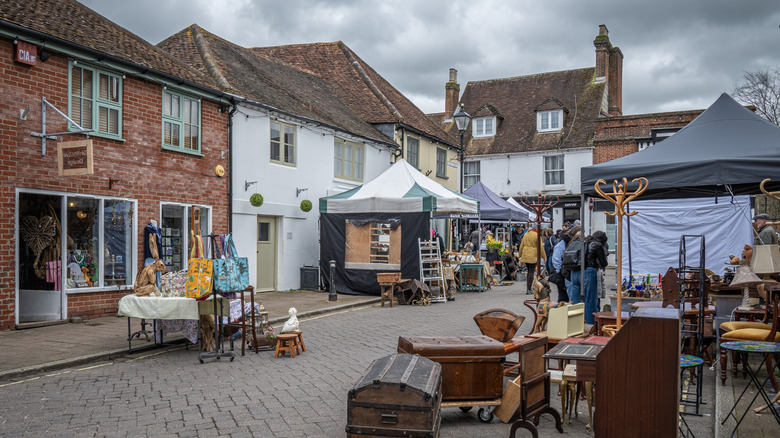
You don't have to go far in Bishop's Waltham to find its history. Originally built in 1136 by Henry of Blois, St. Peter's Church has Saxon, Norman, and Jacobean elements spanning across centuries, plus one of the world's heaviest pendulums, which swings from a 14th-century clock, despite weighing a third of a ton. You can also stroll its medieval High Street at the center of town, where you'll find about 80 local businesses.
They're not your run-of-the-mill stores either, with places like the Merchant of Magic, known for its staff of professional magicians who perform mesmerizing tricks. Tashinga Gift Shop offers an eclectic variety of items, while Willow's Pet Supplies is a favorite thanks to its knowledgeable workers and natural product options. Although the town's historic marketplace is gone — all that remains is a stone under the Jubilee Clock in St. George's Square — the market still takes place, now at the Jubilee Hall. Every Friday from 10 a.m. until mid-day, the market offers locally grown and homemade products.
Not surprisingly, the medieval Bishop's Waltham Palace is a can't-miss for visitors. This heritage-listed magnate residence includes ruins of its Great Hall and three-story tower. After thriving for hundreds of years — Queen Mary I even stayed here to wait for King Phillip to arrive from Spain for their wedding — Bishop's Waltham Palace was abandoned in the 17th century, after being destroyed during the Civil War. Now, it's free to visit, and its 19th-century farmhouse houses the Bishop's Waltham Museum. Bishop's Waltham Palace is open from 10 a.m. to 6 p.m. from April through September and then closes at 4 p.m. the rest of the year. It's closed on Christmas Day, Boxing Day, and New Year's Day.
National parks and nature in Bishop's Waltham
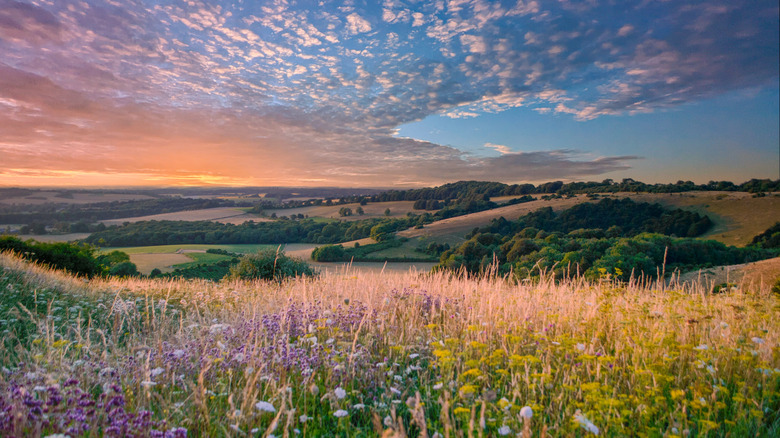
Besides its medieval charm, one of Bishop's Waltham's biggest strengths is its location. It's perched right on the border of South Downs National Park, the newest addition to the U.K.'s national park system, known for its dark skies and rare lowland heath habitat. Bishop's Waltham offers access to 16 trails, several of which traverse through the park. And you don't even have to get in the car, as paths like the Bishop's Waltham, Upham, and Dundridge Circular take you on a 7.9-mile loop that starts in town and winds through South Downs before returning to town.
Park sites like the Beacon Hill National Nature Reserve — a chalk grassland habitat for endangered skylarks and a site of an early 19th-century windmill — are less than 10 minutes by car. Beacon Hill is the starting point for some hikes, so whether you want to walk or drive in your exploration of South Downs, you have options if you're coming from Bishop's Waltham. Generally speaking, Bishop's Waltham is a boon to hikers and cyclists, as the town and surrounding countryside have trails for both. The Heritage Walk takes you past Roman ruins and medieval sites, the 5-mile Country Walk explores the northeast area of Bishop's Waltham like Dundridge Meadow, and a 20-mile off-road cycling route takes you into the park and places like Droxwell and Upham.
Bishop's Waltham is about halfway between Portsmouth and Winchester. It's 30 and 20 minutes away by car, respectively. Once you've gotten your fill of history and shopping, you can take advantage of this town's prime position on the border of South Downs National Park, a landscape of towering cliffs and ancient forests. It's worth having a vehicle if you want to cruise the South Downs' scenic coastal drive, one of the best road trips in England. For those who'd rather be car-free, there are buses that travel directly between Bishop's Waltham and places like Winchester, Eastleigh, and Southampton, Britain's underrated seaside gem.