
The National Park With The Cleanest Rivers In The UK Isn't Lake District Or Yorkshire Dales
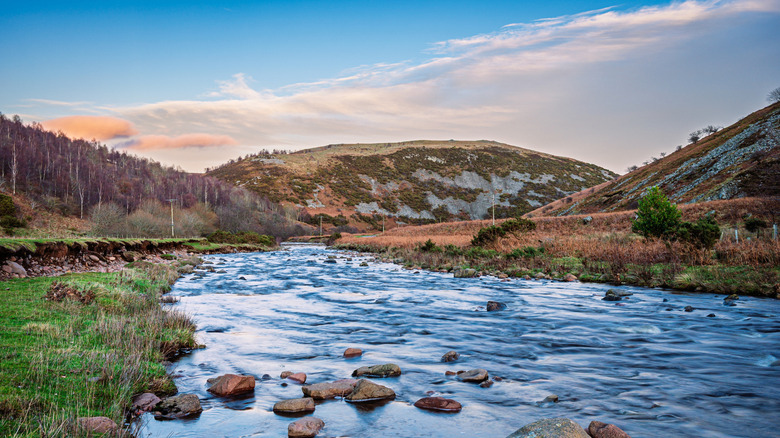
Though not the longest, the widest, or the most voluminous in the world, the U.K.'s many rivers are often deeply connected to history, myth, and pop culture. The River Thames stands out for its role as a thoroughfare through the U.K.'s capital and largest city. Other U.K. rivers have their own claims to fame, like the River Severn (the country's longest) and the River Ness (of alleged monster fame). However, as amazing as these rivers are, they are, unfortunately, also becoming polluted more and more frequently. Fortunately, many of the U.K.'s cleanest rivers are located in one of the country's most beautiful (and underrated) preserves, like the stunning Northumberland National Park.
Though the 405-square-mile Northumberland National Park is a bit smaller than the more famous Lake District and Yorkshire Dales national parks, it nonetheless has the distinction of protecting some of the U.K.'s cleanest and most pristine river systems. Recent studies have found that more than 60% of Northumberland National Park's rivers are rated "high" or "good" for water cleanliness, higher than any other national park in England or Wales. Ongoing restoration projects among the park's most prominent rivers mean those ratings could get even higher in the future. The park's clean waters also mean rivers rich in fish and native wildlife not often seen in more developed parts of the country — including the rare European otter. Clean rivers are obviously important, but Northumberland National Park also showcases an ethereal landscape of valleys, forests, and waterfalls stretching like a painting along the Northumberland coast. All in all, Northumberland National Park is a critical preserve of the U.K.'s threatened biodiversity and an unmissable outdoor escape into the haunting, ancient lands of Northeastern England.
Exploring Northumberland National Park in England
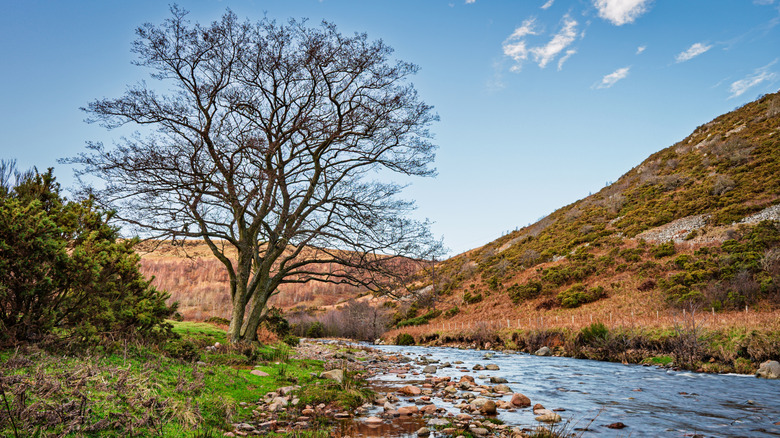
Northumberland National Park's rivers are a major component of its broader landscape. As England's least-populated national park, Northumberland protects 410 square miles of open terrain in the Northern England county of Northumberland, about 27 miles west of the coastal town of Blyth and its sandy beaches, maritime history, and local eats. Northumberland National Park's diverse landscape includes rugged expanses of hills, valleys, and ancient rock formations, all dotted with wildlife-rich ecosystems. The park's defining natural feature may be the rolling Cheviot Hills region that decorates the landscape between Northeast England and Southern Scotland and supports a magnificent cluster of rivers, lakes, and waterfalls. Northumberland National Park also protects the Roman remnant of Hadrian's Wall, Iron Age archeological sites, and other top historic attractions in England's scenic northeastern corner. Stargazers can find England's darkest skies in Northumberland National Park after the sun goes down.
Northumberland National Park's rivers flow through the park's undeveloped network of moors, peat bogs, meadows, and woodlands. The broader Northumberland region is actually home to thousands of rivers and streams of various sizes, though a few prominent rivers in particular highlight Northumberland National Park's immaculate river system. Most notably, the River Coquet is a lovely waterway within the park's Cheviot Hills, where it forms a magical valley of flowery meadows, moorlands, and rock formations known as the Coquetdale. Similarly, the River Breamish carves a picturesque valley of rolling green hills, where travelers can find the charming village of Ingram and many of Northumberland National Park's most important archeological sites. Elsewhere in the park, the Rivers Rede, Till, and North Tyne likewise flow through stunning valleys, hills, and meadows. The park's hilly landscape creates perfect conditions for ravishing waterfalls to form in secret forest cloisters.
Trails in Northumberland National Park, England
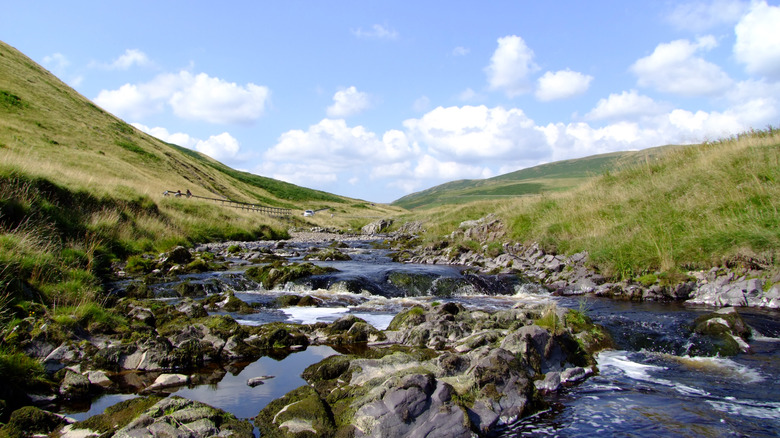
Northumberland National Park's pristine rivers are the result of a well-protected ecosystem, but travelers can still experience these magnificent waterways (and their splendid backdrop) on one of the park's many walking trails. Among its many exemplary hikes, Northumberland is one of three national parks included on the nearly 270-mile Pennine Way, the U.K.'s first "national trail". The park's shorter trails, fortunately, highlight Northumberland's special river lands without the investment of a multi-day hike.
The 4.5-mile Alwinton and River Alwin Walk includes both picture-perfect shots of Northumberland's River Alwin and intriguing slices of regional history. The trail follows ancient trade routes that were at one point used by whisky smugglers. Another, more regal, "river and history" trail is the 12-mile Hadrian's Wall Path. Beginning along the banks of the River North Tyne at Chollerford, the Hadrian's Wall Path follows a challenging, but worthwhile, route through Northumberland National Park's open hills and rocky crags, with excellent views of Hadrian's Wall and other ancient Roman archaeological sites along the way.
Daring hikers can try the Scald Hill, The Cheviot, and Cairn Hill Circular trail. Covering a nearly 9-mile loop through the park's bogs and hills, the trail includes several river and stream crossings (which may at least make hikers grateful for the park's clean waters). Hikers can also explore Northumberland National Park's divine waterfall features. The 3.2-mile Hartside to Linhope Spout Trail takes hikers through a series of bucolic woodlands and hills before arriving at the nearly 60-foot Linhope Spout, perhaps the most extraordinary waterfall in the park. The 3-mile Hareshaw Linn Walk similarly shows off the eye-catching Hareshaw Linn, a gorgeous cascade formed by the Hareshaw Burn and etched into one of the park's most biodiverse areas.