
8 Once-Thriving Missouri Towns That Transformed Into Abandoned Beauties
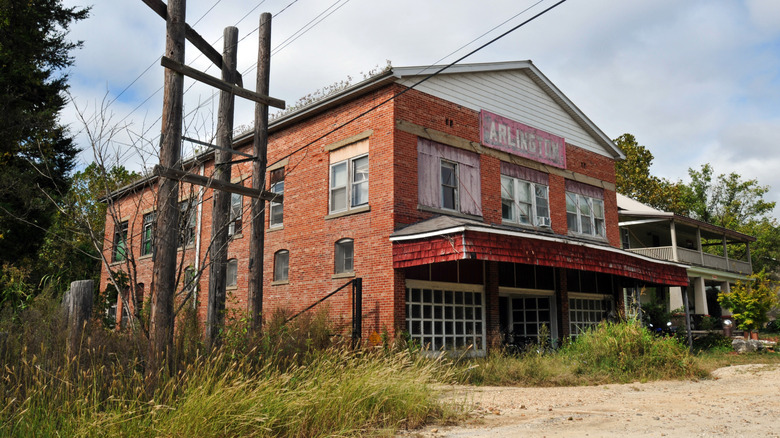
A trip around Missouri can look like Ozark hills marked by limestone bluffs and spring-fed streams, or it might traverse the broad Mississippi River floodplains. Scattered across Missouri are the remains of communities that grew around the state's farms, mines, railroads, and other industries, only to shrink or disappear as economic conditions and the landscape changed. Some of Missouri's ghost towns have a few visible traces of their past, like a crumbling storefront or a cemetery overtaken by grass. Others have been razed so thoroughly that little remains to mark where their streets once ran, save for historical records and the landscapes where homes once stood.
Missouri drew settlers for various reasons: Mineral deposits in the hills supported mining, while fertile river valleys attracted farmers. Meanwhile, the Missouri and Mississippi rivers helped towns in the state develop as hubs for boat traffic. But as industries and technology shifted, mines closed, transportation networks evolved, and dam projects turned river valleys into reservoirs. Head to one of these ghost towns, and you might find traces of a town abandoned before a reservoir flooded its former site or explore a park occupying the grounds of a once-busy riverside settlement. We compiled a list of eight Missouri ghost towns that have been largely abandoned for various reasons, though some may still have a handful of residents living in a few surviving homes. But these are also towns that once thrived.
Arlington
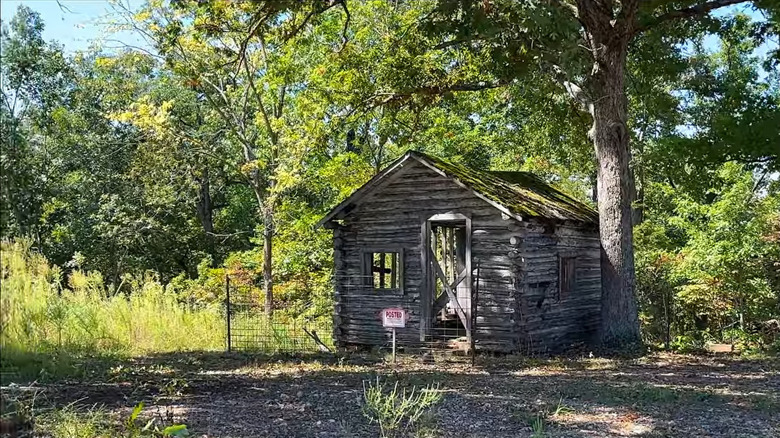
A stretch of weathered pavement winds through the wooded Ozarks, reaching a dead end near the remains of Arlington. Around a two-hour drive from St. Louis, Arlington is one of the once-thriving ghost towns stranded along Route 66. It was first a 19th-century pioneer town and evolved into a roadside resort town when the Mother Road ran through it. However, when Route 66 was widened and rerouted, the new Interstate cut the town off from passing traffic, and its resort was mostly demolished. Still, a couple of derelict buildings, including at least one of the resort's cabins, remain.
Bloodland
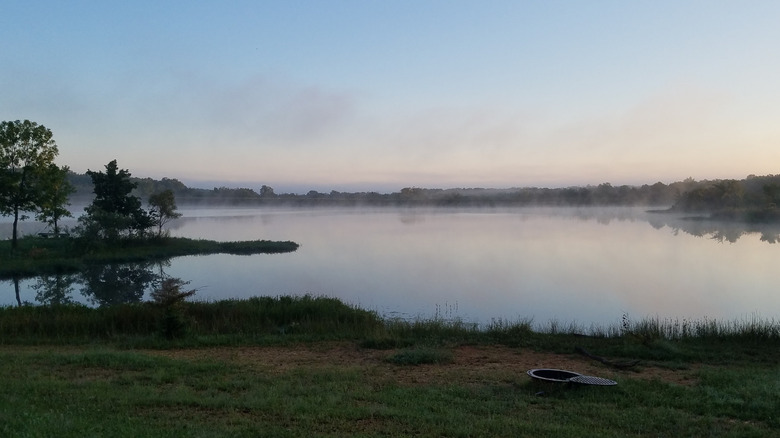
In south-central Missouri, characterized by the Ozarks and spring-fed streams, the ghost town of Bloodland survives largely in memory. Located less than two hours from Springfield, Missouri's mountain charmer with big flavors, Bloodland flourished in the early 20th century as a farming and trading community, with stores, mills, a school, and even a tomato-canning factory. In 1941, the government displaced residents to build a military training installation around the town, and the buildings were razed. Though the maintained Bloodland Cemetery and Bloodland Lake remain, you'll need to pre-register with the U.S. Army to visit, since they're within the active Fort Leonard Wood.
Far West
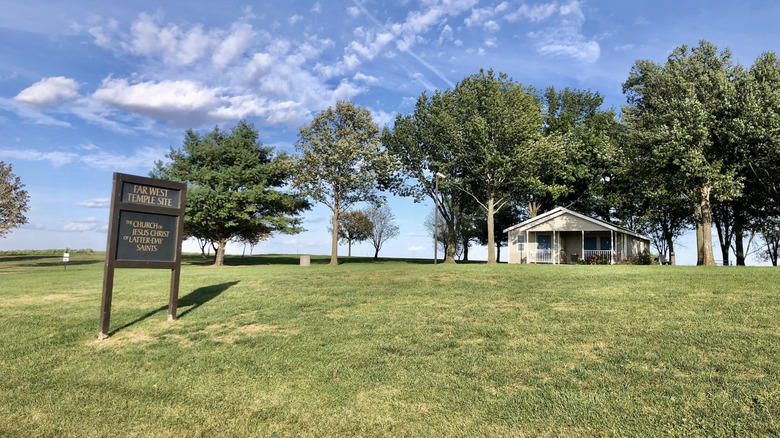
The farmland around northwestern Missouri holds the remnants of a former Latter-day Saint settlement called Far West. Roughly an hour's drive from Kansas City, Far West was settled in 1836 by exiled members of the movement. At one point, it had up to 5,000 residents and served as the church's headquarters. By 1838, Missouri militias had surrounded the community, and most residents were forced to leave. Far West is now on the National Register of Historic Places, and you can see the Far West Temple monument, containing four original cornerstones laid in 1838 for a temple that wasn't completed.
Old Greenville
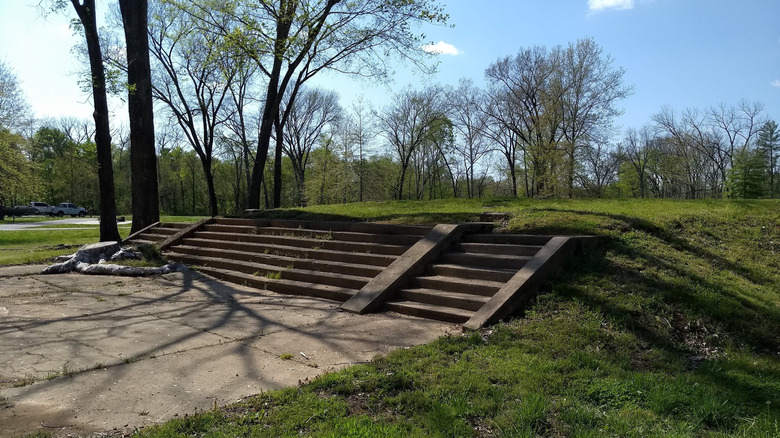
The St. Francis River lends southeastern Missouri its riverside landscape, and it's on the riverbanks that you'll find Old Greenville, roughly a 40-minute drive from Poplar Bluff. Beneath the riverbank trees lie the ghost town's concrete sidewalks and foundations. Greenville was established here in the early 19th century and grew into a timber hub. After the timber boom declined and repeated flooding occurred, residents moved the town 2 miles north, where present-day Greenville sits. Old Greenville still lingers, and there's even a nostalgic Memory Lane self-guided trail that traces the old streets and sidewalks for around a mile.
Old Pattonsburg
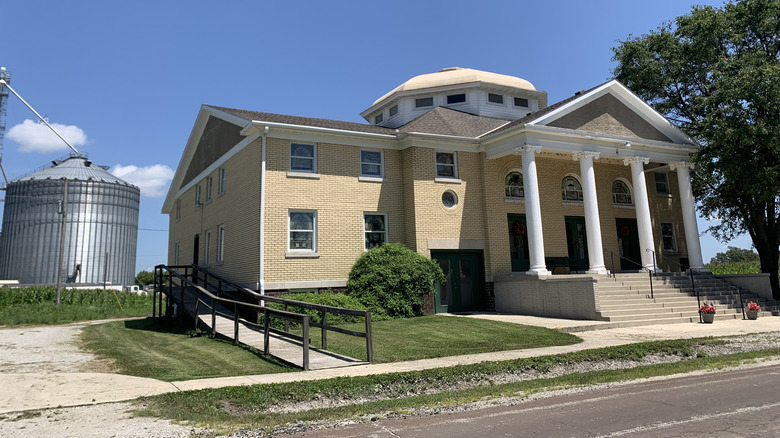
Cornfields stretch across the former streets of Old Pattonsburg in northwestern Missouri, slightly over an hour from Kansas City by car. Crooked road signs, remaining streets, and some lone buildings are clues that there was once a bustling town here. Pattonsburg began in the mid-19th century, capitalizing on Big Creek's fertile floodplain. That location proved to be its downfall: The town flooded repeatedly, and in 1993, after a particularly severe inundation, the community moved to higher ground. Today, the old townsite is a patchwork of farmland and a former street grid with a few scattered buildings.
Seventy-Six
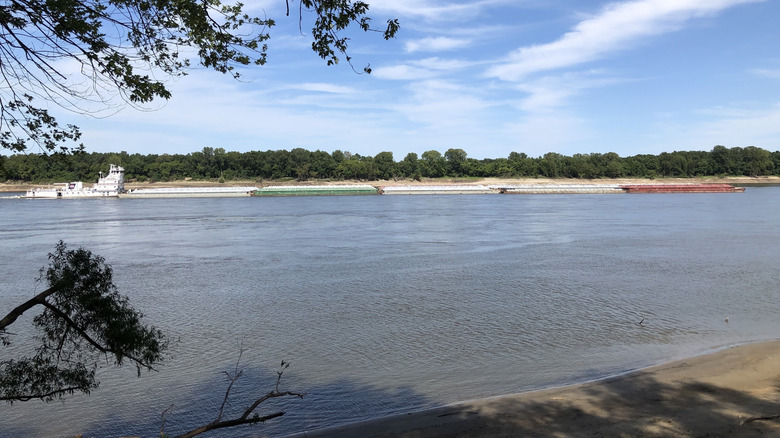
On the wide, forested bends of the Mississippi River, North America's largest river by volume, the lost town of Seventy-Six brings a little history into a quiet nature setting. At the spot just under a two-hour drive from St. Louis, settlement began in the mid-1800s, turning river traffic into a source of community income. As steamboats and railways became less integral to commerce, the village of Seventy-Six slowly dwindled through the 1900s. Today, the abandoned site lies within the Seventy-Six Conservation Area, where towering cottonwoods have replaced the former general store and forest trails wind in place of streets.
Times Beach
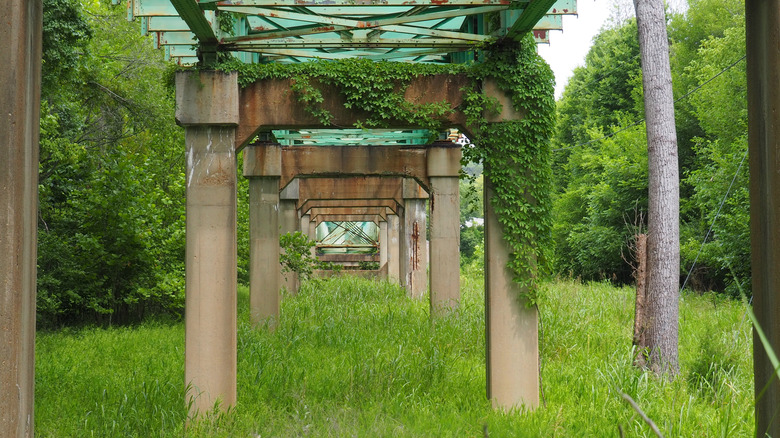
Birdsong has replaced the bustle of a small town on the banks of the Meramec River, just 40 minutes from central St. Louis. Times Beach developed in the 1920s as a summer resort community, attracting wider visibility when Route 66 was routed through the town. Its future was short-circuited after contaminated waste oil and dioxin, sprayed on roads to dampen dust, spread through town. Residents were evacuated, and buildings were incinerated. Today, the former townsite is Route 66 State Park, where the only Times Beach building left standing is the Bridgehead Inn, now the visitor center.
Jollification
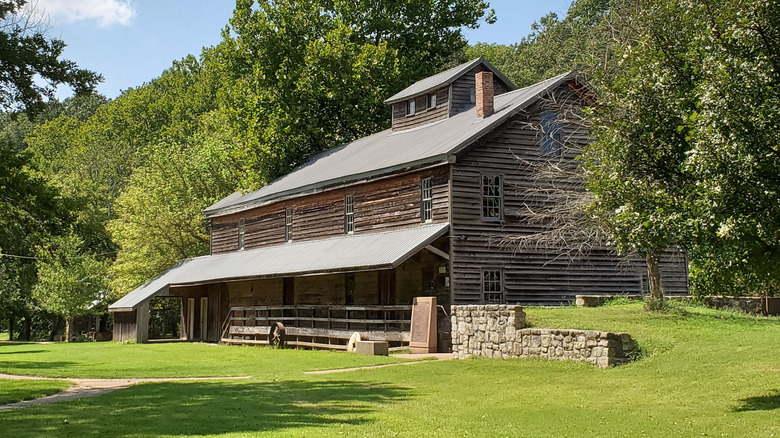
On Capps Creek in southwestern Missouri, about an hour's drive from Springfield, the former village of Jollification now centers on a restored water-powered mill. In the mid-1800s, a settlement grew around the grist mill (which doubled as a whiskey distillery). The village had stores, a blacksmith, and a doctor. But during the Civil War, much of Jollification was burned down, though the mill survived. Its decline was sealed when a new railroad bypassed the village, drawing business away. Today, the mill anchors a small historical park where you can tour some other period buildings and bridges.