
The Unexpected Safety Reason All Colorado Hikers Should Get A Fishing License
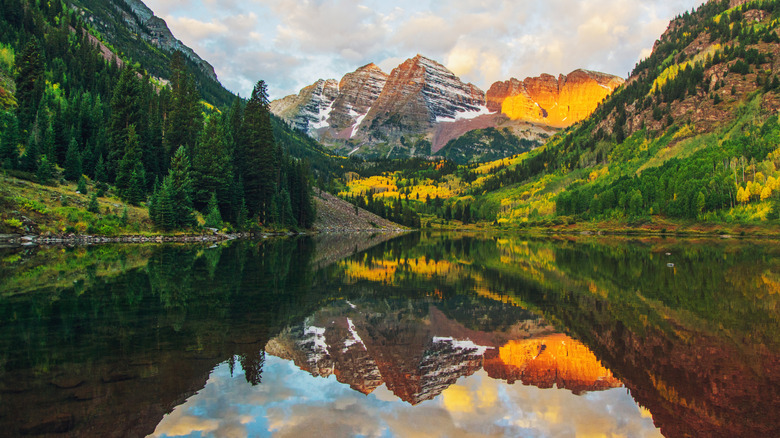
In Colorado, a portion of the fee you pay for a fishing license goes to support the state's search and rescue (SAR) system, making sure that there's a team waiting should you need their services in the backcountry. As AAA Colorado explains, "Think of the license as a season pass to adventure — fishing and climbing ... Your license fee supports volunteer rescuers, who typically do not bill victims."
Having a fishing license isn't the same as health insurance, and it isn't necessary for search and rescue operations to be called out when you're in trouble. But if you're carrying one when you're rescued, it allows the team that responded to your situation to be reimbursed immediately, rather than waiting for the end of the fiscal year. You don't need to be an avid angler to purchase the pass. Other outdoor recreation licenses that contribute to Colorado SAR include hunting, boat, snowmobile, and off-road vehicle licenses, as well as the separate Colorado Outdoor Recreation Search and Rescue (CORSAR) Card, which you can purchase online for $5.
Backpacker magazine calls Colorado SAR the busiest in the country. The all-volunteer system responds to well over 3,000 incidents per year, according to the Colorado Search & Rescue Association, with volunteers logging nearly half a million hours. Not only are these highly skilled heroes unpaid, but one study shows that they spend over $1,500 of their own money per annum on gas, gear, and incidentals, per Denver's 9News. One way in which you can support those teams is by buying a Colorado fishing license.
Why Colorado has a high number of rescues each year
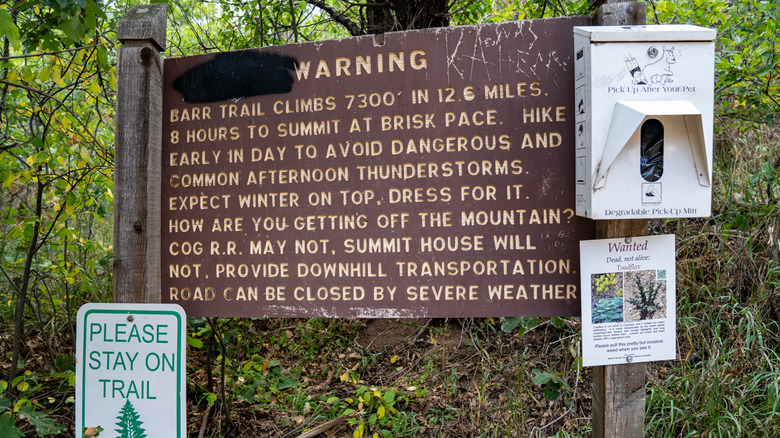
One key reason Colorado hikers get into trouble is a version of what's known as "summit fever," the irrational urge to reach a peak regardless of the risks. It commonly affects climbers attempting to summit Colorado's 14ers, the state's 58 mountains with summits above 14,000 feet high. For example, the fact that you can drive or ride the scenic cog railway to the summit of Pike's Peak often gives hikers a false sense of confidence that they can summit the mountain via the Barr Trail, despite a stern sign at the trailhead that warns of afternoon thunderstorms and winter conditions that can close the road and the rail service. Climbing 7,300 feet in over 12 miles is not easy, but every year 15,000 hikers attempt it. So many of these hikers call 911 from the summit that the city of Colorado Springs has begun fining uninjured hikers who do so $100, according to Backpacker magazine, which notes that being cold, sore, or tired does not constitute a genuine emergency.
For the legit crises Pike's Peak sees per year, Colorado SAR turns out in force, even though the outcome isn't always successful. In June of 2025, a 55-year-old man went missing on the trail, triggering a search effort involving 100 volunteers, drones, and K-9 teams. His body was eventually found near the summit by another hiker. In a statement, the El Paso County Sherrif's Office called it a "tragic outcome of a man confronting the challenges of nature." Another 14er, Long's Peak, is considered Colorado's deadliest mountain, with 71 people dying on its slopes between 1915 and 2021. In February 2026, two men were rescued from the summit in an effort that involved SAR volunteer forces from multiple agencies, including three different helicopter attempts, the first two of which failed due to severe weather.
Why Colorado doesn't charge for search and rescue services
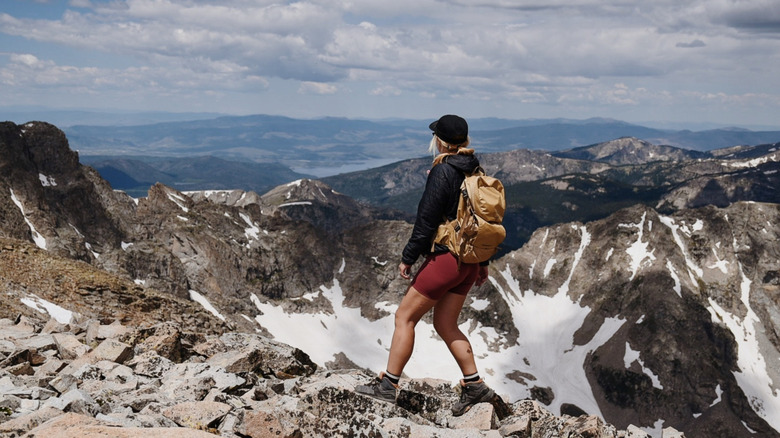
Obviously, if your rescue involves the deployment of a helicopter and military troops, your fishing license fee — around $45 for Colorado residents and $124 for non-residents in 2026 — isn't going to cover the cost. But Colorado doesn't charge hikers for rescue operations, no matter how unprepared they might have been. In a 2021 statement, Colorado Search & Rescue explained that "SAR teams, in many ways, help sustain the Colorado way of life. Charging for services, especially in a punitive context, does nothing to further this culture and likely would injure Colorado outdoor tourism."
That is not the case in every state. For well-prepared hikers, New Hampshire's White Mountains are a high-altitude alpine paradise, but they are also prone to extreme weather and rugged terrain. In 2008, the state of New Hampshire implemented a new policy of charging "negligent hikers" for search and rescue operations, according to the Appalachian Mountain Club. In August 2026, four foolhardy teens from New Jersey needed rescuing from Franconia Ridge. In a prepared statement, the New Hampshire Fish & Game Department noted that "the group did not have lights, were low on water and food, and were not properly dressed for the conditions." After their rescue, the state sent the kids a bill for an undisclosed amount.
The one instance in which you might be charged for some portion of your mountain rescue in Colorado is if you're met at the trailhead by an ambulance or require a medical life-flight evacuation by helicopter. Those services are typically covered by personal health insurance.