
Between Birmingham And The Welsh Border Is A Town With Victorian Streets, Fascinating Museums, And A Scenic Gorge
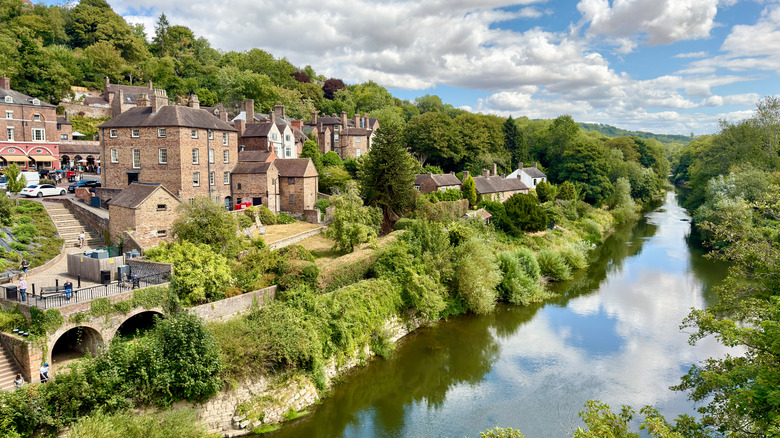
Britain's Industrial Revolution was born in an unassuming woodland village sandwiched between England's bustling city of Birmingham and the eastern edge of the Welsh border. Ironbridge, a picturesque tangle of Georgian and Victorian architecture settled in a striking gorge on the River Severn, is the renowned "Birthplace of the Industrial Revolution." The village is nestled among a constellation of river valley locales comprising the UNESCO World Heritage Site of Ironbridge Gorge. Together with its fellow landmarks, Ironbridge brings 19th-century England to life with its Victorian streets and fascinating museums chronicling the Age of Industry.
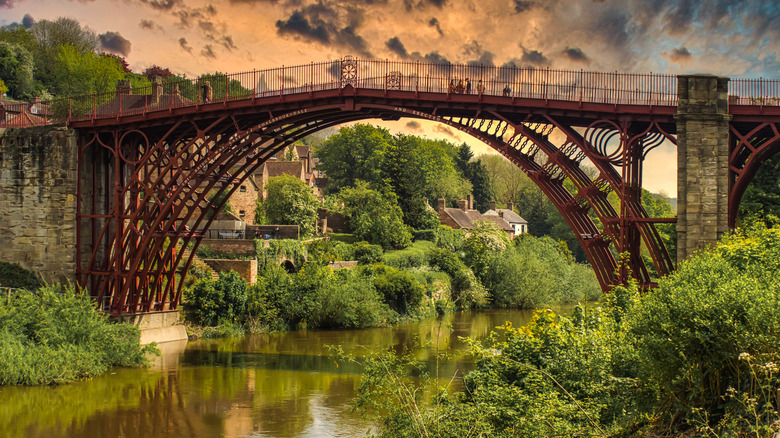
Ironbridge sits in the pastoral Midlands county of Shropshire, which is cleaved by the U.K.'s longest river, the Severn. It's famously home to the world's first cast-iron bridge, the eponymous, 378-ton Iron Bridge. The iconic structure appeared above the vast chasm of Ironbridge Gorge (also called Severn Gorge) between 1777 and 1779. By that time, the area had been a hotbed of iron casting for almost 80 years. In fact, it was the first place in the world to produce everything from iron wheels to steam locomotives, owing largely to the smelter Abraham Darby I, inventor of the coke-fired blast furnace. Abraham Darby III, the elder's grandson, was able to build the monumental Iron Bridge thanks to his grandfather's innovative smelting methods.
Today, Ironbridge is a bucolic destination dotted with galleries, shops, and waterside eateries strung along the riverfront Ironbridge Wharfage, a long stretch of road built in the 1780s. Next to the bridge, breezy nature trails invite cyclists and walkers to explore the ethereal Ironbridge Gorge, while lovely walks like the Tile Trail and Severn Valley Way connect Ironbridge to nearby towns once integral to the flourishing ironworks industry. The Wharfage is also a prime spot to take stunning snaps of the Iron Bridge.
Marvel at striking Ironbridge Gorge and the iconic Iron Bridge
Ironbridge Gorge is a breathtaking work of Mother Nature. The enormous fissure was hollowed into the earth during the Ice Age, when water trapped beneath a melting glacier created a river that sliced deep into the landscape. The formation of the gorge, a sheer rise that goes from 131 feet at the river bank to nearly 500 feet at its peak, exposed an abundance of coal, limestone, and iron ore, a geological goldmine ripe for iron smelting.
Scale the 109 hard-won steps up to the 1830s hilltop fixture of St. Luke's Church for sweeping views of the gorge that also take in the iconic Iron Bridge. An emblem of the Industrial Revolution, the Iron Bridge gave the hillside village its name, and it stands at the heart of one of UNESCO's outstanding travel destinations. Spanning close to 100 feet, the bridge was built to link the bustling industrial and coal mining town of Broseley to Coalbrookdale, the place where Abraham Darby I pioneered the groundbreaking technique of smelting iron with coke instead of charcoal. The pedestrianized bridge, which is free to cross and best traversed in the daytime, is also a wonderful place to revel in gorge views.
Iron Bridge overlooks Ironbridge Wharfage. Among its shops and eateries, the meandering street boasts historic Victorian buildings like Iron Bridge House, an imposing brick edifice and former grocer's built in the 1830s, and Severn Wharf Building, an homage to Gothic architecture built between 1838 and 1847. The latter building houses the Museum of the Gorge, which traces the area's industrial rise. Unfortunately, at the time of this writing, the museum is closed pending conservation works by the National Trust, which recently took over care of the Ironbridge Gorge Museums.
Immerse in Victorian and industrial heritage at fascinating museums
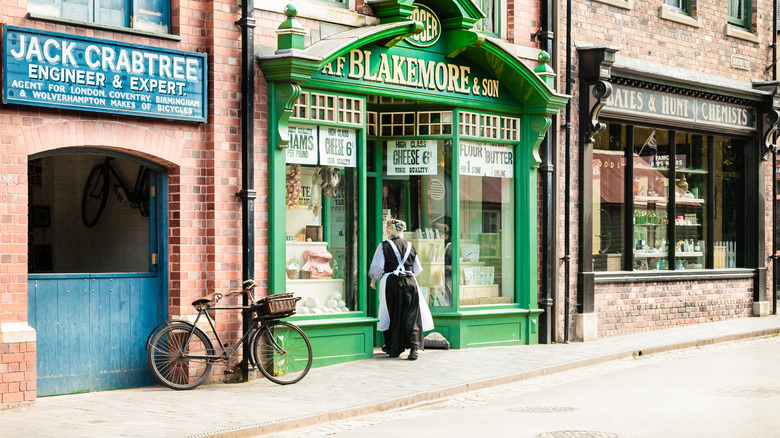
Ten museums reside within the Ironbridge Gorge UNESCO-designated site. Unlike the museums in underrated, artsy Manchester, the museums here largely showcase the region's rich Victorian and industrial heritage. One of the best museums, according to a 4.6-star Google rating, is Blists Hill Victorian Town. A sprawling, open-air replica of a 19th-century Shropshire town, it recreates life in the 19th century with shops, interactive exhibits, and period-dressed actors "living" their Victorian life. A Google reviewer who's visited several times noted that it's a great day out for families: "The attention to detail is incredible, and it gives both adults and children a real sense of what life was like during Victorian times."
A stately brick Victorian building from 1874 houses Jackfield Tile Museum. A design lover's dream, the museum's abundant collection of decorative tiles, friezes, and replicas of old-time interiors like an Edwardian metro station resides side-by-side with pieces by famous British designer William Morris and surrealist master Salvador Dalí. The museum, which is housed inside the world's oldest surviving specialized tile factory, has an impressive 4.5-star Google rating.
Boasting a 4.6-star Google rating, Coalbrookdale Museum of Iron is dedicated to the heritage of the iron industry. Along with fine castings and a duo of noteworthy Victorian sculptures by John Bell, the museum celebrates Abraham Darby, housing his pioneering, water-powered blast furnace, "Old Furnace." Online reviews appreciate the onsite café and free museum tour, and many are moved by Darby's legacy: "We also walked up the hill to Abraham Darby's grave, overgrown but what a man," stated a Google review. To get to Ironbridge, the closest airport is an hour away by car in the vibrant foodie gem Birmingham.