
Hidden In The Outer Banks Is North Carolina's Botanical Garden That Could Pass For The English Countryside
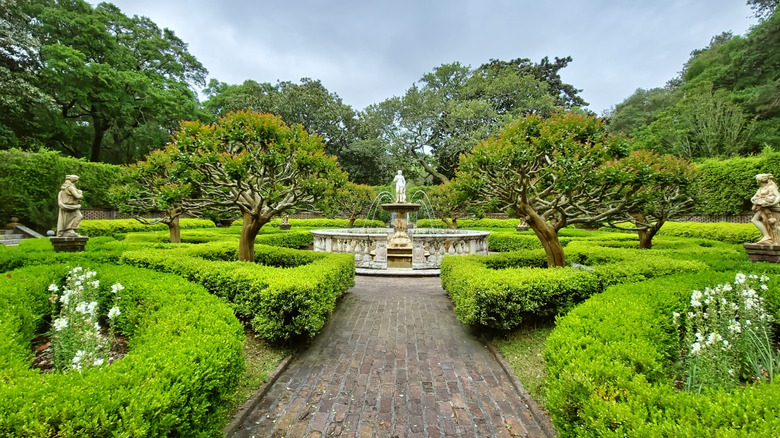
The Outer Banks usually brings to mind miles of Atlantic coastline, windswept dunes, and picturesque villages, but this trending American destination is also steeped in history. One such location tucked away on Roanoke Island is the Elizabethan Gardens. Located within the grounds of the Fort Raleigh National Historic Site, which commemorates the people, history, and culture of the site from pre-colonial to modern times, the gardens offer visitors a quiet escape. Formal flower beds, fountains, classic statues, and shaded pathways offer a relaxed setting, with most visitors spending one to two hours here. For frequent visitors, the garden's flowering plant life offers something different season-by-season, offering repeat guests a new experience.
The garden's expansive 10 acres take inspiration from the elaborate landscapes of Elizabethan England. Brick paths wind through carefully arranged flower beds and perfectly clipped hedges, offering quiet corners to pause and admire the impressive landscaping and plant collections. The centerpiece of the grounds is the Sunken Garden, which draws visitors to the Italian-Renaissance fountain in the center, surrounded by symmetrical design. Clipped dwarf yaupon structures the 32 parterres, with statues of Apollo, Diana, Venus, and Jupiter anchoring each identical quadrant. It feels more like being transported to an English estate than a coastal attraction in North Carolina.
The history of the Elizabethan Gardens dates back to 1950, when community members began an initiative to create a garden commemorating the Roanoke colonists. In 1951, the Garden Club of North Carolina adopted the proposal, working with notable landscape artists Umberto Innocenti and Richard Webel to develop the 16th-century Elizabethan design. Philanthropist John Hay Whitney donated the historic Italian statuary and fountain, resulting in the original 2-acre concept growing into the 10-acre project we know today. The gardens began construction in 1953 and opened in 1960, offering visitors a living tribute to the region's colonial history.
What not to miss at The Elizabethan Gardens
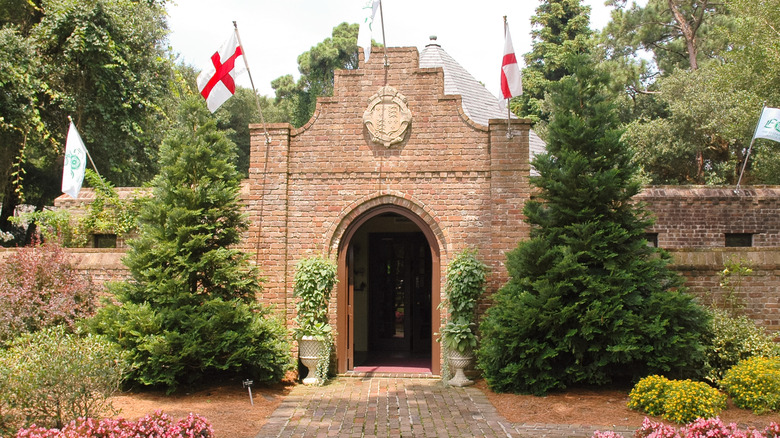
Over 500 species of plants invite casual and serious plant lovers to explore. In just the Great Lawn alone, one can see over 85 varieties of camellia and a live oak dating back to when the first colonists arrived in 1585. The Queen's Rose Garden is a notable attraction, and this cloistered rose garden includes a piece of royal history. Here you'll find a rose sent by Queen Elizabeth II in 1976 from the royal rose garden at Windsor Castle in the collection of red, orange, and pink-hued roses. Additional plant collections of interest include historical herbs, hydrangeas, and native coastal species.
Beyond the plants, gates, fountains, and statues offer visitors plenty of manmade features to admire. Between the Queen's Rose Garden and the Great Lawn, you'll find a nine-foot bronze statue of Queen Elizabeth I. A 500-year-old sundial calls the rose garden home, and the cherub-adorned Lion Couchant Birdbath is a perfect place for birdwatching with its surrounding marble benches. If you're building a nature-focused itinerary, the nearby Alligator River National Wildlife Refuge swaps flower beds and fountains for wetlands and wildlife.
For travelers looking to add something unexpected to a coastal getaway, the Elizabethan Gardens offers a change of scenery. Visiting families can spend time at the Discovery Cottage, a dedicated children's play area. The learning opportunities also extend to all ages, with one Google reviewer noting, "There is a small section dedicated as a museum for the history of the garden, but there are also plaques and signs throughout identifying statues, plants, and some of the history." The gardens make an easy addition to a drive along the scenic North Carolina Highway 12, offering contrast to the beaches and small coastal communities that are the usual draw along the route.