
This Midwestern State Has The Top-Ranked Quality Roads In The US
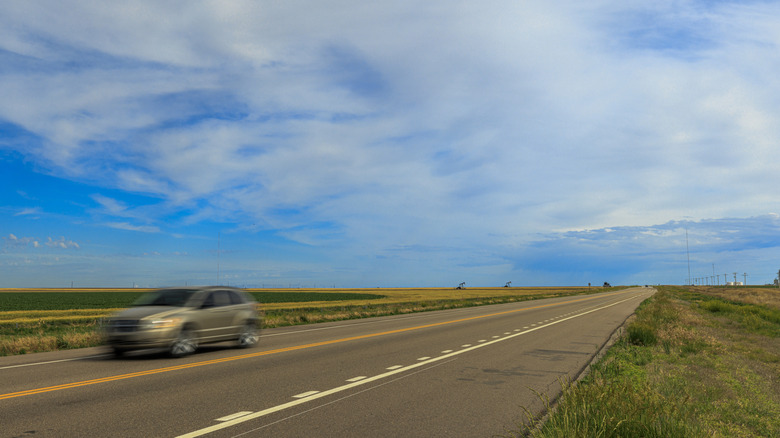
When planning a road trip, you might scout scenic overlooks to pull over for and boring stretches to avoid. But there's another factor that can add major bumps (quite literally) to the journey: the road itself. When you're constantly swerving around potholes or wincing at rough patches of pavement, a scenic drive might lose some of its charm. For drivers in Kansas, there's a good chance of encountering fewer of those road-surface troubles — a U.S. News & World Report study ranked it first among all 50 states for road quality. For travelers exploring the Sunflower State by car, that ranking suggests you can spend less time dealing with potential road hazards and more time watching the prairie roll past or stopping at roadside attractions and rural towns.
To compare states based on road quality, U.S. News & World Report used data from the Department of Transportation (DOT) Highway Statistics Series on the conditions of roads across the country. The states were ranked based on which had the lowest percentage of roads in poor condition — the DOT considers factors like rutting, faulting, and cracks as measures of poor road pavement. The results put Kansas in first, with just 3.3% of its roads classified as being in poor condition, compared with a national average of 18.9%, as U.S. News data analyst Evan Comen broke down to WIBW. The ranking is a broad, statewide measure; not every highway or country road might be smooth, but it offers travelers a data-backed indication that poor pavement may be less of a concern in Kansas, whether you cross the state en route to further points west or plan a road trip through Kansas to see its secret canyons and historic towns.
Why the roads are so good in Kansas
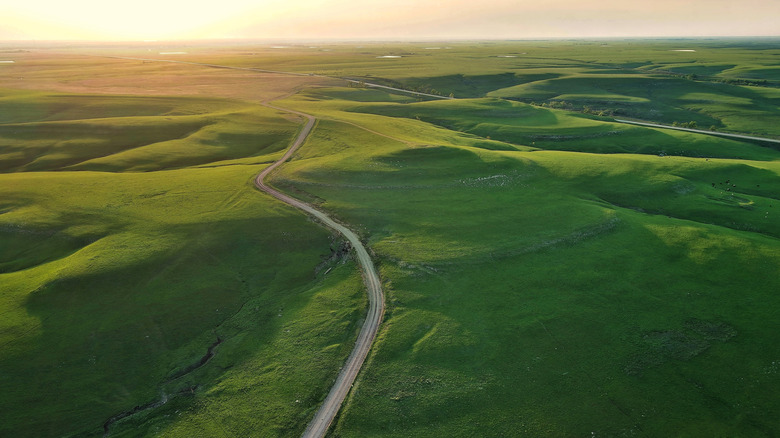
A few factors might contribute to Kansas's strong showing for its top-quality roads. In 2020, for example, the Kansas Department of Transportation (KDOT) launched the Eisenhower Legacy Transportation program, a 10-year investment plan focused on preserving and modernizing transportation across the state. Some of the specific projects funded by the program include pavement resurfacing, patching, and mill-and-overlay work. The program and road improvements across the state appear to be paying off — Transportation for America found that Kansas reduced the share of its major roads in poor condition by 9% between 2018 and 2024.
A smooth road network doesn't necessarily guarantee an uninterrupted drive. WIBW noted that drivers in Topeka, for example, face lots of ongoing construction. One big hurdle for drivers passing through the city is reconstruction of the I-70 Polk-Quincy Viaduct, a section of the interstate that runs through downtown. Although I-70 partially reopened in October 2026, traffic is sharing a single lane in a head-to-head configuration on the new eastbound structure while work continues. According to the Kansas Department of Transportation, construction is supposed to continue into 2027, with a longer detour following I-470. But as analyst Comen told WIBW, "I think a lot of the construction that maybe Kansas residents are seeing is maybe indicative of some of the improvements [to road conditions]."
If you're moved by Kansas's smooth roads to consider a road trip through the state, one to check out is the Flint Hills National Scenic Byway, where "ancient Kansas" thrives. The byway runs for around 47 miles from Council Grove to Cassoday, winding through small communities and prairies. Another detour the Kansas roads can take you on is Little Jerusalem Badlands State Park, an uncrowded alternative to Badlands National Park. The park sits about four hours by car from Wichita, making it a natural road-trip destination for travelers coming from the bigger hub.