
Forget The Bahamas, This Asian Island Has Gorgeous Sandy Beaches, A Vibrant Culture, And Crystal-Clear Waters
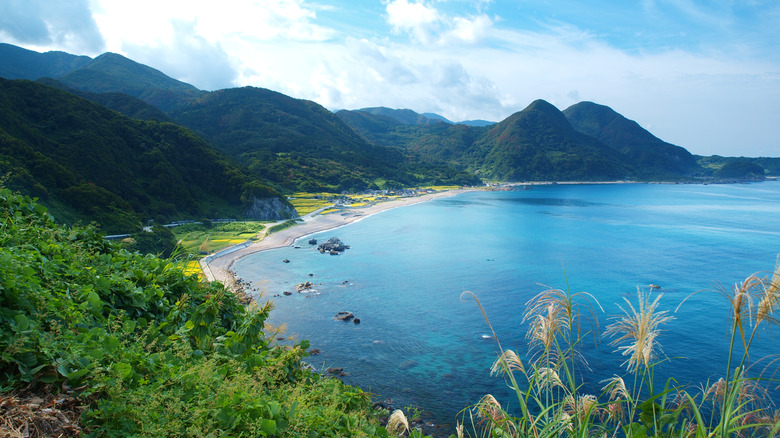
While a trip to the Bahamas undoubtedly includes turquoise seas, soft sands, and Caribbean vibes, those seeking similar views should set their sights on a Japanese island off the eastern coast of Niigata. This large island in the Sea of Japan has a very different cultural makeup than that of the Bahamas, as it has been inhabited for 10,000 years. Although Sado is still unknown to most foreign travelers, local tourists visit to experience its rich traditions, vibrant festivals, and artistic performances, as well as its stunning beaches.
Sado has a fascinating history. It was primarily used as a place of exile, housing nobility, political figures, and artists from around the eighth century until medieval times: most notably, Emperor Juntoku, Buddhist monk Nichiren Shonin, and Noh master Zeami Motokiyo. It also has a rich history of gold and silver mining, which caused the island to rapidly grow in the 17th century. Today, visitors can explore Sado's connection to the metals and learn more about its commercial beginnings by visiting the Sado Gold Mines, a UNESCO World Heritage Site, or the Nishimikawa Gold Park.
Sado has about 174 miles of coastline, boasting turquoise waters with their own color: "Japan Sea Blue." The entire island is considered a Japanese Geopark, and paddlers can embark on an exploration of Sado's protected Ogi Peninsula. Guides take you around the rocky caves, and the crystal-clear waters display the island's volcanic rock formations underneath the surface. To get a closer look, Sado is also a popular scuba diving location, especially from August through September, when the warm Tsushima Current passes through and visibility is at its peak to view fish like the bulbous Asian sheepshead wrasse. Summer is also packed with cultural events, showcasing the island's rich connection to performing arts.
Sado's vibrant cultural experiences
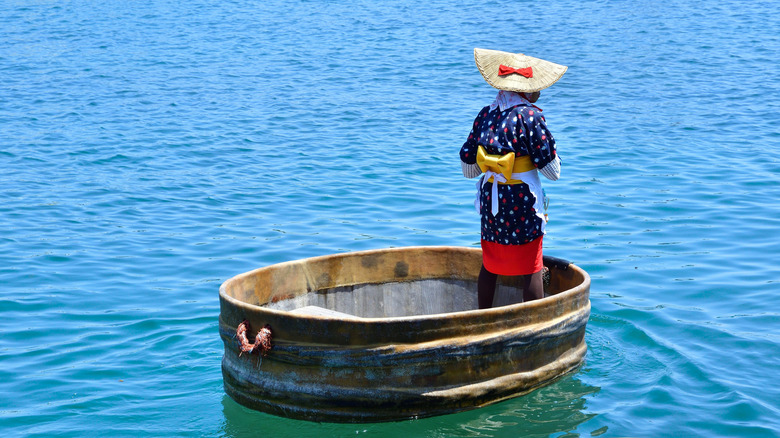
Although Sado is off the foreign tourist radar, local tourism thrives on the island. One popular activity is a boat ride in a Tarai-bune, a miso barrel cut in half that's often used for washing. Originally, these boats were used for fishing, but today, Sado is the only place in Japan where women paddle tourists in these special vessels around the island's blue waters. Studio Ghibli fans might even recognize them from the iconic 2001 animated film, "Spirited Away." Visitors also come to see Taiko drumming, as the esteemed Kodo Group hails from Sado. Visit the Sado Island Taiko Center (Tatakokan) to learn more about the huge wooden drums (note that the center is closed for much of winter).
Sado also has a long history with Noh, a theatrical art form blending music, dance, and drama. Popularized by Zeami Motokiyo, who was banished to Sado in 1434, Noh uses masks and minimal movements filled with expression to tell poetic stories of gods, warriors, women, and supernatural figures. On the island, there are more than 30 stages where Noh is performed between April and October. Nighttime showings by firelight (called Takigi Noh) are hauntingly beautiful, especially during Noh Month in June.
Throughout the year, Sado has many festivals to celebrate agriculture or local shrines, but late summer is densely packed with cultural events and experiences. Kicking off the summer festival season is the Kouzan Festival, celebrating the island's gold-mining history. The Akadomari Port Festival showcases floating sumo matches, with fireworks lighting up the night sky. In August, the Kodo taiko group hosts the Earth Celebration. Drumming fills the air from local and guest performers as the music festival erupts around the town of Ogi.
Gorgeous sandy beaches on Sado
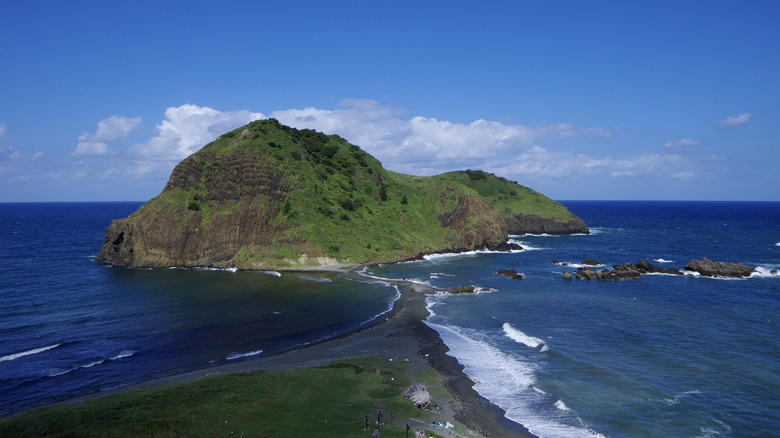
Probably the most famous sandy shore on Sado is Futatsugame Beach on the northern tip of the island. At low tide, a sandbar emerges, connecting Sado with the rocky island of Futatsugame. Lush greenery covers the island surrounded by clear blue waters, which is said to resemble two turtles. For a more remote experience, Sobama Beach on Southwest Sado offers wide sandy shores. Here, a campground is available for those who want to truly disconnect. For something a little closer to modern comforts, Johagama Beach is next to a resort (which has enticing hot springs baths). With white sandy shores, this beach is ideal for swimming, as an offshore concrete tetrapod keeps the larger waves at bay.
When planning your visit, the best time to visit Japan depends on the season and cultural events you want to experience. While the Bahamas boasts a tropical climate year-round, the weather on this Japanese island varies greatly, with four distinct seasons that each has its own benefits. Those who want to enjoy Sado's white sands and crystalline waters should plan their trip between May and August, when the sun is shining, temperatures reach highs of about 86 degrees Fahrenheit, when outdoor activities like scuba diving and kayaking are popular.
Reaching Sado is pretty straightforward when coming from Niigata City, one of Japan's gorgeous and affordable destinations. From Niigata's Shin Nihonkai Ferry Terminal, a roughly two-hour ferry runs to Sado's main Kisen Ryotsu Port Terminal on the island's east side. A three-hour ferry from the smaller town of Naoetsu connects to the southern tip of the island via Ogi Port, but this route closes during winter. Although you can't use your affordable Japan Rail pass to reach Sado's shores, Niigata City is just a three-hour train ride from Tokyo, with a few changes. To easily enjoy all of Sado's natural and cultural splendors, a rental car or guided tour is recommended.