
The Best Places To Stay In Edinburgh

We may receive a commission on purchases made from links.
Scotland is having a strong year when it comes to tourism. An influx of direct flights from the United States, an ever-increasing Outlander following, the Tartan Army's frolics in Boston, and heatwaves in Europe have all helped push more visitors than ever to its bonnie shores, and the glittering capital, Edinburgh, has been winning over hearts.
From its impossibly beautiful medieval Old Town, spiraling down from the castle, to the ever-cooler streets of Leith, it's a multifaceted city, rich in history, culture, art and, well, whisky, of course. For all its offerings, it's a surprisingly compact place, however. You could explore one of the world's most walkable cities comfortably in a day and even squeeze in time for a pub or three. With a city that small, you'd think it wouldn't matter too much where you stayed, but your home base is more important than you think.
To help plan your visit to Auld Reekie, we've broken the city down into nine excellent areas to home in on, based on who they're best for and what's nearby, researching local blogs and attractions. Whether it's your first visit or a repeat trip to see what you missed before, one of these brilliant neighborhoods will see you well on your way.
Old Town and the Royal Mile: Best for first-time visitors
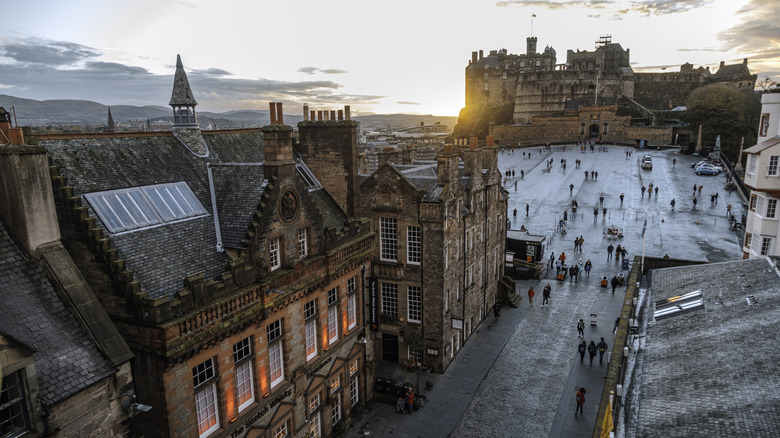
By far the most recognizable slice of Edinburgh, the Old Town, strung along the Royal Mile, is the best place to base yourself as a first-time visitor. Edinburgh Castle, serving as the focal point of the city, sits atop a craggy extinct volcano. From there, the Royal Mile snakes down the hill, with dozens of narrow lanes — called "closes" in Scotland. The Mile itself is a hive of energy, with countless pubs, museums, and, in the summer, street performers, while the closes each bear their own secrets. It's a history-lover's dream, and for everyone else, it's just beautiful.
Basing yourself here places you in the throng of the action. You'll wake to the sound of pipers in the street, and spend your days exploring the mysterious closes. The Castle itself is the primary draw and worth splurging on a tour, although it pays to know what you should book in advance for a weekend in Edinburgh. Meanwhile, Mary King's Close is an immersive experience delving into Edinburgh's dark history during the plague. Pubs will be a running theme in this article, but the Mile has multiple iconic ones, too. The World's End is a definite highlight. It's named for the old city wall boundary, once considered the edge of the known world. It's just one of many historic pubs found along the stunning road.
As for where to stay, you can check out The Witchery. Set within the gates of Edinburgh Castle and built in 1595, the hotel and its renowned restaurant are dripping with Scottish history. It's pricey, but unforgettable. There may be one too many gift shops and a few too many people, but that doesn't detract from Old Town's sheer beauty.
New Town: Best for shopping and luxury
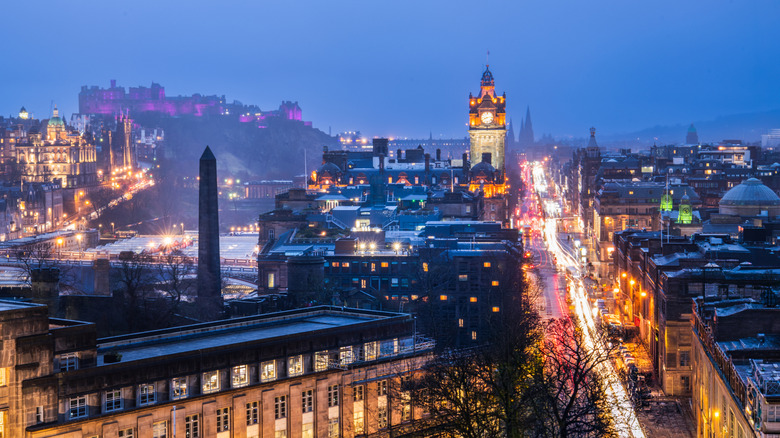
New is a matter of perspective when Edinburgh is concerned. The city's New Town area is actually over two hundred years old — it was just new compared to the Old Town. And it is stunning. Sitting in the shadow of the castle, across the picturesque Princes Street Gardens, New Town served as an intellectual epicenter of the city for years. Its city planning, with Georgian townhouses lining broad avenues, was a pioneering undertaking in European urban planning and still shines today.
Modern New Town makes a strong case for almost any type of traveler. Its hotels are larger, and often more luxurious, than the adapted medieval rooms on the Royal Mile; it's easier to get around thanks to direct access to trams, Waverley Station and buses; and its selection of restaurants, bars and shopping is among the best in the city. Plus, it's home to Johnnie Walker Princes Street, arguably one of the best introductions to whisky for visitors. For art lovers, it's home to the Scottish National Gallery, the Scottish National Portrait Gallery, both free, and the Scott Monument, a towering Victorian memorial to novelist Sir Walter Scott. It's even close to one of the city's best sunset spots, Calton Hill. Technically, it's not part of New Town, but it's right nearby.
For accommodation, The Balmoral is one of Scotland's best-known luxury hotels, boasting a world-class whisky bar and a Michelin Guide-recommended restaurant among other luxury touches; the Caledonian is a stunner; and The George's Georgian architecture helps make it a dream stay. If the crowds of Old Town are too much, come here. You're still close, but it's a lot calmer. And you can get your shopping on in the area's countless boutiques, malls, and high-end fashion stores.
Leith: Best for foodies and nightlife
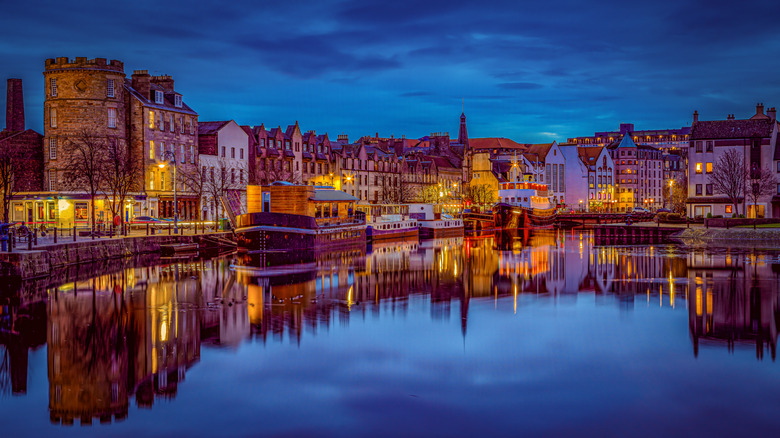
Not so long ago, Leith would never have featured on a list like this. The drastic decline of the Scottish shipbuilding industry crippled the area economically, and for many years it was associated with severe poverty, heroin addiction, and HIV. The movie Trainspotting paints a harrowing picture of life there in the 1990s. Today, however, it's a different story. Gentrification has taken hold, and you're now more likely to stumble across a Michelin-starred restaurant than encounter trouble.
Leith does take visitors a little farther from the city center. It's not a huge deal, but it'll require a half-hour walk or a tram ride back to New Town and the more traditional attractions. But for those returning to the city, Leith is an opportunity to dive into Edinburgh's rapidly flourishing culinary scene, as well as its nightlife. Restaurants like Heron (the writer's favorite on the planet) and The Kitchin, both near the water, set a high bar, earning Michelin stars for their excellent command of Scottish produce, while nearby breweries like Moonwake and Campervan add to the independent spirit the area is becoming known for. Leith Walk, the long road leading from New Town, is lined with bakeries, pubs, restaurants, bookshops, and bottle shops, all vying for your attention. The addition of the Port of Leith distillery, the world's first vertical whisky distillery, is another high point in Leith's development.
Accommodation is still catching up with the rest of the city, but there are signs of more options emerging. New spots like 3 John's Place, a stunning townhouse that's been converted into a 16-room self-check-in hotel, make an excellent base, while Fingal, a luxury hotel set on a ship in the harbor, is an experience in itself.
Stockbridge: Best for couples
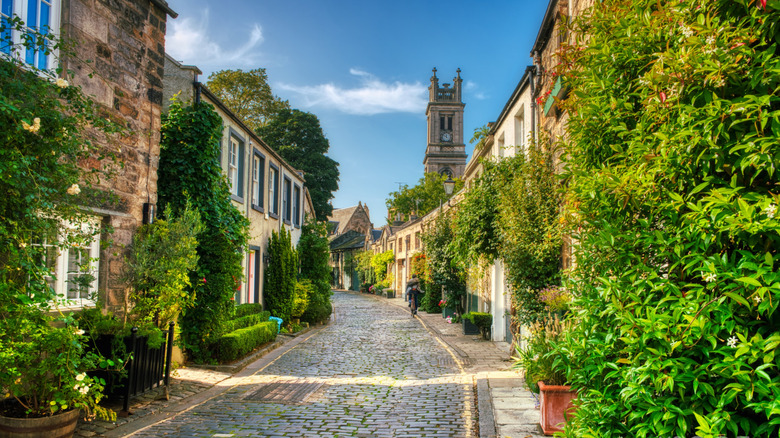
Stockbridge may be one of the most overlooked areas of Edinburgh for tourists. Most only stumble upon its charming streets after exploring Dean Village, a stunning historic milling village on the Water of Leith that was absorbed by the city's growth. It's distinct from the rest of Edinburgh in both appearance and atmosphere, but often winds up being a favorite area for visitors, especially after the traditional tourist draws have been ticked off.
Circus Lane, one of the city's prettiest lanes, is Instagram-famous and representative of the area's architectural beauty. The area is also buzzing with some of Edinburgh's best coffee shops, independent boutiques, and bookshops. The Stockbridge Market is one of the biggest draws, running every Sunday from 10 a.m. to 4 p.m. and showcasing a rotating list of local vendors selling everything from local cheese and jams to small-batch kombuchas. Meanwhile, the Royal Botanic Garden Edinburgh and Inverleith Park are well worth a wander, not least for the views over the city. Stockbridge is a wonderful place for a relaxed stay, perfect for a couple fantasizing about actually living in Edinburgh. But it's still only a short walk to New Town.
Keeping in step with its atmosphere, you won't find many big-name hotels in Stockbridge. Instead, you'll be limited to a small number of boutique hotels, guesthouses, or self-catering apartments. The Raeburn, with only 10 rooms, is an excellent choice, set in a traditional Georgian building, while the slightly larger Nira Caledonia is set in a similar and beautiful townhouse. The comparative lack of options is worth considering if you're set on staying here, as rooms can disappear quickly, especially in August when Edinburgh's festivals are in full swing. It's not called Europe's festival capital for nothing.
Grassmarket: Best for pubs and atmosphere
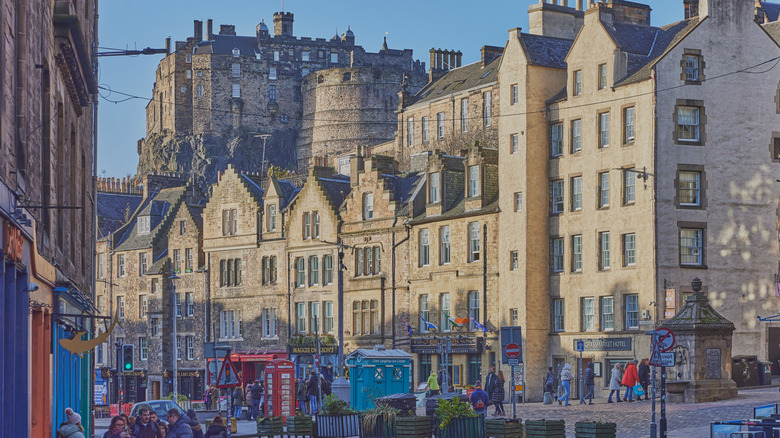
Grassmarket pulls us back into the older areas of the city. It could technically have been included in the first entry for Old Town. It's older than many buildings on the Royal Mile, but its atmosphere and unique characteristics make it a neighborhood-within-a-neighborhood worth including.
The name itself offers a clue to the area's historic role in the city. It operated as a market square from the medieval period, primarily for livestock and grain, but also served a darker purpose in the 17th and 18th centuries as a public execution site.
Today, however, it's a thriving assortment of pubs, markets, independent shops, and vintage stores. There's a good chance you've seen its most famous feature, Victoria Street, on social media. The curving, sloping road is often touted as J.K. Rowling's inspiration for Diagon Alley in the Harry Potter series, although Rowling has denied it. It's also home to famous pubs, including the White Hart Inn, one of the oldest, with roots dating back to 1516, and The Last Drop, an atmospheric pub where legend says condemned prisoners had their last dram of whisky before being hanged nearby.
For those hunting historic drinking holes, Scotland's oldest pub is another Edinburgh gem worth a visit over in Duddingston. It takes you slightly off the hyper-touristy Royal Mile but keeps you within a five-minute walk, while a 10-minute saunter around the foot of Castle Rock takes you toward New Town, all while putting some of the best drinking spots nearby. There are a few solid hotels in and around the square, including Apex Grassmarket Hotel and Grassmarket Hotel, and while they may not be as fancy as options elsewhere, you won't be complaining when you wander out from your room to the excitement and revelry outside.
West End and Haymarket: Best for convenience
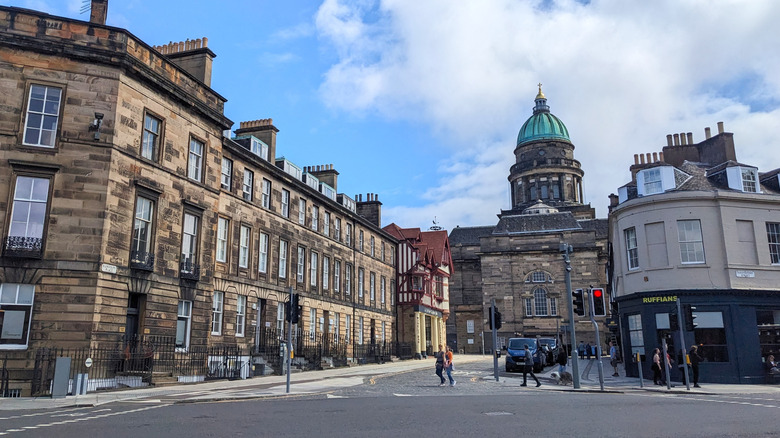
The West End and Haymarket areas share a lot of similarities with New Town, connecting to the western edge of Princes Street, the main thoroughfare. With its leafy streets, stunning architecture, and more residential atmosphere, it's quieter but still puts you within striking distance of almost all the city's main attractions. It also makes a strong case for those using Edinburgh as a base to explore the rest of Scotland.
The main reason for its convenience is Haymarket Station. Once the terminus for the Glasgow-to-Edinburgh railway line, Waverley Station, slotted between the Old and New Towns, later took over as the city's main station. But Haymarket still operates as a station on the line and is far easier to navigate, especially with larger luggage. If you've explored Edinburgh and are tackling Glasgow, the West Coast or Stirling, you're in a prime spot to grab the train for the day, then retreat to a quiet bed and recuperate before starting the next morning again. It's also one of the easiest spots to get to Edinburgh Airport from. That's not to say there's nothing to do. It has its fair share of stellar pubs and restaurants, and it's home to major cultural and performing arts hubs like Usher Hall, Royal Lyceum Theatre, and Traverse Theatre.
Its rail links mean there are plenty of solid hotels right by the station, like the Leonardo Hotel Haymarket or voco Edinburgh, while more upscale boutique options like The Hoxton and The Roseate offer some historic charm thanks to their 19th-century Georgian bones. You'll also find familiar names like Hampton by Hilton there, which opens up the possibility of free stays with points if you're into hotel and airline loyalty programs.
Bruntsfield and Morningside: Best for families
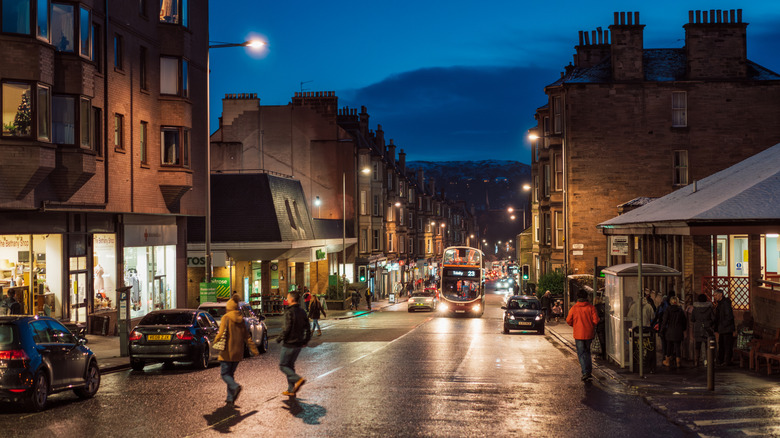
Bruntsfield and Morningside offer a quieter side of Edinburgh that many visitors never reach. It's a shame more tourists don't venture this far, although the lack of crowds is probably a big part of what makes these neighborhoods so appealing. Located south of The Meadows, a large park that was once a loch before being gradually drained, the two neighborhoods are wonderfully leafy residential districts popular with young professionals and families who want more space but aren't ready to pull away from the city quite yet.
It's slightly farther out from the Old Town, taking around 35 minutes to walk from Bruntsfield and a little more from Morningside, but if you're traveling with kids, you'll be thrilled at the amount of extra green space you can find to let them blow off steam. The Meadows, for example, is a huge hangout spot in the summer, often packed with locals and students enjoying barbecues on the grass. The neighborhoods themselves are a hive of excellent shopping and boast a brilliant, ever-growing selection of restaurants, pubs and bars, while a few unique historic spots like the Union Canal and Holy Corner can fill a relaxed morning if you don't fancy heading into town.
Similar to Stockbridge, hotels aren't in huge supply here, as these are primarily residential districts. But you'll find a few excellent boutique spots like the Black Ivy Hotel or Albyn Townhouse. One notable exception is JA The Bruntsfield, a 4-star hotel with 74 rooms and a solid restaurant. It's by no means a rule, but you'll find the energy in Bruntsfield to be slightly more youthful, owing to its ties to student life, while Morningside tends to attract more families and older residents craving a village feel within the city.
Southside and Newington: Best for budget travelers
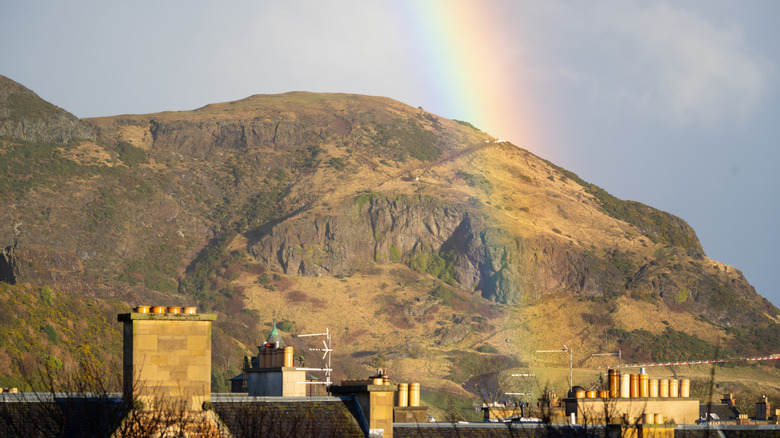
Southside and Newington aren't at the top of the list for those traveling with a sizable budget. But for those wanting to experience the Scottish capital while pinching pennies a little, they offer a great opportunity. Brilliantly placed near the Old Town but benefiting from being primarily student-centric areas, Southside and Newington can offer lower accommodation and food prices while working well as an exploration home base.
A nice perk of the area is its location right under Arthur's Seat, a stunning craggy hill and extinct volcano. Further south, Scotland's scenic castle, Craigmillar Castle, with a well-preserved medieval tower, is another worthwhile detour, best visited first thing in the morning for expansive views over Edinburgh all the way to the coast. That proximity means an early-morning wake-up isn't quite as rough as it would be in Leith or Stockbridge and may not require public transport to speed things up. It's also close to the previously mentioned Meadows, and the University of Edinburgh itself, which is worth exploring, too. It's not bursting with attractions itself but is only a few minutes' walk from the Royal Mile and all its draws. One exception is Surgeons' Hall Museums, a grisly collection of surgical pathology exhibits that people either love or leave feeling nauseated.
Again, accommodations are limited here, and if you're sticking to a budget, that's not a bad thing. Hostels like Argyle Backpackers can be among the cheaper stays in the city, although rates vary by date. Considering pints tend to be cheaper in the area, too, that's a big win.
Portobello: Best for the seaside
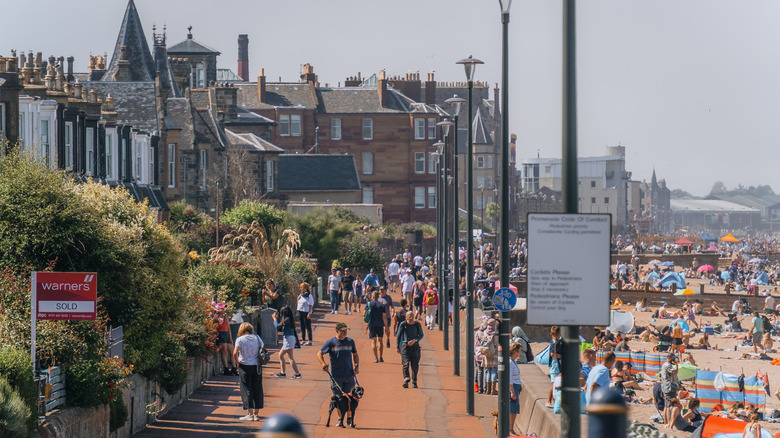
Portobello is a bit of an outlier on this list. It won't be for everyone, especially first-time visitors, but those who venture here might just fall in love. It's about three or four miles to the city, depending on where you're heading, and centers around a two-mile-long paved promenade on one of the country's prettiest beaches.
Staying here is all about the setting. Waking up to the Firth of Forth, wandering along the promenade, enjoying the over-a-century-old swimming pool and admiring its Victorian Turkish baths, then browsing an eclectic mix of independent shops might be enough to convince you not to leave. Where it falls short, again primarily for first-time visitors, is proximity to the bigger attractions. On any given day, you'll need to factor in a train, bus, or pricey taxi, then keep an eye on the clock if you want to get back after a late night. That's by no means a deal-breaker. A bus ride into town isn't much, but doing it every day might get tiresome, so keep that in mind. There's also the strong possibility of the weather being absolutely brutal the entire time you're there. Even in summer, Scotland's weather can shift, bringing lower temperatures and what feels like perpetual rain to the coast, turning what could be a wonderful seaside retreat into a lock-in.
Accommodations are equally scarce when it comes to traditional hotels. Most of the larger ones are found back from the water or farther along the coast toward Musselburgh. Instead, opt for one of the cute little guesthouses that dot the town, like Straven Guest House. If you're happy to head farther afield, about an hour from Edinburgh is the Scottish town of Leven with coastal vibes and a beach, across the Firth of Forth.