
Halfway Between Berlin And Hamburg Is A Medieval Town With River Walks, Seasonal Festivals, And Historic Charm
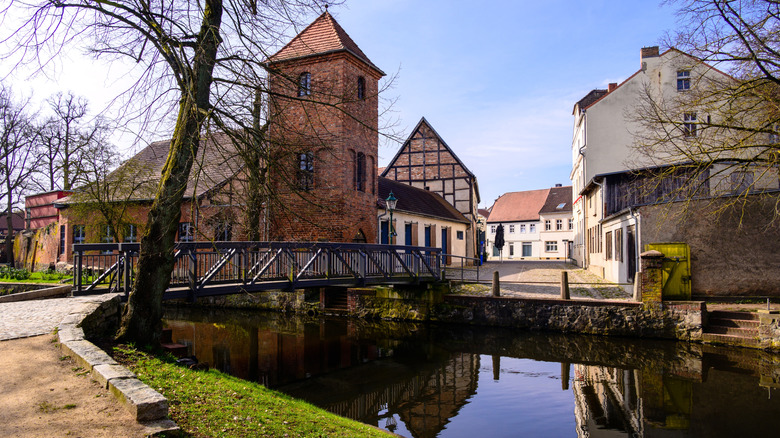
Berlin and Hamburg are two of northern Germany's biggest tourist destinations, packed with landmarks such as the Brandenburg Gate in the former and the Port of Hamburg in the latter. However, the area between them is dotted with smaller towns which are equally worth exploring. Perleberg, for instance, is a picturesque, historic town roughly 90 minutes by train from either city. According to the World Population Review, it has just under 12,000 residents.
Perleberg began to take shape around the early 12th century, when settlements grew around St. Nicholas and St. James, and it was established as a town in 1239. Its strategic position along the Stepenitz River granted it access to the Elbe River and the North Sea. It soon became part of the Hanseatic League, a powerful medieval trading confederation of towns and cities along the Baltic and North Seas, helping the town prosper.
Today, the Altstadt, or old town, has a market square known as Großer Markt, home to landmarks such as the Knaggenhaus at No. 4, a brick and timber townhouse built in the 1500s, and a medieval town hall partially renovated in the 19th century.
Exploring Perleberg along the Stepenitz River and into the countryside
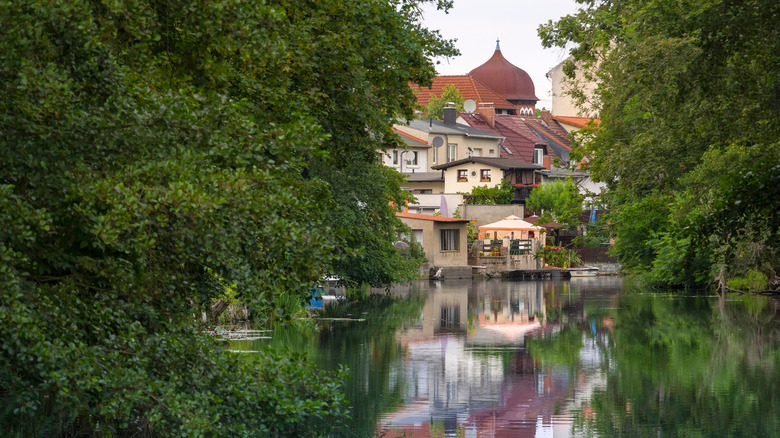
The Stepenitz River flows for about 53 miles from its source near Meyenburg, about 90 miles north of Berlin, to its confluence with the Elbe near Wittenberge, 105 miles southeast of Hamburg, the "Venice of the North." It passes through Perleberg along the way. While not fully navigable, the river is popular among watersport lovers, while its banks provide a scenic setting for several walking and cycling paths. For instance, hikers can follow a roughly 5.6-mile loop connecting Perleberg's historic center with Neue Mühle, a former mill now converted into a riverside restaurant. The trail is considered easy to medium and takes around two hours and 20 minutes. An easier option is the 4-mile loop that passes through the village of Lübzow, which takes approximately one hour and 40 minutes. Free parking is available near the trailhead.
The Hagen protected marshland, a stone's throw from downtown, marks the start and end points for the Perleberg Tour, a 26-mile cycle loop through countryside that passes the villages of Burghagen, Krampfer, Groß Pankow, Wolfshagen, Seddin, and Kreuzburg. Several cultural and historic attractions are along the way, including the former estate of a noble family in Groß Pankow; Wolfshagen's eponymous castle, an 18th-century palace that displays blue porcelain; and the Bronze Age burial site of King Seddin.
Tierpark Perleberg, which has been operating for more than 60 years, is a five-minute drive south of the town. Today it houses 650 or so animals and birds, including endangered species such as the northern bald ibis. It also has play areas, an education center, and a restaurant, and hosts events such as a Halloween party in October.
Seasonal festivals and regional food in Perleberg
Perleberg has several seasonal festivals. Roland Festival is the biggest, taking place in Großer Markt as summer draws to a close. The two-day event comprises live music, stage performances, market stalls, and a talent contest. Come the festive season, the town hosts its own Christmas market, the five-day Perleberg Weihnachtsmarkt. Stalls serve festive dishes such as sugar-coated nuts and juicy German sausages alongside steaming mugs of glühwein (mulled wine) spiced with cinnamon and cloves, perfect for warming up when temperatures dip below freezing. You could combine this with other spectacular German Christmas markets to get into the holiday spirit.
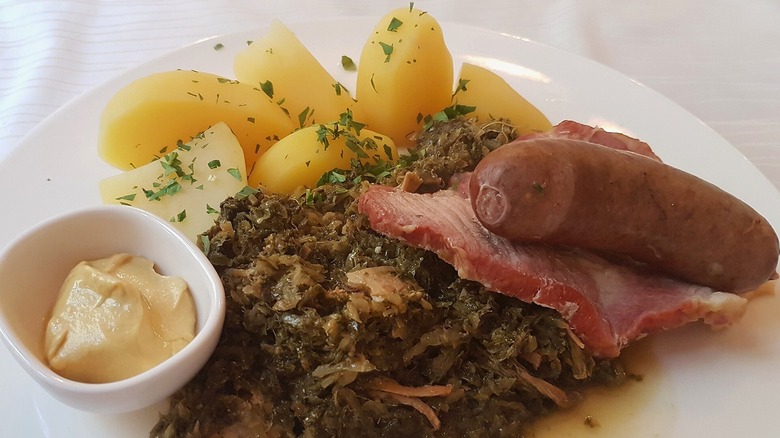
Food is another important part of Perleberg's identity. Hearty combinations of pork and roasted potatoes often share plates with knieperkohl, a traditional Prignitz specialty made from fermented cabbage varieties. Also known as knieper, the dish is particularly popular during the colder months, when cruciferous vegetables are in season, and gets its distinctive tangy flavor from the fermentation process. The dish even has its own celebration: Surn-Hansen-Markt. Typically held toward the end of winter, it brings together different versions of knieperkohl and features a competition to determine the best. However, you do not have to wait for the market to try it. The restaurant Neue Mühle, about 2.5 miles from Perleberg on the banks of the Stepenitz River, serves it along with a good selection of regional dishes. If you are still craving German flavors once you're back home, San Antonio is home to restaurants serving authentic German cuisine, right in the heart of Texas.