
Forget The Grand Canyon, Hike In This Scenic Western Escape With One Of The Largest Natural Bridges In The US
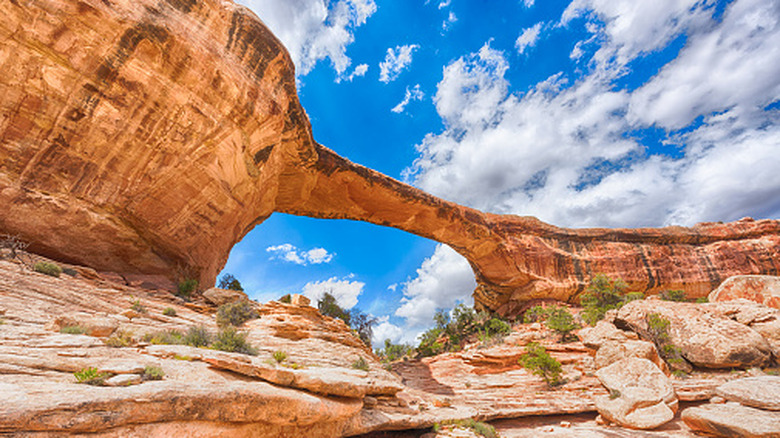
The Grand Canyon is justifiably ranked as one of the wonders of the natural world, but as worthy as its sights are of a once-in-a-lifetime pilgrimage, hiking the canyon can be a challenge. It can feel like the few trails leading down into the canyon are either remote and forbidding or popular and crowded. Where to turn for that just-right Goldilocks desert adventure, where the trails are easily accessible, yet safe, uncrowded, and brimming with views? Utah's under-the-radar Natural Bridges National Monument handily fits that bill, with a scenic drive that takes in astounding views and a choice between short scenic hikes and longer, more adventurous treks with plenty of pay off, without the Grand Canyon's grueling altitude gains and losses.
You may be familiar with the natural stone masterpieces of Arches National Park, great sandstone arcs that soar through the sky overhead, but what is the difference between an arch and a natural bridge? The naming convention follows the way in which the rock was formed, according to the Natural Arch and Bridge Society. Natural arches are formed when flowing water, wind erosion, and freeze-thaw cycles cause rock to crumble away. A natural bridge is a type of natural arch specifically formed by water erosion, spanning a body of water like a stream. There is something inherently pleasing to the human eye about these soaring spans, and the three specimens in the monument arching over the White Canyon offer unforgettable views from every angle.
Hiking in Natural Bridges National Monument
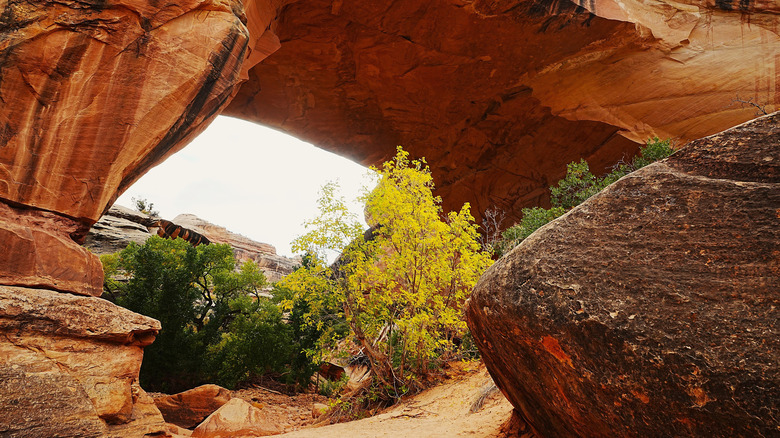
Hiking down to gaze up at the sky through these magnificent rock arches is well worth the effort. The largest bridge here, Sipapu, is one of the largest natural bridges in the US, second only to Rainbow Bridge, a stand-alone national monument near Lake Powell. The Hopi name translates as "place of emergence." At 268 feet across and 220 feet high, Sipapu is so tall and wide that it "would almost house the dome of the United States Capitol," according to the National Park Service. To fully appreciate its scale, take the short, steep hike down to the bottom and back. How steep? Several ladders and metal staircases are involved in descending 456 feet in 0.7 miles. Visitors describe the climb as more fun than scary.
The next bridge, Kachina, is named for the dancing figures depicted in nearby petroglyphs. The interesting hike to it is also 1.4 miles round-trip, but a bit less steep than the Sipapu trail, with creek crossings, pretty canyon views, and steps carved in rock. The easiest hike is the paved, 0.6-mile round-trip to stand under Owachomo (Hopi for rock mound), the last bridge. Although the smallest, it's also the most-photographed of the three. Step under it and look back at how dramatically it frames the sky, and you'll be snapping pics, too.
The connector trail along the river means you can combine two or three bridges into a half-day or full-day hike. The full Under the Natural Bridges Loop visits all three in 8.3 miles, with 980 feet of elevation gain. As one AllTrails hiker describes exploring the canyon trail, "It's like being in the Narrows at Zion NP." Alas, you cannot backcountry camp in the monument, but there is a dry campground nestled in the juniper forest near the Visitor Center.
How to Visit Natural Briges National Monument
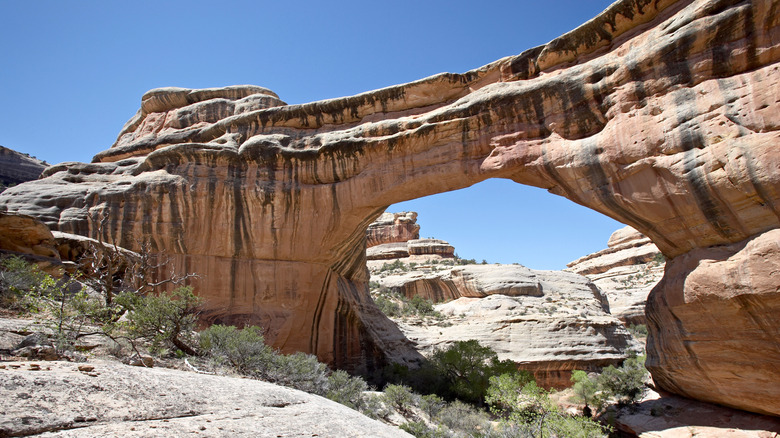
Tourists headed for the American Southwest on a road trip often focus on the abundance of scenic riches to be had in Arizona's Grand Canyon National Park and Monument Valley, or within Utah's "Mighty 5" National Parks: Zion, Arches, Capitol Reef, Bryce Canyon, and Canyonlands. But getting off the beaten path has its rewards. In addition to the many hikes in the monument, the 9-mile Natural Bridges Scenic Drive boasts multiple viewpoints that are easy to walk to for excellent vistas into the White Canyon, where the three bridges span the White River.
Compared to the Grand Canyon's 7-mile South Rim Drive, where parking can be a challenge, the Natural Bridges Scenic Drive is a breeze, and the viewpoints are easily accessible, with short, paved access trails to the bridge overlooks, making this a great destination for families with children in strollers or relatives with disabilities. "I went with my mom who has COPD and she absolutely loved sitting on the rim of the canyon a very short walk from the car," writes one Facebook user.
Your jumping-off point for visiting the monument is the unique, off-the-tourist-trail town of Blanding, 40 miles away, but consider making Natural Bridges part of a larger Southwest road trip, rather than a stand-alone destination, as it's over five hours from Salt Lake City International Airport (SLC).