
One Of The Bahamas' Most Scenic Boardwalks Cuts Through A Mangrove Forest Inside A National Park
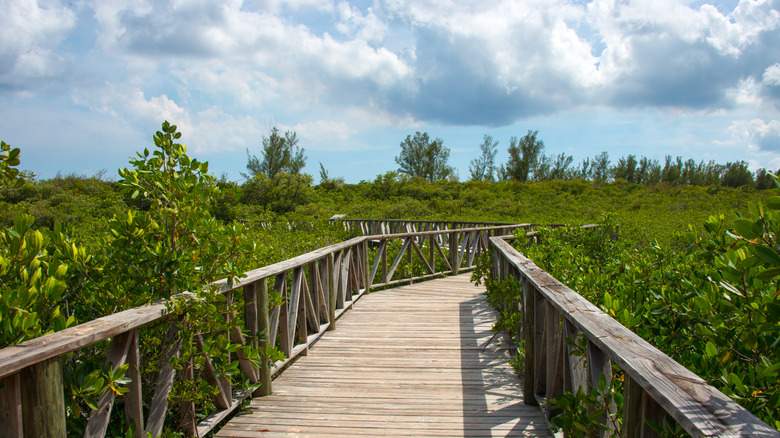
The Bahamas are generally associated with pristine beaches, bright blue seas, and a relaxed time spent in the midst of some of the best beauty the Earth has to offer. However, there's one little national park that not only offers pristine beach landscapes, but also mangroves, creeks, and underwater caves. This diverse landscape is found in Lucayan National Park, on the gorgeous Grand Bahama Island.
Unlike many other national parks, Lucayan National Park is unique in that it covers ecosystems both above and below ground. The park began as an urgent initiative to protect the island's fragile underwater caves from private exploitation, especially after ancient remains of the island's indigenous Lucayan people were found in Burial Mound Cave. Around 40 acres of land, including the caves, surrounding mangroves, and nearby Gold Rock Beach, were put under the auspices of the Bahamas National Trust. Later, a raised wooden boardwalk was constructed to protect the mangroves from human activity.
Today, visitors can explore the last tidal mangrove creek on the island and admire endemic Caribbean birds from this boardwalk. It's just a few hundred meters and mostly flat, ending at Gold Rock Beach, a stunning low-tide sandbar. It also connects to the Gold Rock Creek Trail, which leads to the beach too, so most visitors create a loop out of the two connected trails. Pro tip: take the mangrove boardwalk trail as soon as the park opens at 9 a.m., when you can see the maximum amount of bird activity. Dedicate the afternoon to Ben's Cave and Burial Mound Cave, the entrances to one of the largest explored underwater cave systems in the world. Lucayan National Park lies approximately 18 miles east of the Caribbean paradise that is the Bahamas' second-largest city, Freeport.
Birdwatching, gorgeous sandbars, underwater caves, and more
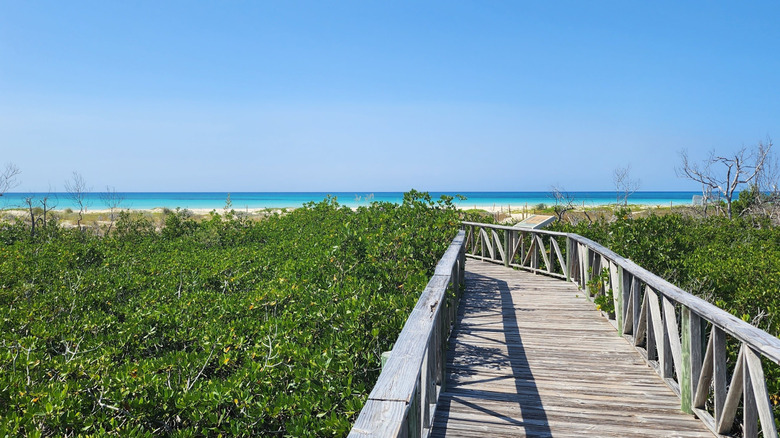
One of the most popular destinations in Lucayan National Park is Gold Rock Beach, one of the ten best beaches in the Bahamas, and also one of several Caribbean destinations used in the filming of the "Pirates of the Caribbean" movies. While you can take the shorter Gold Rock Creek Trail to the beach, we recommend taking the slightly longer Mangrove Swamp Trail instead. You can always come back via the Gold Rock Creek Trail — in fact, the park's signage suggests doing exactly that.
The boardwalk was built in the early 1980s by a youth group associated with a multinational Peace Corps called Operation Raleigh. This raised wooden boardwalk allows visitors to explore the mangrove without damaging it. From just a few feet above the swamps, visitors can peer into the water and watch native fish swim through the complicated maze of mangrove roots, while a variety of colorful birds flutter around. According to eBird, an online database in which birders record their bird sightings, 132 species have been seen at Lucayan National Park. BirdLife International, a global natural conservation organization, has also recognized Lucayan National Park as an Important Bird Area.
The boardwalk ends at the stunning Gold Rock Beach. At low tide, visitors are treated to a picture-perfect Bahamas beach, with golden-white sands and clear, turquoise water. After spending some time here, visitors can head back to the highway via the Gold Rock Creek Trail, completing the loop. Across the highway, a similar wooden path leads down to Ben Cave and Burial Mound Cave. In keeping with the budget-friendly nature of Grand Bahama Island, day passes to Lucayan National Park cost just $15 per adult, with senior citizen passes and kids' passes available for even less.