
Between Luton And Harlow Is A Historic Village With Roman Baths, Scenic Trails, And Rural Beauty
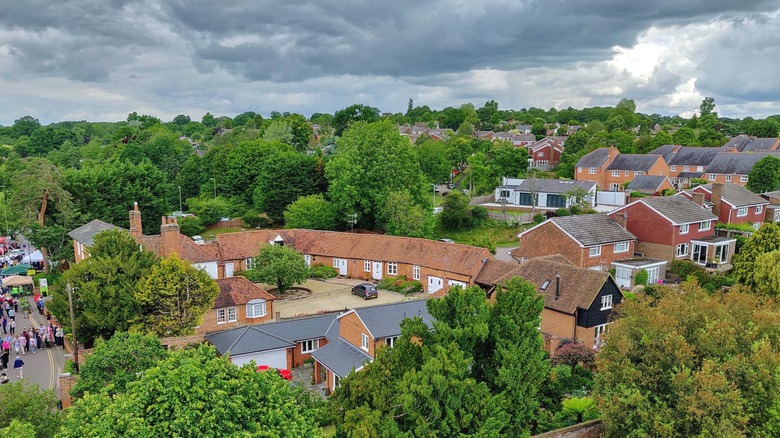
Britain's landscapes are absolutely riddled with Roman ruins and artifacts, with more unearthed every year. Whether it's the obvious remnants of Hadrian's Wall, or farmers finding unusual objects in their fields, these historic sites never fail to intrigue those with the slightest interest in history. The idyllic village of Welwyn is home to a detailed Roman bath and streets lined with historic buildings, which are a big draw for visitors — along with its lush surroundings and verdant hiking trails.
Trees and shrubs adorn nearly every road of this wee village, creating a sense of rural beauty and calm. Strolling its charming streets takes you into various ages of history. St. Mary's Church, an Anglican structure with its earliest portions built in the 13th century, holds services to this day. Welwyn has numerous listed, heritage residential and commercial buildings, and the town itself stands on the site of an ancient settlement that includes a Roman road. Natural beauty and deep history are found wherever you look.
Those flying into London Luton Airport (LTN) can reach Welwyn within a half hour drive. Trains from London King's Cross to Welwyn Garden City take 30 minutes; from there, buses to Welwyn take about 15 minutes. Heading west from Harlow is also a half hour drive, while indirect buses from Harlow take about an hour and 10 minutes. If you're visiting from there, you'll pass the similarly named, yet distinct Welwyn Garden City and under the towering Welwyn Viaduct, also called the Digswell Viaduct. While it looks vaguely Roman, it was built for train tracks in the mid-1800s.
Ancient Roman baths welcome history buffs in Welwyn
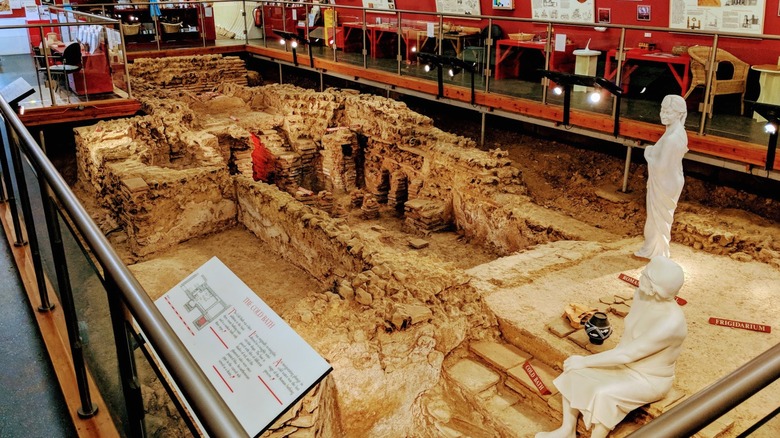
In 1960, an archaeologist named Tony Rook was the first to discover the remnants of venerable Roman baths in Welwyn underneath the A1(M) highway. Constructed in the middle of the third century, the site contains a hot plunge bath and a kitchen, and once excavated, efforts were made to preserve it in a temperature-controlled enclosure. The Welwyn Roman Baths opened to the public about 50 years ago, and are accessed via a tunnel with a round entrance that strongly resembles the front of a Hobbit home from J. R. R. Tolkien's fantasy novels.
A small admission fee allows visitors to see the bath ruins up close from an elevated walkway. While not as intact and well-preserved as the UNESCO World Heritage Site in aptly-named Bath, it shows an intriguing cross-section of the construction of a Roman bath that can not be seen in a more complete site. Plaster models of humans show scale and display how the baths were likely used, and you can view everyday objects found on the site, as well as a preserved human skeleton.
You can walk from the baths to the center of Welwyn to enjoy a filling meal and a good pint at The Rose and Crown. An inn since the 17th century, it enjoys a 4.5-star rating on Google Maps, with a beloved barn used by locals as a venue for birthdays and other celebrations. While it no longer serves as a true inn, you can stay close by at The White Hart, which also dates back to the 17th century. Its tastefully simple rooms with cozy furnishings offer a comforting home base where you can soak in a huge tub and enjoy a well-deserved rest after walking about all day.
Lush trails around Welwyn offer gorgeous natural views
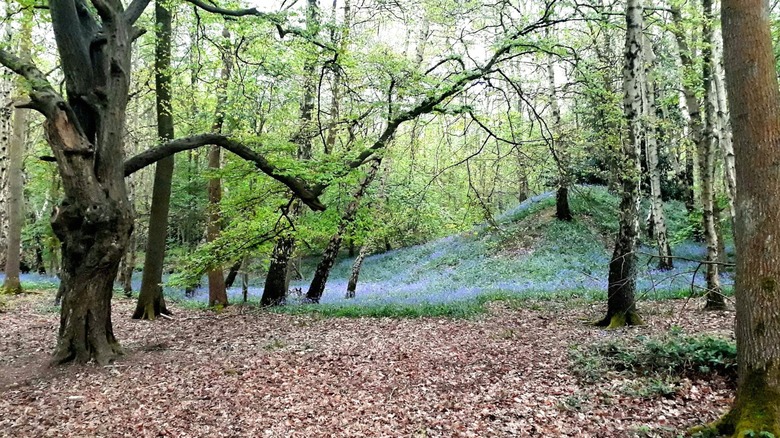
Welwyn has managed to exist for millennia while staying small, yet far from cramped. Vast green spaces and parks separate its various districts, and picturesque hiking trails weave throughout its lovely landscapes. Start out with the 3.5-mile Oakland's and Harmergreen Lane trail, which All Trails classes as easy. It takes hikers on a loop that alternates through bucolic farmland, fascinating gnarled trees in Harmergreen Wood, and fields laden with wildflowers that convey a storybook vibe to the journey.
Writers, avid readers, and classic play aficionados will find a special treat along All Trails' moderately challenging, 8-mile Ayot St. Peter's and Ayot St. Lawrence Circular trail, which is a loop starting just west of town. As it takes you through the two tiny burgs listed in the trail's name, you'll get to see the former home of the Irish playwright George Bernard Shaw, whose wit and political passion endeared him to many and was evident in his works, including the widely-lauded "Pygmalion." The trail continues along farms and within sight of the ruins of Ayot St. Lawrence. Shaw frequented the Palladian church, often playing its organ for churchgoers.
Those who don't want to venture onto trails to get an eyeful of Welwyn's rural beauty can head to Danesbury Park on its northern border. The nature reserve's 61 acres include fairytale gardens with large, old trees looming over them. Mardley Heath, a 91-acre wood containing eerie, twisted roots and lovely swaths of bluebells lies just beyond that. To fill a few more days with history and beauty, check out Buntingford, a cozy town with charming shops and tasty restaurants, which is a 30-minute drive northeast, or Ware, a pretty riverside town with trails that's 25 minutes' drive east.