
Forget Yellowstone — Visit Montana's Massive National Forest With Mountain Trails, Wildlife, And Panoramic Views
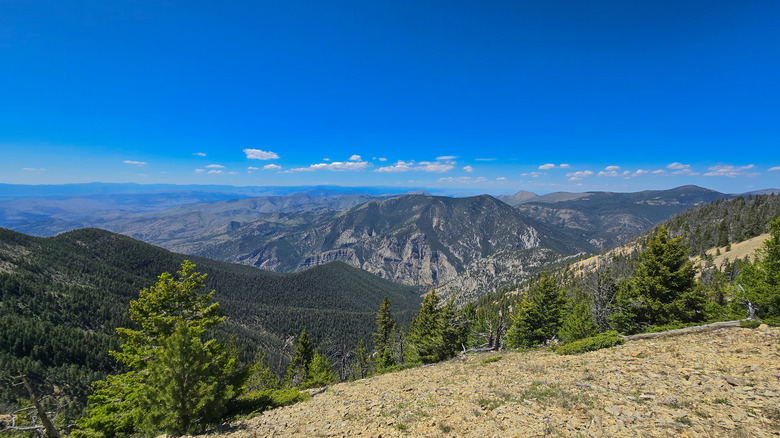
As America's first national park, Yellowstone has long been among the most popular public outdoor recreation areas in the country. The diverse array of wildlife and dramatic landscape views are among the main reasons so many visitors clamor to visit. Montana, a state that is a top destination for nature enthusiasts and adventure seekers, contains a portion of this fabled national park. However, a couple hours north of Yellowstone is a national forest that is actually even larger and is contained entirely within the boundaries of the Treasure State.
Helena-Lewis and Clark National Forest sprawls across 2.8 million acres of forest and mountains throughout central and west-central Montana. For comparison, Yellowstone National Park covers around 2.2 million acres. This massive amount of acreage is the result of combining two adjacent national forests — the Helena and the Lewis and Clark — into a singular unit. However, each of the individual national forests was established more than 100 years ago. Because these tracts have been protected for over a century, they largely remain as they were when first seen by the Lewis and Clark Expedition.
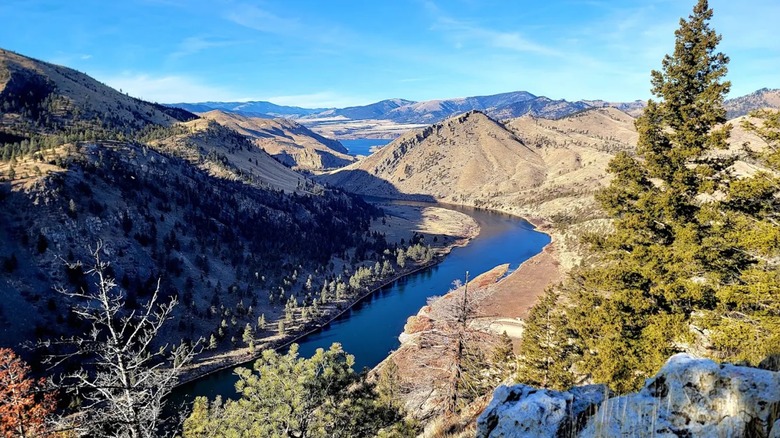
Within the Helena-Lewis and Clark National Forest, visitors will find an incredible diversity of geographic features, flora, and fauna. The landscape, which includes large tracts of forest, multiple wilderness areas, numerous mountain ranges, and a plethora of rivers and streams, is every bit as dramatic as Yellowstone, sans hydrothermal features. Much of the park expands over the continental divide. This unique geographic location allows visitors to recreate in and around rivers and streams draining into both the Pacific and Atlantic watersheds.
Mountain trails and lookouts in Helena-Lewis and Clark Forest
There are more than 1,000 miles of trails crisscrossing the Helena-Lewis and Clark National Forest. Hiking is the most common way to traverse these pathways, but many trails are also used for mountain biking, horseback riding, cross-country skiing, snowshoeing, and snowmobiling. Regardless of how they travel the trails, visitors are treated to spectacular landscapes and panoramic views. All Trails has well over 100 trails listed for the national forest, ranging in difficulty from easy to hard. Each of the trails offers views of mountains and forests. Depending on the trail you choose, you may see lakes, waterfalls, rivers, streams, or any number of geological formations.
A 67-mile section of the 3,100 mile-long Continental Divide National Scenic Trail runs through the forest. Day hikers can access the CDNST via four different passes – Flesher, McDonald, Rogers, or Stemple. Above the timberline, panoramic views of the surrounding mountains and valleys come into sight. There are plenty of shorter treks that will also result in outstanding scenery. The Memorial Falls Trail is only 1.3 miles long and is rated as moderate. This trail takes hikers to the Lower Memorial Falls, where crystal clear water plunges over a rocky ledge. The Missouri River Beaver Creek Trail is an easy out-and-back path along the Missouri River to the Beaver Creek Recreation Area.
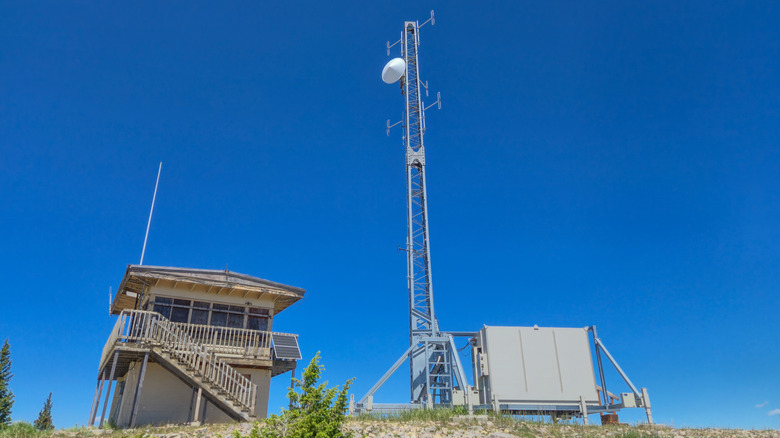
Another great way to take in the views of the national forest is to book a stay at one of the two lookout towers, both of which were originally built by the CCC in the 1930s. The Monument Peak Lookout Tower is furnished with two beds, although additional campers are allowed to pitch tents on the grounds. Granite Butte Lookout is located adjacent to the Continental Divide Trail. It is furnished with one bed and three cots.
Wildlife in Helena-Lewis and Clark National Forest
While adventuring in the Helena-Lewis and Clark National Forest, visitors are likely to encounter any number of wild animals. As a result, wildlife observation and nature photography are popular pastimes here. Among the more common creatures visitors are likely to see are chipmunks, beavers, porcupines, and woodchucks. Larger animals, including both mule and whitetail deer, big horn sheep, elk, moose, and Rocky Mountain goats are also found in good numbers. Occasionally rarer species such as lynx or wolverines may be seen. Additionally, a variety of songbirds, along with birds of prey such as hawks, owls, and bald eagles, can be spotted flying overhead.
Hikers, wildlife observers, and campers — whether staying in the lookout tower, rental cabins, or one of the 34 campgrounds — should be aware that this is bear territory. Black bears as well as grizzly bears are commonly encountered in the forest. As a result, the Forest Service urges all visitors to take precautions such as properly storing food, making noise while moving along trails, and carrying bear spray. Visitors are also encouraged to learn how to recognize signs a bear may be nearby and know what to do if a bear is encountered.
Because it covers such an expansive area and blankets a portion of 17 different counties, there are multiple points at which visitors can access the Helena-Lewis and Clark National Forest. However, the primary hub city near the forest is Helena, which is not only the state capital, but also considered the best place to live in Montana. The main gate for the forest is located on I-15 just outside of town. While there are small regional airports nearby, the closest commercial airport is Bozeman-Yellowstone International Airport (BZN), the mountain gem of an airport in Bozeman some 90 miles away.