
North America's Largest Paddle-Only Lake Is A British Columbia Fishing Paradise With Alpine Trails
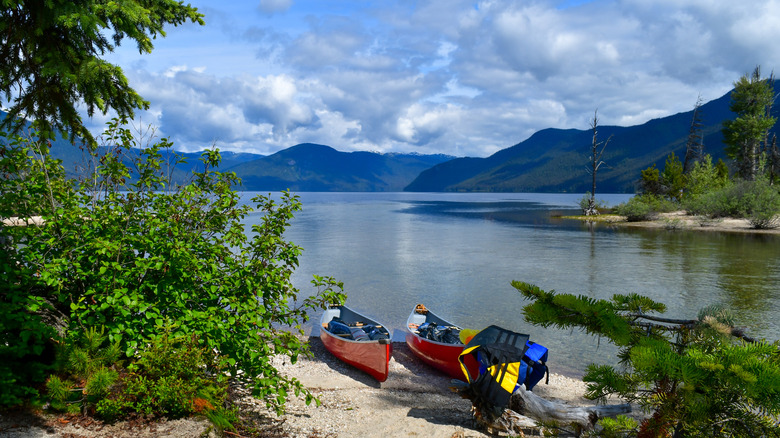
British Columbia is renowned for its natural features, including lakes, dense forests, and rugged mountains. It is also regarded as an area with a plethora of remote and semi-remote destinations in which to enjoy outdoor activities such as paddling, fishing, and hiking without the encroachment of modern civilization. Murtle Lake, North America's largest paddle-only lake, is one area where all of these elements combine to create a perfect destination for adventurers who appreciate rugged, remote, and quiet solitude.
Murtle Lake is located within Wells Gray Provincial Park, which is often referred to as Canada's Waterfall Park. Over half a dozen falls are along the Murtle River, which feeds its namesake lake, including Canada's fourth-highest waterfall, Helmcken Falls. Some falls, as well as a handful of streams and other lakes, are accessible via trails leading from trailheads scattered along the lake's 62-mile shoreline. These trailheads, as well as the 20 wilderness campsites on the lake shore, can only be reached by water. That means even hikers and campers visiting Murtle Lake must be prepared to paddle.
Conversely, even paddlers must be prepared to hike, at least for a short distance, as canoes and kayaks have to be portaged 1.5 miles from the parking lot to the launch site near Murtle Lagoon. Once in the lake, paddlers can explore around its main body, which covers almost 17,000 acres. They can also head up the 12-mile-long arms of the lake, where they will find trailheads, campsites, and sandy beaches. The lake is ensconced in densely forested mountains that, along with the motor ban, create a scenic, peaceful setting for paddling and nature watching. Paddlers do need to be aware that the waters of Murtle Lake can become rough and heed weather forecasts before embarking on an excursion.
Fishing and hiking at Murtle Lake
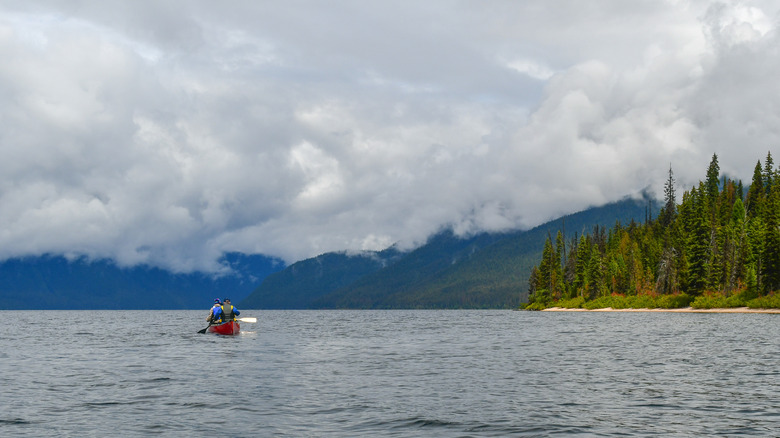
Beyond being the largest paddle-only lake in North American, Murtle Lake is well-known for fishing. Rainbow trout is the primary target species. Anglers can target trophy size fish or settle for catching good numbers of smaller rainbows. Kokanee salmon are also commonly caught from the lake. Anglers can find good fishing in nearby Henrietta Lake, too, which is a short 0.6-mile hike along the Henrietta Lake Trail, the trailhead for which is located on the southwest shore of the lake. Late spring through early autumn is considered the best time for fishing in Murtle Lake. Anglers age 16 and older must have a valid British Columbia freshwater fishing license.
In addition to the Henrietta Lake Trail, there are four other trailheads hikers will find along the shores of Murtle Lake. Each trail leads to a different water body or natural feature. Both the Anderson Lake and McDougall Falls trails are rated as easy and take around 1.5 hours to complete. The File Creek/McDougall Lake Route combines a portage, paddle, and hike experience. A separate trail leads from McDougall Lake to Kostal Lake, which is located at the base of the extinct Kostal Volcano. Be warned that paddlers cannot access the river past the portage, as the rapids here are too strong. The most difficult trek is the Wavy Alpine Trail. From this trailhead on the eastern shore of Murtle Lake, hikers can take a 3-mile path to Strait Lake or the more difficult 6-mile trail to ascend Wavy Crest Peak.
The closest town to Murtle Lake is the small community of Blue River, some 16 miles to the east. Kamloops, Canada's sunny river city is the biggest metro in the charming Thompson Valley region of British Columbia and is the closest large city to Murtle Lake. It is located about 2.5 hours south of Blue River. Kamloops Airport (YKA) is also the closest commercial airport.