
Forget The Grand Canyon, Visit This Underrated Western Region Escape With Rock Arches, Trails, And Fewer Crowds
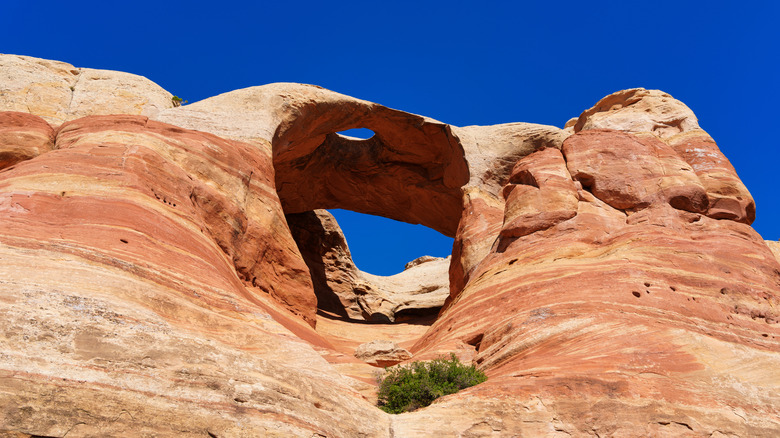
As desert adventures go, exploring the Grand Canyon tops many a bucket list, right alongside Utah's Mighty 5 national parks. But with these destinations' justifiable popularity come some notable downsides, including crowds and hard-to-get backcountry permits. Add to those inconveniences the vagaries of weather and climate, with scorching summers, wildfires and their aftermath, and seasonal flash floods, and planning a successful outing in these parks can become daunting.
Colorado isn't the first state that springs to mind when you think of splendid desert scenery, but the state's far western borderlands are home to the world's second-largest concentration of natural rock arches, after Utah's Arches National Park. Yet outside of Grand Junction, you'll find the remote, pristine rockscapes of Rattlesnake Canyon, home of the Rattlesnake Arches, one of the most spectacular desert locales you've never heard of. Like the Grand Canyon, Rattlesnake Canyon lies along the Colorado River, just much farther upstream, hidden in the McInnis Canyons National Conservation Area, managed by the Bureau of Land Management.
Rattlesnake Canyon's lack of fame (and subsequent lack of visitors) stems from its rugged remoteness. This is not a casual drive-up viewpoint suitable for sedans and strollers. The hike in is very long, unless you have a high-clearance four-wheel-drive vehicle to access a trailhead closer to the arches. If you don't own a 4x4, you can hire an outfitter to take you on an off-roading tour, with a short hike to the arches. Alternatively, you can hike up Rattlesnake Canyon as part of a river rafting or kayaking excursion on this generally calm section of the Colorado River.
Day hikes to the Rattlesnake Arches
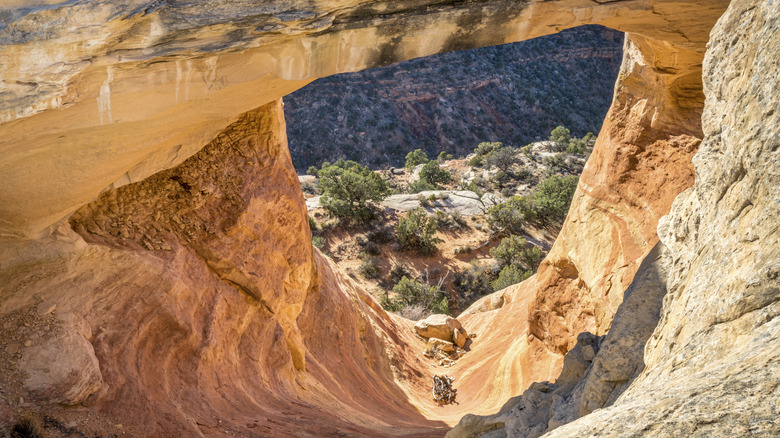
There are two ways to visit Rattlesnake Arches on foot. The full hike from a trailhead you can access in any sedan is a 15-mile round-trip trek. The hike begins at the Pollock Bench Trailhead and travels through canyon after canyon, amid beautiful scenery. After a few miles of mountain-goating up and down, you'll come to the junction for the Rattlesnake Arches Trail. Go right here and you'll soon begin to see one stunning arch after another, to the left of the trail. At around mile 7, you'll spot Rattlesnake Arch, the largest of them all, a soaring 120-foot-tall beauty. There is only one arch beyond that, the Cedar Tree Arch, where you turn around. Like hikes in the Grand Canyon, this hike offers little shade, so don't try this one in the summer heat.
If you have a high-clearance 4x4 and are comfortable with rough terrain, head for Rattlesnake Arches Upper Trailhead for a shortened, 5-mile round-trip hike. The upper and lower trails are two out-and-back routes rather than a full loop. They can only be connected to form a loop via an off-trail scramble up and through Cedar Tree Arch. One AllTrails hiker called the scramble "terrifying," so factor in your tolerance for white-knuckling it. If you do this as an out-and-back, choose the lower path, as you'll see the most arches on that route.
If neither of the options above falls within your comfort zone as a hiker or driver, and you still want to explore Colorado's desert scenery, head instead for McInnis Canyons' "Trail Through Time." This underrated gem within the same wilderness is just 1.5 miles long and relatively flat.
Longer excursions to visit Rattlesnake Arches
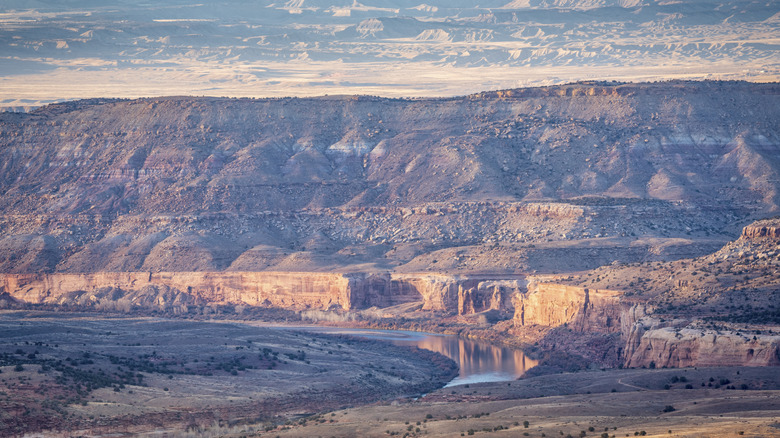
Just as float trips with side excursions for hiking are a popular way of exploring the Grand Canyon, Rattlesnake Canyon can also be approached by water. The Ruby-Horsethief Canyon river rafting route travels a 25-mile section of the Colorado River between Loma, Colorado, and Westwater, Utah. This is a mostly flat-water float trip with Class I and II rapids that Treeline Review calls "easy-going rafting in a Grand Canyon-esque aesthetic." One of the trip's highlights is camping at the mouth of Rattlesnake Canyon and hiking 4.4 miles round-trip to the Rattlesnake Arches Trail.
This river trip can be done as a DIY adventure, using a shuttle service, or as a fully guided excursion. Either way, you'll need to obtain permits for overnight campsites. In addition, you will need to bring must-carry gear rangers may request to see, including a fire pan, a sealed, portable toilet river runners colloquially call a "groover," and miscellaneous safety equipment. Rimrock Adventures, just a 10-minute drive from the Loma boat ramp in the outdoorsy and timeless town of Fruita, can provide any or all of the above. While the river is open for running year-round, Rimrock's shuttle service is seasonal.
Sticking to dry land, a guided off-roading and hiking tour with Grand Junction Adventures delivers you to the backcountry by jeep and reduces the amount of hiking to just 3.2 miles. At $325 per person for a couple, it's comparable to taking a helicopter flight over the Grand Canyon, but a Rattlesnake Arches tour will give you a much more unusual story to tell to the folks back home.