
One Of France's Cleanest Cities Is A Norman Gem With Lush Green Spaces, Historic Sites, And Tasty Local Eateries
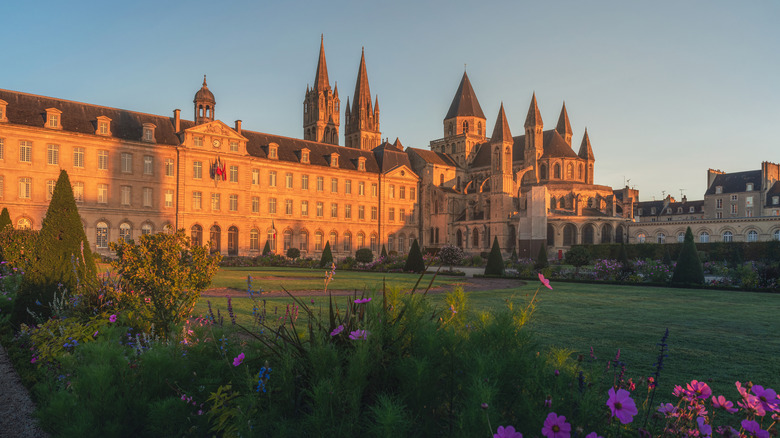
Normandy bends to every kind of wanderlust, whether that be historic D-Day beaches, dramatic rock-anchored abbeys, or quaint towns full of half-timbered houses typical of the region's countryside. Among all the paths to take, though, travelers bound for Caen will find a Norman gem packed with history and culinary delights amid lush swathes of greenery. All this, and with a bonus to boot: it's set against one of France's cleanest backdrops.
In 2026, Caen was the only French city to receive the fifth and highest star of the "Ville Eco-Propre" (Eco-Clean City) label. Awarded by the association AVPU, this distinction is given to cities that show initiative and continuous improvement in urban cleanliness. But beyond its neatly kept streets, Caen is the embodiment of clean and green. It placed eighth in the Observatoire des villes vertes' 2026 ranking of the greenness of France's 50 biggest cities — hardly a surprise, with 25% of the city covered by parks and gardens.
A tour around Caen confirms these accolades. Flora beckons at the Jardin des Plantes, a botanical garden flush with over 8,000 plant species, while the meadows and footpaths across the 27-acre Vallée des Jardins offer picnickers, joggers, and cyclists a breather from the city's bustle. Close to the center, locals and visitors can swap pavement for the Prairie, where a bird reserve and one of France's oldest racecourses are spread across 220 acres. On a much smaller but no less captivating scale, the Michel d'Ornano Park turned its original 1774 gardens into a public park in 1992, with its 12-plus acres of flowerbeds, shady walkways, and a labyrinth in the shadow of an 11th-century abbey, one of Caen's most historic sites.
Historic sites at every turn in Caen
Much of Caen's history is rooted in its most famous resident, William the Conqueror, the Norman duke who rose to the English throne in 1066. Sites from his lifetime are anchored across the city, starting with the Abbaye aux Hommes (Men's Abbey). Its 11th-century church bears centuries of change: a 13th-century Gothic choir where William's remains rest, and a cloister from the 18th century. A visit here naturally leads to the Abbaye aux Dames (Women's Abbey), located a mile to the east. Commissioned by William's wife, Matilda of Flanders, around 1060, it comes laden with a convent, church, and crypt.
A precursor to William's castle in Durham, a medieval city between Newcastle upon Tyne and Middlesbrough, Caen Castle is one of Europe's largest fortresses. Drop by Saint-Georges church for its stained-glass windows; the Exchequer Hall, where royal receptions and court sessions were held; and the northern ramparts for city views. Entry is free, except for the tour-led keep and Queen Matilda's Tower. Caen's Museum of Fine Arts and the Normandy Museum also lie within the castle walls.
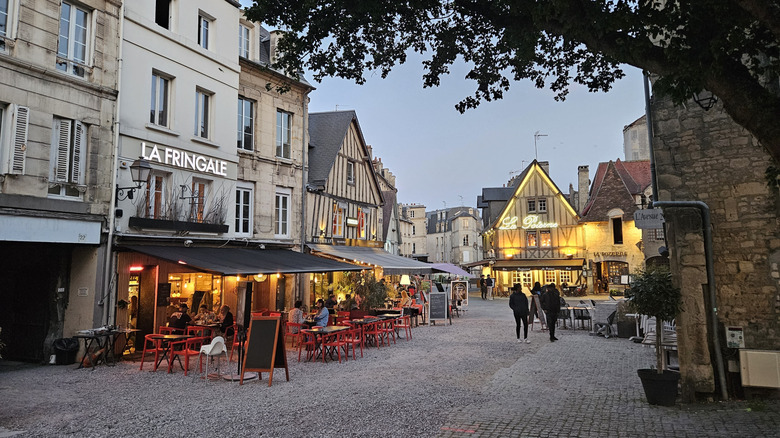
World War II destroyed 80% of Caen as Allied and German forces battled it out for six weeks in 1944 to secure the city. The Caen Memorial Museum honors that memory with an immersive war museum and guided D-Day tours. The past also endures in the historic Vaugueux quarter, the very definition of medieval-meets-modern. Cobbled streets lined with Caen-stone houses thrum with bars, boutiques, and restaurants, culminating at the old town square, Place du Vaugueux.
Culinary stars of Caen
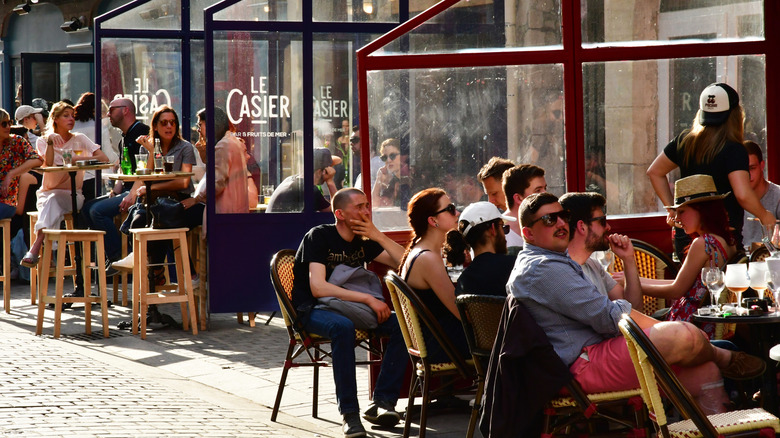
Caen is no slouch when it comes to culinary chops, offering everything from regional fare to Michelin Guide-recommended eateries. Dig into the local specialty, Caen-style tripe — a simmered animal stomach lining dish credited to Sidoine Benoit, a 14th-century Caen monk. Locals take tripe so seriously that a brotherhood of tripe devotees crowns the best tripe versions every year since 1952. Sample it at Le Mancel, a restaurant within the castle walls that lists tripe and Normandy cuisine among its specialties, or at Boeuf & Cow, the city's tourist-office pick with more than 5,000 Google reviews.
Market day is a weekly French ritual that's as important as museums, according to travel expert Rick Steves. Sundays in Caen see local food vendors set up their stalls along the Bassin Saint-Pierre, offering a mouthwatering array of local produce and artisanal products. Come nightfall, indulge at the Michelin-listed À Contre Sens, where the chef Anthony Caillot turns local Normandy produce into seasonal multi-course menus. And for a nightcap, it's hard to find a stretch more fitting than the bar-lined Rue Écuyère: it is, after all, dubbed "rue de la soif," or "thirsty street."
Ready to make those travel plans? The nearest airport is Caen-Carpiquet (CFR), about 20 minutes west of the city center, while direct trains from Paris Saint-Lazare to Caen take a little over two hours. Daily ferries from Portsmouth, England, dock at Ouistreham, under half an hour's drive to town. Arriving by train, bus, or bike pays off, too: Normandy's Low Carbon Rate rewards commuting travelers with discounts at museums and attractions, one reason the region counts among Europe's most sustainability-minded destinations.