
Forget Florida, This Senior-Friendly Mediterranean Escape Has Gorgeous Beaches, Top-Notch Eats, And Affordable Living
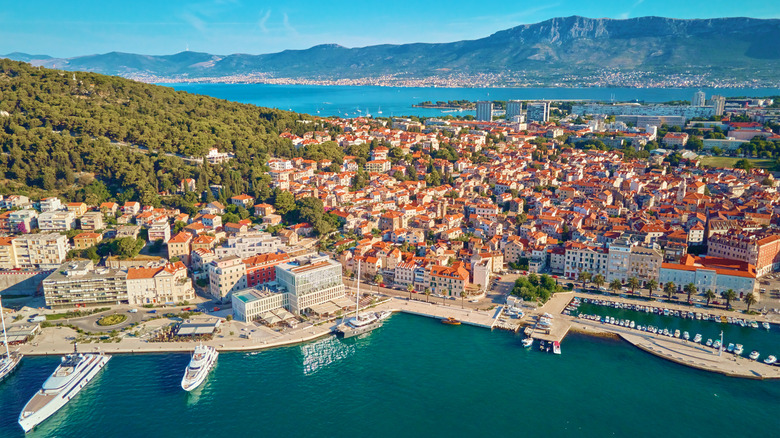
Visitors bound for Split should take a moment to mentally prepare for the sensory onslaught of gorgeous beaches, history, culture, and top-notch eats awaiting amid the city's limestone streets and terracotta roofs. It's enough to make one want to toss aside an ambitious itinerary and stay a bit longer, especially if you're a retiree galivanting the world. The Mediterranean escape offers a senior-friendly destination with affordability suited to the longer vacations that fill post-work life. And if retirees can't bear to leave, settling in this Adriatic gem would put one in vaunted company.
The city is arguably one of the grandest and most opulent getaways in history. Its first notable and (still) most famous senior citizen showed up in 305 AD. Local boy and Roman Emperor Diocletian ditched his throne for a bespoke, seven-acre palace on the Adriatic coast. His fortified residence, with its imposing gates, carved stone pillars, 3,500-year-old sphinxes, cavernous cellars, and an unobstructed view of the Adriatic Sea, is now the heart of modern-day Split. Yet visiting the historic city doesn't come with a princely sum.
Split has recently been labeled overpriced when compared to other European destinations. Ditto for Croatia in general. The reality from the ground is much more nuanced. Snagging a longer-term rental and keeping a reasonable budget, travelers can get by on $2,000 per month, according to Mandracchio Capital, a local financial and business consulting firm. It's a relative bargain compared to the monthly $5,000-plus required for living in the Sunshine State, according to SoFi. In terms of responsible financial choices made on a fixed income, one could do worse than following Diocletian's footsteps and decamping to the second-largest city on the Croatian coast, full of history and beauty.
The many beaches and good eats in Split
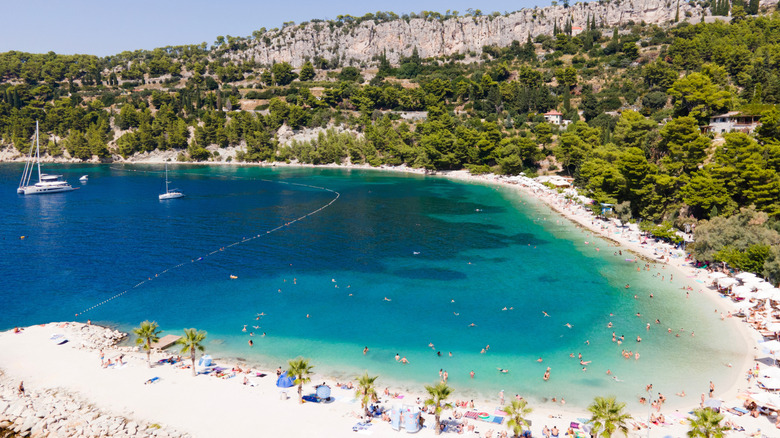
Being a peninsula city, Split has ample coastline with beaches that range from soft sands to pebbly, rocky shores — set against the city or lush hillsides and cliffs. One top spot is Bačvice Beach, a rare sandy cove on the city's southern coast with a long shallow bay stretching out towards the neighboring islands. Here you'll notice locals playing picigin (pronounced pih-tsih-gheen), a game first developed on Bačvice Beach, making a real show of keeping a ball in the air. It's one of the city's proudest inventions, and participating in a game with locals is a badge of honor. About 10 minutes east of Bačvice lies Žnjan, the all-you-can-eat buffet of Split's beaches. Its amenities range from nearly a dozen eateries and cafes to an amphitheater. It's the most Florida-like stretch of coast you'll find in the city.
For a more idyllic escape, head to Marjan Forest Park, the city's outdoor mecca. The imposing green hill lies just west of Diocletian's palace, offering several historic sites and panoramic views of the city itself. It's the ideal hub for a day spent hopping the beaches that line its coast. Beneath the picturesque hills lies Kasjuni Beach, on the park's southern shore. Kasjuni offers a resort-like atmosphere, with small pebbles stretching out into a cove and loungers and cabanas available for rent. An adjacent cafe serves coffee and drinks next to some of the cleanest water for swimming in all of Europe.
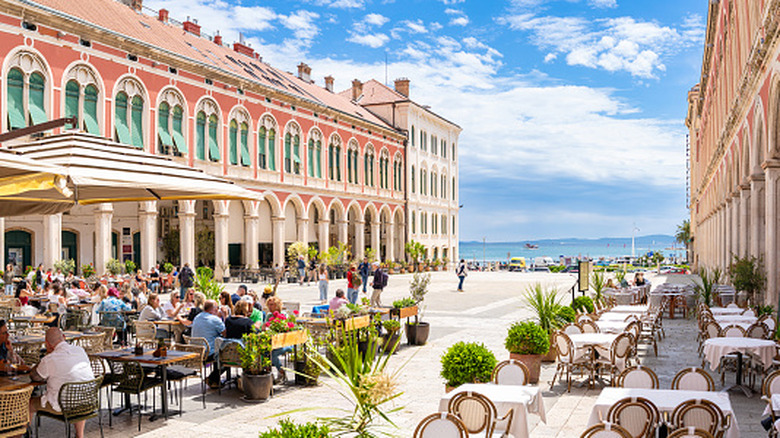
All that swimming can work up an appetite, and Split's food scene ranges from authentic local eats to gastro cuisine, with outdoor cafes lining its coast and historic plazas. For a taste of what the locals usually have at home, head over to Restoran Laf!, a well-regarded, affordable eatery that serves dishes the locals cook for themselves at home. Stuffed peppers, Swiss chard and potatoes, and cuttlefish with fava beans (don't knock it 'til you've tried it) are all available for under $20 and delivered in filling portions. Krug, Split's only restaurant with a Michelin star, is the crown jewel of the city's rich fine dining scene. The nine-course tasting menu is good enough to earn a 4.9-star score on Google, with prices to match.
The ins and outs of visiting Split
Fortunately, in Split, the weather won't be an issue. As winter dies down in March and the blustery Bura wind makes its exit, beach weather quickly arrives around the end of April. By mid-May, residents can dip their toes in the water at the beach or even take a dip if they don't mind a slight nip at first. Be sure to bring plenty of sunscreen, as clear or mostly clear skies are the norm in Split. Prepare for a potential burn when looking for a place to stay, depending on your timing.
Properties that cater to longer stays can be found for less than $1,000 per month in April. Yet they all but melt away in the heart of the summer season. As a general rule, if affordability and a lack of crowds are your north star, avoid Croatia's coast in July and August. "Visiting Croatia in summer is like spending spring break in Florida — it can be fun, but also miserably crowded and expensive," according to Rick Steves.
Reaching the Croatian coast can be a challenge for travelers from the States. Flights from major U.S. cities require a stop in Europe, with layovers that sometimes seem excessive. However, United Airlines now flies directly to Split's beachy utopia, though it's a summer-only route from Newark International (EWR), and just three times per week. The Croatian coast's seasonality makes prices fluctuate wildly depending on a trip's proximity to summer: An $875 flight from LAX to Split in April balloons to $1,200 in July. If you're trying to pinch pennies, a bus from Split's airport to the heart of town costs less than one third the price and is nearly as fast as a cab.