
Tourists Are Visiting Banff National Park During The Off-Season And It's Easy To See Why
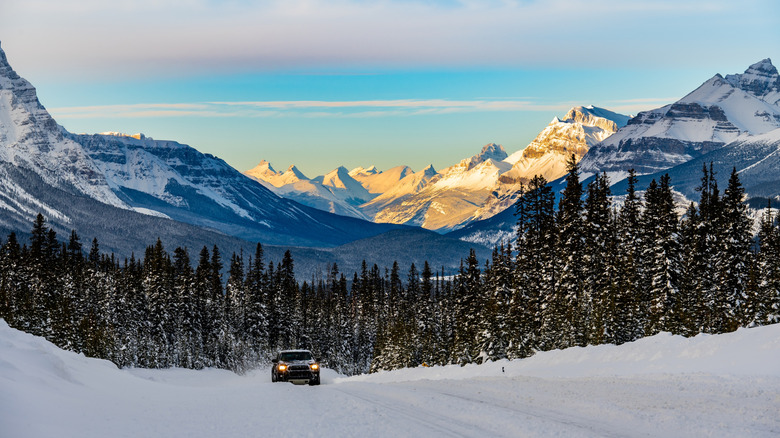
Come wintertime, the mountainous landscape of western Canada gets blanketed in white, with dark evergreen forests sprouting up through snow-filled valleys and slopes. One of the most famous of these landscapes is the stretch of the Rocky Mountains running through Banff National Park, famous for its majestic peaks and blue waters. For all the thrills that come with visiting Banff in the warmer months — biking down mountain trails, swimming in alpine lakes, and enjoying sunny picnics — visiting when the temperature cools down has its charms, too.
You can take to one of the national park's three ski hills or try backcountry skiing for a more secluded, adventurous experience. Lace up your ice skates for when Lake Louise freezes over, or take the family on a horse-drawn sleigh ride. If there's no snow yet, you can always ride up the Banff Gondola or hike in the cooler air. Plus, you get the perks that come with the off-season, namely fewer crowds and better lodging rates.
While Banff draws a lot of visitors year-round, the total number drops starting in October. Visitor numbers in 2025 went from around 559,000 in September to 177,000 in October, according to data published by the Parks Canada Agency. In previous years, numbers have been lowest from October through December, going up a bit in January as ski season picks up steam. Still, the colder months are far from quiet, with visitor counts staying well above 100,000 even in the slowest months, and there's been some more winter momentum. A 2025 Banff & Lake Louise Tourism report said nearly 28,000 more rooms were booked than in the previous winter, owing to additional winter events and increased marketing efforts.
Winter recreation at Banff National Park
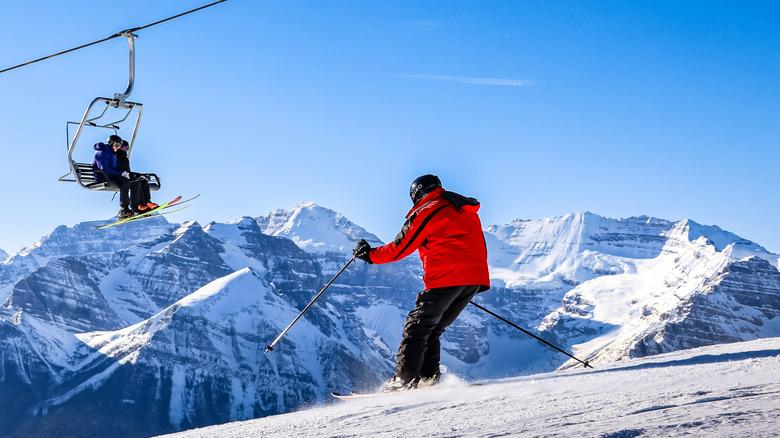
When snow falls across Banff, a whole new suite of activities becomes possible. First, there's skiing. While visitor numbers tend to rise around January and February, the ski season at Banff starts earlier, running from November to May, per Banff & Lake Louise Tourism. There are three ski resorts in the park, collectively known as the "SkiBig3": Banff Sunshine Village, Lake Louise Ski Resort, and Mt. Norquay. Banff Sunshine and Lake Louise are the higher of the three, with top elevations of nearly 9,000 feet and over 8,600 feet. Mt. Norquay is smaller and somewhat lower, but it's close to Banff — one of Canada's breathtaking mountain towns that could pass for Europe — less than a 15-minute drive away.
The ski resorts can get busy (especially on weekends and holidays), but if you want a more secluded outing, you could go backcountry skiing. You can go beyond the developed resorts to ski in the park's wilderness, either by using ski skins to climb up slopes or by getting dropped off by helicopter ("heli-skiing"). Because it requires more technical skill and specialized equipment, backcountry skiing is best for seasoned skiers or visitors accompanied by guides.
There are plenty of more leisurely activities for winter travelers to Banff. The park has some snowshoeing trails that are suitable for beginners. A scenic, easy option is the Johnson Lake loop, which covers less than 2 miles along the shoreline through fir and spruce forest, with views of Cascade Mountain's peaks. To get out on the snow without much physical exertion, a horse-drawn sleigh ride might be a good option. Sleigh rides are offered in both the Banff and Lake Louise town areas from December through March, taking visitors through snowy meadows and under evergreens.
Shoulder season activities in Banff that don't need snow
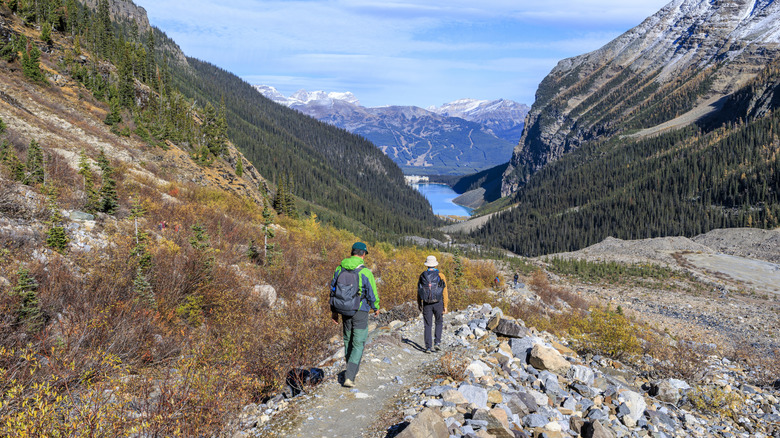
Snow falls reliably in Banff during the ski season from November through May, but even outside those months, there are ways to enjoy the cooler weather and fewer crowds. Come in October or around the end of the ski season, before tourism really picks up in July, and you can enjoy a quieter hike or ride. The Banff Gondola runs year-round, taking its riders up Sulphur Mountain for sweeping views from the top. With a car, you could embark on one of Banff's scenic drives (which might be easier before snow falls, since snowy road conditions can lead to closures or restrictions). One of them is the Icefields Parkway, considered one of the world's most scenic road trips and linking to Jasper National Park. The shoulder season of late spring can be an especially good time to make the road trip, with more wildlife viewing opportunities and longer daylight hours.
If you're interested in coming to Banff for its hiking opportunities, the off-season means quieter trails and fairer weather. Around fall, specifically, you'll get to hike trails with crisp weather, right as the mountains get their initial sprinkling of snow. Plus, fall brings larch season, when trees' needles turn golden-yellow before they fall off in winter. The Larch Valley trail is a moderate hike that takes you into the larch forest above Moraine Lake, covering just under 3 miles.
You can reach Banff National Park from Calgary in a little over an hour by car. Turn your trip into a luxurious mountain retreat by booking a room at the castle-like Fairmont Banff Springs. Alternatively, Moose Hotel & Suites is a charming option conveniently located close to downtown Banff.