
Why You Should Think Twice Before Eating At The Airport Gate
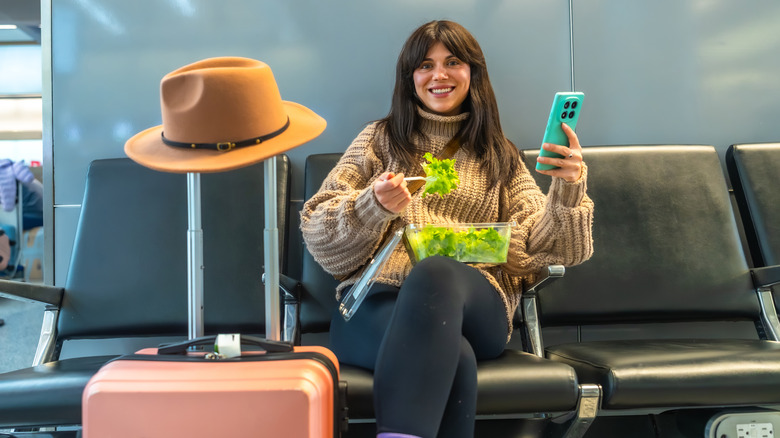
Your flight's late, the terminal is crowded, and the person already sitting uncomfortably close to you at the gate opens a pouch of garlic tuna. This may be a worst-case scenario while waiting to return home or head on vacation, but we know almost anything can happen at an airport. Which is why terminal tact and eating etiquette are important at the gate.
Airports are among the germiest places you can visit. Every day, thousands of people — who may or may not have washed their hands — regularly touch everything from the self-check-in kiosks and handrails to the armrests on the seats we sometimes sleep in. On top of that, gates are among the most congested areas in an airport. With congestion comes contamination. Imagine tucking into that steaming burrito (which was likely not cheap since food in airports is so expensive), only to have someone sneeze a foot from it. Not to mention, with the high cost of travel, many people will still embark on their trip even if feeling under the weather. And beyond the bacteria is the civility factor.
Waiting at the gate is often a standing-room-only situation, where seating is limited, delays are endured, and anxieties are fanned before boarding the plane. People convening in crowds while waiting to board have even been given an unpleasant name by airline crew: "gate lice." Now imagine you've actually scored a seat at the gate, but the elbows of the person next to you are flying as they gobble down their overly fragrant food. Oops, their fries fell on your lap, and now you have a grease stain on your favorite travel pants. Plus, would you want to be distracted from the airline announcements by someone munching loudly on their lunch or flailing around to find their lost ketchup packet? Likely not.
How to be a good neighbor at the airport gate
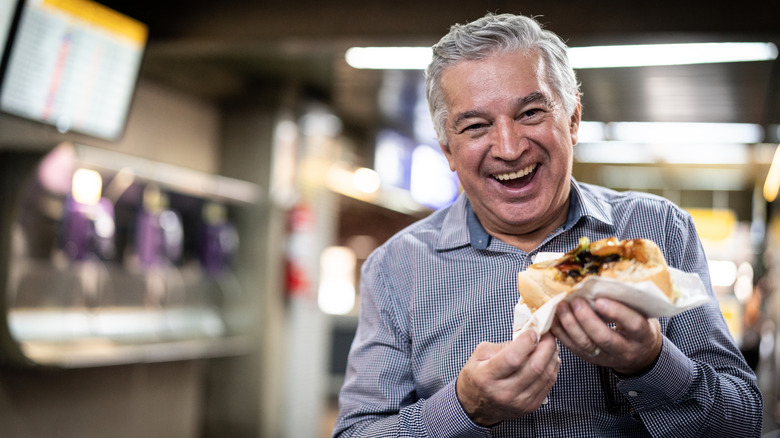
The aroma of your barbecue bacon cheeseburger may make you salivate like Pavlov's dog, but to the vegetarian at the end of the row, it may be a highly offensive odor. Also, anything with "barbecue" in the name tends to be saucy and messy, leaving sticky hands that touch shared objects at the gate. Bits of breaded and fried foods like French fries, chicken nuggets, and onion rings can get on places that aren't your mouth, including your neighbor's seat, bags, and clothes. Other selections that may prove unsavory to your gate-bound peers are often overly fragrant seafood, hard-boiled eggs, anything laden with garlic or onions, and heavily spiced foods.
Now, let's talk flatulence, because isn't it fun? Grabbing a soda pre-flight may sound refreshing, but there are valid reasons why it's best to completely avoid this common type of drink before or during air travel. First, soda fountains are exposed to a multitude of germs daily and are notoriously tough to clean, meaning those at busy airports may not get as much attention as they require. Also, when consumed before flying, carbonation will soon expand to create bloating and discomfort. Meaning that gas could follow you from the gate to your seat.
You might not even realize you're breaking crucial airport etiquette rules by eating smelly or messy foods. But there are some ways to be a bit more friendly to your neighbors while awaiting your flight. Bring or buy snacks that are tidier to eat and less pungent to the nose. For instance, opt for baby carrots instead of grabbing a sushi tray at the airport kiosk. Instead of an open soda cup, use a sealable water bottle. While eating, be respectful of others' space and keep to your own. Following these basic guidelines will get you off the ground in good standing.