
11 Questions To Ask Before Choosing A Country To Retire To

Retiring to a different country used to be a dream for only the wealthy or adventurous. However, the world is getting smaller all the time, and a multitude of factors are now motivating future retirees to look beyond their country's borders for their golden years. The number of people considering moving abroad (for all age groups) is three times higher than it was 50 years ago, according to a 2024 study from Monmouth University. This growth in would-be expats is even larger amongst people 55 and older, since the study noted an increase from 4% in 1974 to 17% today (a four-fold difference).
Of course, retiring is not like being a tourist. The resort you visited during that cruise or the island-hopping tour you took for spring break isn't the ideal metric for judging the best countries to live in, especially later in life. Moving to a new country for retirement means a long-term commitment and a thorough assessment of what you value most. Daily life for residents of different countries often varies widely from the places you see as a visitor, and it's better that you have firsthand knowledge of a country before making a permanent move. The questions you need to ask about moving to another country to retire depend on various factors, ranging from personal preferences to financial needs. Access to your pension, moving your belongings, and having a bank account are just a few of the issues on a long and complicated list that retirees have to consider. Here are some other things to keep in mind.
Will I still get my pension?
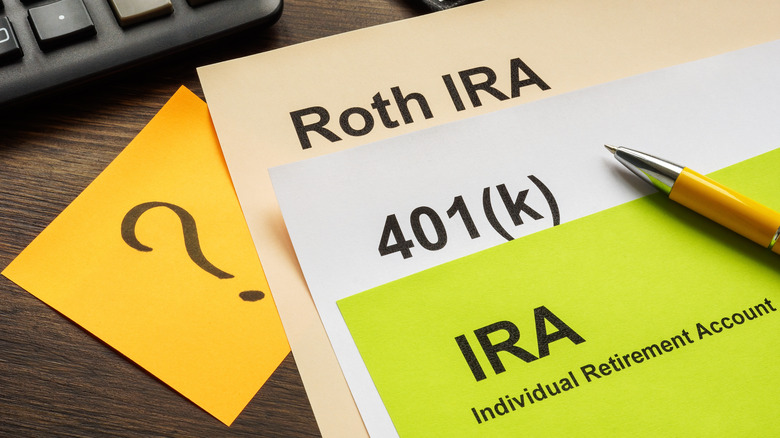
Whether or not you'll still get your pension depends on what kind it is and where you're planning on going. Americans typically have either public or private plans that include a range of IRAs and 401(k) plans. The U.S. Social Security Administration started to make bilateral agreements with other countries regarding Social Security payments in the 1970s, so if you choose a country from its designated list, you can still get your pension and also be free from hassles like double taxation.
Almost 70 million Americans will collect Social Security in 2025, and more than 50 million of that number are retirees and their dependents. These payments average close to $2,000 dollars a month, which can equal a decent but not luxurious life in countries with a lower cost of living. Mexico, a popular choice for Americans living abroad, offers several of the most iconic and famous beaches in the world and comfortable homes at pension-level prices.
There's also the option of retiring "overseas" without ever leaving the U.S. You can also decide to relocate to one of the various American territories known as "insular area political organizations." These include Puerto Rico, the U.S. Virgin Islands, and Guam, which are still considered to be within U.S. territory even though they aren't states. Should you choose one of these options, you can collect a pension or Social Security through the normal channels.
Do I need a bank account?

Now that the world has digital banking services, you can get a long way using your account in your home country with little more than a debit card and a bank account with online access. Plenty of banks in the United States have foreign branches in various countries, which is one of the best ways to avoid ATM fees while overseas.
Charles Schwab has an Investor Checking account that can be accessed globally, without charging transaction fees, and refunds any foreign ATM charges. Then there's the relatively new trend of online international accounts with features that include transfers and deposits in a variety of currencies without the extra fees. Citibank has these options, provided you have a Citi Priority or Citigold account.
Most countries require that only full-time permanent or temporary residents and citizens can open local bank accounts, which often requires an updated visa and a local address, though the criteria will be different depending on where you are. Keeping a bank account in your home country is fine while you're still just a visitor and exploring life abroad, but it's a good idea to get one when it's time to make a permanent commitment — just have all the necessary paperwork first.
Is there a language barrier?

There are Google Translate features every traveler needs to know, but if you're planning a permanent move and eventual retirement, at least a conversational level of the language is recommended (and sometimes required). Remember, in the future you'll have more complex questions to ask to deal with housing or employment issues. If citizenship is an option, you'll likely have to demonstrate a proficiency in the official language of the country and some general knowledge and trivia. For example, the test for Mexican citizenship not only includes a language test but also a multiple-choice exam about the country's history and culture.
Those who are starting with English as their first language have a great advantage. Plenty of tantalizing potential choices for retirement destinations include countries where English is either the official language or widely spoken. Outside of the United States, retirees can speak English in Belize or Singapore, and there are nations in the European Union where English is also widely spoken such as Finland, Germany, and the Netherlands — although knowledge of these countries' native languages is especially helpful outside major cities.
For those who have their eye set on a foreign country where English isn't widely spoken, learning the local language is obviously the best option. Until you do, it's possible to use a translation app for basic conversation needs. Google recently added another 100 languages to its Translate app, bringing the total number to 243 and making communication even easier. It also has a new feature that includes AI-generated conversation practice, which is quickly becoming a standard feature for most learning apps.
What kind of medical services are available?

Even if you're years from retiring and in the peak of health, planning to retire in various locations overseas makes health care questions an important consideration. Americans spend more than their global neighbors on health care, but that doesn't always equal better quality of care or life expectancy. Potential retirees are strongly motivated by the availability of health care, not only for their future comfort but also because insurance and health care prices are already restrictive. It's always one of the top reasons for retiring in another country, closely following a lower cost of living.
Mexico is an example of a country with both a socialized system of care and a lower cost of living. Even temporary residents can access the Instituto Mexicano del Seguro Socia (IMSS), or public health care system, as long as they pay an annual insurance fee. Those with a larger retirement nest egg can think about destinations like Australia and Canada, which also offer public health care options to citizens and permanent residents.
It's not always about emergencies or hospital visits when it comes to health care either. Potential retirees should also consider amenities like available pharmacies, clinics, dental care, and alternative medicine as well when it comes to their desired retirement destinations.
What is the crime rate like?

Even if you're planning on moving to a gated community or know some safer neighborhoods, the overall crime rate is an important consideration and often an indicator of other factors such as property values and community stability. Several countries with low crime rates also have better-than-average social programs and low levels of militarization, according to the 2025 Global Peace Index.
This consideration puts some countries at a disadvantage that would otherwise be perfect choices. According to World Population Review, Mexico has the highest number of American expats, but it's so-called "desirability" is often overshadowed by other countries such as Portugal, Spain, and Germany. This is often attributed to the country's higher crime rates in comparison with the United States (via the Global Organized Crime Index). Costa Rica, on the other hand, is one of the safest countries in Latin America (via Statista) according to the same metric, but it costs more to live there (via World Population Review).
Making sure your money is safe is another important factor. For those concerned with banking and financial security, Chile has some of the most secure banking in Latin America,and several banks in Germany are among the most secure worldwide. Indicators of a safe banking system include a strong credit rating, enough capital to withstand tough times, dependable government support, and a strict adherence to rules and regulations.
Can this new location support my lifestyle?

Everyone takes certain comforts or routines in their lives for granted. Not every location or culture can enjoy amenities like public transit, libraries, or even electricity on a daily basis. In tropical climates, even upscale homes don't always have hot water or air conditioning. The amenities that tourists enjoy in resorts and upscale hotels, like fat-free meals, extra fruits and vegetables, or gluten-free bread, might not be as easy to find in a foreign country even for long-term residents.
Living rough might be fun as a young backpacker, but do you want to retire in the same environment? It's likely you'll have to make some lifestyle changes eventually. Mobility issues affect 35% of people over 70 years old, and you might not be able to climb down a cliff to the beach so easily in the next few years. Portugal has more than 240 beaches equipped to accommodate people with mobility issues, so it's a good choice if you're looking for a retirement destination that includes a lifestyle by the seaside.
For those who are invested in online life, whether it be streaming, gaming, or podcasts, the powerful internet connections you're used to won't be available everywhere. Internet penetration varies by country, and even isolated areas that have internet might not be able to handle video streaming or anything that might need a high speed connection. On the other hand, maybe "unplugging" is something you want for retirement, and choosing a place based on the lack of internet also makes sense for you.
What documentation do I need for long-term or permanent residency?

When choosing a country that's ideal for your personal retirement needs, it's a good idea to look into a long-term plan of permanent residency. Tourist and traveler visas have a limited duration and are issued when you physically arrive in the country. These can be used to gain entry to the country initially and do some exploring if you're not sure about a permanent move yet.
When you find a place you like, upgrade to documents that give you a longer stay. If you still plan to work some of the time (more on that later) and you don't have to secure an on-location job in the destination country, work visas can be an option even in "retirement." These days, travelers can take advantage of options that welcome remote work. Iceland, Spain, Thailand, and Brazil all offer a digital nomad visa, which is another way to stay in the country for a longer time without a local employer sponsoring a traditional work visa. If you don't plan to work, this may limit your options. You may want to look into potential retirement visas or other requirements for those who aren't working, but these may be expensive.
Once you've stayed in a country long enough to gain temporary residency, you can look into the requirements needed for permanent residency or citizenship. A passport is always the most important item, followed by whatever document was issued for your proof of residency. The USA.gov website has a handy "Learn About Your Destination" search tool when you need answers for a specific destination.
Can I get dual citizenship?
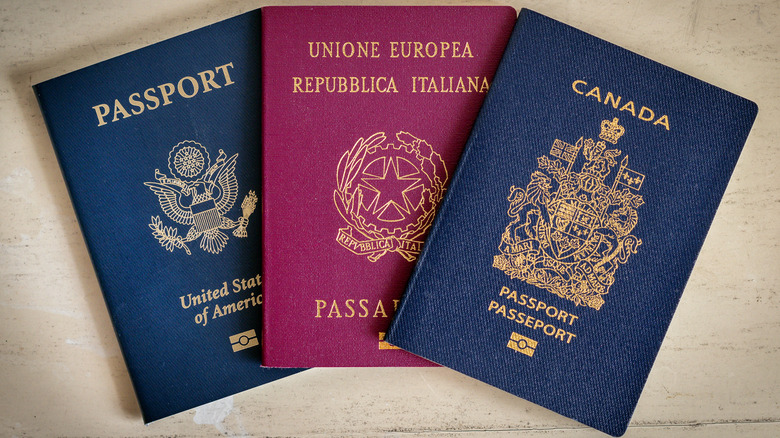
The advantages of becoming a citizen in your retirement destination include getting access to more government services. These include perks like state-run health care, educational subsidies, loans, and voting rights. The U.S. Department of State defines someone with dual nationality as a person who is "a national of two countries at the same time."
This means that U.S. law generally doesn't require its citizens to choose one or the other, so as long as your destination country is equally tolerant and you follow the laws of both countries, you can have two passports. However, there is still some criteria that may disqualify you from doing this. Due to concerns about national loyalty, cultural differences, or security issues, China, Singapore, Cuba, and Thailand are some of the countries that allow American residents to live as long-term or permanent residents, but not to have dual citizenship.
One popular example is Italy, which allows some people with Italian descent to apply for citizenship through the Jure Sanguinis program — though there are many hoops to jump through and you must fulfill very specific criteria to prove your "citizenship by decent," so it's sadly not available to absolutely everyone with Italian ancestry. This is also a long process that includes a tough slog through the complicated Italian bureaucracy. Another possibility is Mexico, which grants permanent residency to retirees and pensioners with a designated amount of capital in both their investments and annual pension.
Can I buy land and build on the property?
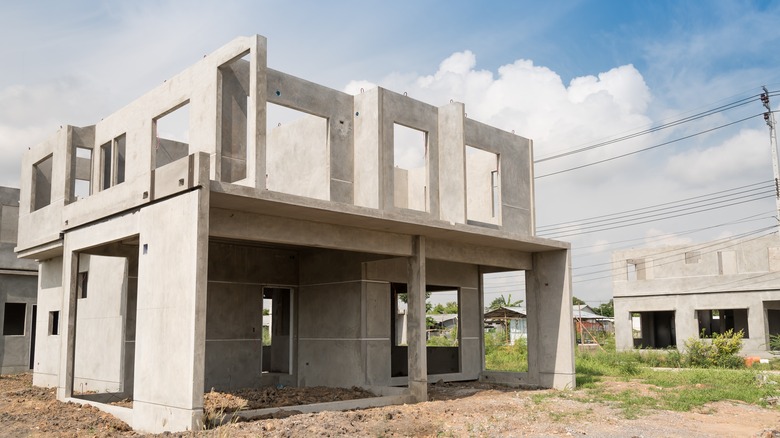
Part of the goal of retiring in a foreign country often includes a plot of land and a dream home, something that's out of economic reach for some in the United States. Many countries have strict laws regarding how much freedom an expat would have to buy property in their own name, only allowing purchases through proxies like bank trusts after running a gauntlet of notaries and lawyers. Once a person has gone through the process of gaining permanent residency or citizenship, buying land and building a home naturally becomes easier.
There are countries where the government will actually pay you to move to certain parts of the country and subsidize your efforts if you want to settle, invest, buy land, build on it, or start a business (depending on their individual criteria), such as Ireland, Italy, and Chile. Some destinations with a wealth of natural, wide-open space offer rural relocation incentives for those dedicated to permanent relocation.
Canada's Rural Community Immigration Pilot is one example of a program that you can use to get permanent residency. Eligibility requirements include a job offer, certain educational credentials recognized by the Canadian system, sufficient language abilities, and the funds to support themselves and their family. The catch is that this is a program for those who would prefer to live in a rural area, which means a village or town with few residents in an isolated region. Ireland has a similar program, but it's focused on revitalization rather than immigration. Applicants have to be Irish residents already and be willing to renovate an abandoned or derelict property in an isolated region.
Do I prefer urban, suburban, or rural living?
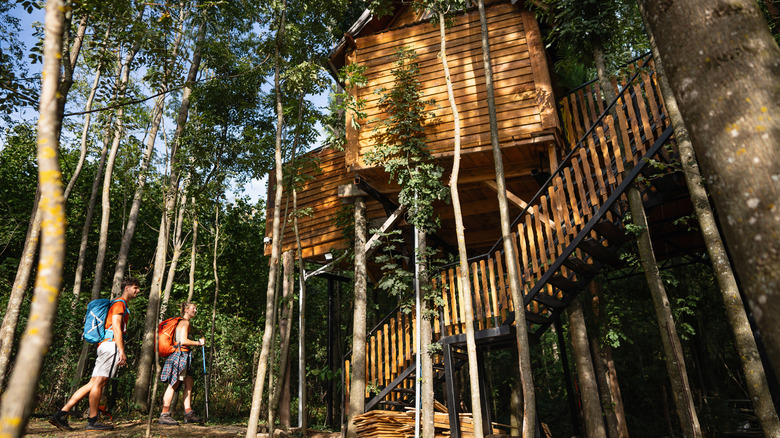
Are you a city mouse or a country mouse? Would you prefer a treehouse lodge beneath a gorgeous jungle canopy with little more than a view, or is a modern condo more to your liking? Of course, the wise retiree knows they can have both if they want, but only if they choose the right country. Sometimes the choice is obvious if you plan on taking advantage of a government incentive plan to move to a rural part of the country, while others may be looking for a place to invest in property or businesses.
What kind of house do you want, and what amenities will you be expecting? This is a long-term move, where you'll likely be spending the rest of your life and possibly your most vulnerable years, so you have to consider that treehouse with the cool staircase might not be so fun when you're pushing 70.
Considering whether you want city life or country life is based on more than just personal preference. Will you need the internet for your hobbies or communication with the outside world during retirement? Internet coverage isn't available everywhere, and even Starlink has issues with too many users in one area or a lack of coverage in others. On the other hand, that might be something you want while tending a large garden or giving a wide-open living space to your many rescue animals. If nightlife, convenient shopping, or public transit are part of your retirement plans, move to an urban setting.
Can I still work if I want, and what can I do?

Retirement doesn't have to mean that you stop working completely. In fact, this is a time when a lot of people decide to embark on a new career or try something that's always been a dream, but they never had the time or money. Perhaps you want the challenge of pursuing another vocation like freelance writing, or working as a cook or baker to learn the nuances of the new local cuisine and the best local restaurants.
The rise of digital nomads means that as long as you have the internet, there's work available in your own language and currency. Remember the digital nomad visas for online employees, which is one way to get to know a country better without making the commitment to local employment, residency, or citizenship. It takes longer to get and requires more documentation, but it allows you to stay longer than a typical tourist visa. If you're planning to retire, you can use your work and income as a digital nomad to upgrade to residency, which might be ideal if you're lacking a generous nest egg or pension plan.
It's an expensive option, but plenty of countries offer big spenders a Golden Visa to fast-track permanent residency and citizenship. This is for people who have a big dream to start or invest in a business and have the bank account to support it. The Golden Visa isn't exclusively for retirees; anyone with the funds can access it. Every country is looking for business investors, no matter their citizenship.