
These Affordable Campers With A Cult Following Blend The Best Of RV And Tent Camping
We may receive a commission on purchases made from links.
Pop-up campers have been around for decades, but they've developed a modern cult following among people who want more comfort than a tent but aren't ready to tow a full travel trailer. The pop-up community is tight-knit — owners trade tips on forums like PopUpPortal and show off mods they've made to their rigs. Seasoned campers are more than happy to share lessons they've learned from real-life scenarios. In fact, campers in the pop-up community often say people making the switch to travel trailers and full-size RVs are "going to the dark side." But for anyone just getting into the RV scene or looking for a comfort upgrade without losing the nature immersion primitive camping offers, a pop-up camper could be the answer.
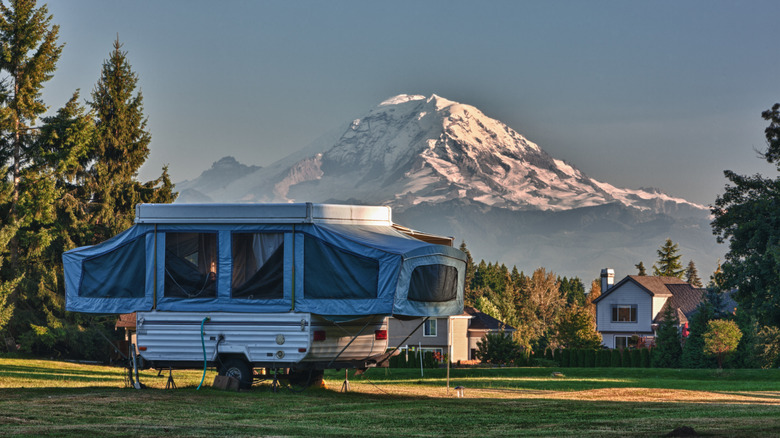
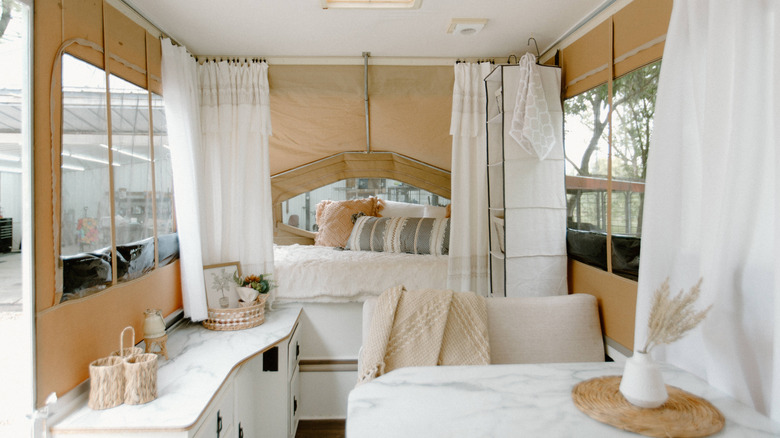
People love pop-up campers because they're affordable, lightweight, and easy to set up, with just enough amenities to feel like a tiny RV. When you're towing, they break down into a low, compact trailer that's easy for smaller vehicles to handle. But at camp, the roof lifts up, canvas sides expand, and you instantly have real beds, a mini dining area, and sometimes even a bathroom. They're popular with people who are looking for an experience closer to tent camping than a full-size luxury RV, but would still rather sleep off the ground and have more convenience.
To learn just why these campers have amassed such a loyal fanbase, we consulted camping blogs, pop-up forums, manufacturer specs, buyers' guides, and camper reviews. Because pop-ups vary widely based on their layouts and features, we focused on the points that campers themselves talk about most: towing weight and size, insulation, setup time, comfort upgrades, and special considerations.
Pros and cons of a pop-up camper
Pop-ups are often recommended for first-time RV buyers because they're cheaper than full-size models. Basic pop-up campers can be purchased new for around $9,000, while some models start around $25,000 or more. There's a robust secondhand market, so first-timers can save a bundle by buying used. This also gives campers wiggle room to learn about their wants/needs and what pop-up camping is like without plunking down a massive investment.
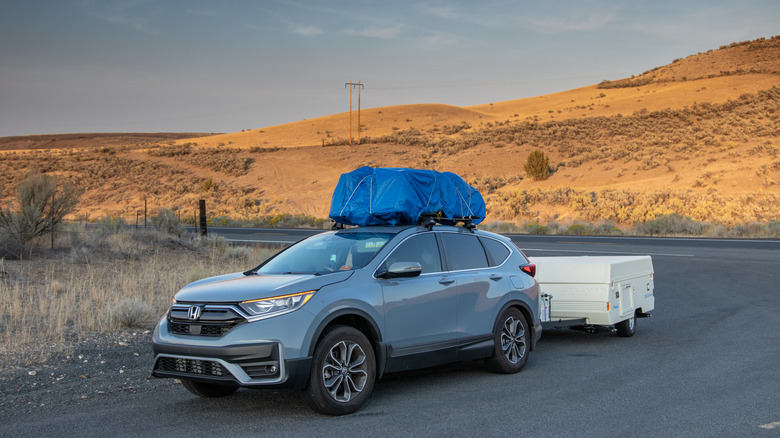
Another plus: Pop-ups are often under 2,000 pounds, which keeps you out of heavy-duty truck territory. Since one of the most dangerous parts of RV living can be navigating such a large vehicle, this may give drivers peace of mind. Many full-size RVs are also too big for certain campsites — for example, Rose Canyon, Arizona's jewel-like mountain lake, has a max trailer length of 22 feet. With most pop-ups on the shorter side, they fit more campsites than massive rigs. Some models even offer furnaces or A/C, so you're not suffering through cold nights or sweltering afternoons. And with canvas walls, you get that tent feel of being out in nature. Plus, unlike a rooftop tent, you can use your car without having to pack everything away.
Of course, there are trade-offs. Pop-ups can require patience, as setup can take anywhere from 15 minutes to over an hour, depending on how much camping gear you have for comfort. Insulation is limited, bathrooms are small (if you have one), and a few campgrounds in bear country restrict soft-sided rigs for safety. One Redditor says pop-ups are "cheaper, easier to store and tow," but canvas walls mean there's "no noise protection." They also warn that if you pack up in the rain, you'll have to pop it back out at home to let it dry.
Real campers share their tips for pop-up trailers
There are a few practical tips that come up again and again. One, you must match the camper to your tow vehicle to maximize the space-to-weight ratio. Also, consider starting with something used to save money, especially if you're new to pop-up camping. Always plan for maintenance — lift systems, canvas, and seals need occasional attention, and repairs can be costly. If you're okay with a bit of ritual — cranking up the roof, making the bed, drying and cleaning canvas — pop-ups can feel like a significant comfort upgrade without going fully to "the dark side." A good way to streamline setup is to create a task checklist to go through each time.
A few different brands come up frequently when comparing models. For beginners, Forest River Rockwood campers are recommended by both Camping World and RV.com. Aliners are praised by campers interested in A-frame pop-ups. These designs forgo canvas walls in favor of solid ones, but still fold flat for towing. Other brand names mentioned often include Jayco, Coachmen Clipper, and SylvanSport.
Most pop-up enthusiasts recommend newbies do a backyard or driveway trial first to learn the ins and outs of setup and breakdown. Some also suggest tools to help ensure your setup is as level as possible — options include a BAL trailer leveler, a Firecore torpedo level, or these Hopkins graduated levels. Depending on your pop-up's features, you may want to invest in some additional items, like a compact portable camping stove, storage containers, a toolkit, extension cords, a first-aid kit, and other camp essentials. With so many different models, features, price ranges, and modifications available, it's no wonder a whole community is loyal to the pop-up lifestyle.