
The Real Price Airlines Pay To Serve Those In-Flight Meals
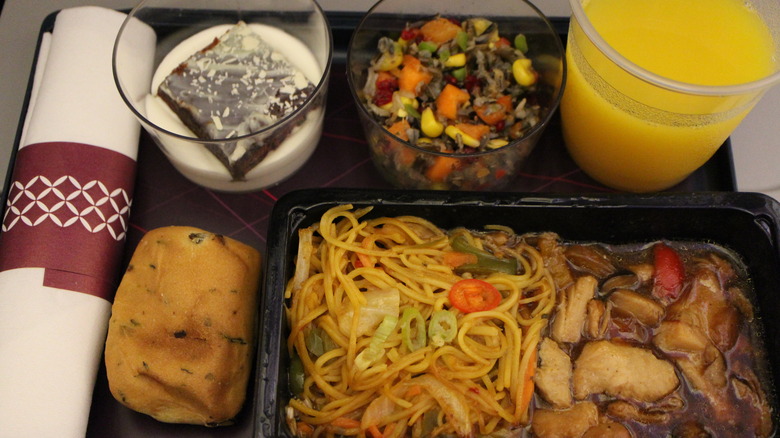
Despite offering passengers a choice of meals, it's always a bit of a mystery what airline food will be served, wrapped in shiny tinfoil for quick and easy reheating. From overcooked pasta to leathery cubes of beef, in-flight meals are notoriously hard to get right. Certainly, opinionated British chef Gordon Ramsay is not a fan of airplane food. Trying to nail down what goes into an in-flight meal and how much it costs can prove surprisingly difficult, since airlines generally don't disclose those costs. The actual cost of a meal depends on each airline's catering budget and the catering companies' operating costs at the departure airport. But as it turns out, the per-meal cost of airline food rivals that of fast food, if not lower.
On the FlyerTalk forum, there was a debate over how little airlines pay for meals. One poster shared a document from a German airline catering company offering economy meals for just €2 (around $2.30) and business-class meals for €7 (about $8). Another poster who had toured the catering facilities was told that first-class in-flight service with two meals costs a total of €18 (less than $20).
Not what you expected? You might be left wondering where exactly airplane food comes from and how it's budgeted. According to a cost index published by Airlines 4 America, U.S. airlines spend only slightly more than 2% of their operating costs on food and beverages. Meanwhile, the in-flight catering market is a $3 billion industry by some estimates, and is expected to grow to over $6 billion by 2030. Before you file a complaint with the Consumer Protection Bureau, consider how caterers can keep costs down and still deliver (somewhat) edible meals in the air.
Making food fit for flying
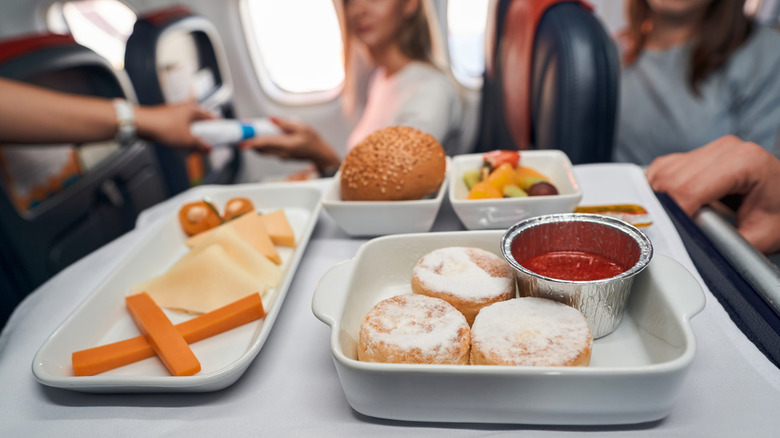
Airline catering is about far more than whipping up a meal in a kitchen. It involves buying ingredients in bulk and producing industrial quantities of food that must remain edible when reheated tens of thousands of feet in the air — no easy task. Can it really be done for under $2.50 a plate?
According to a corporate chef, those prices are standard practice in the catering world, whether flying or not. "It's entirely possible to serve very nice food at that price," wrote @TimTamTrack at online flight blog One Mile At A Time, "I'll also note that we generally aren't taking advantage of the huge economies of scale that a flight kitchen would be able to, as we are serving usually 30-40 people per meal."
And cost isn't the only factor. Passengers could be served, say, succulent wagyu beef straight off the grill at Mastro's steakhouse in New York, and it still wouldn't replicate the experience of dining in a restaurant. That's because the body's sense of taste and smell changes at altitude, which is why food tastes different on airplanes. Coming up with a meal that's portable, tasty, and not overly dehydrating from salt is a tricky order, regardless of price. That's why some seasoned travelers choose dishes served with a sauce or curries — options that retain moisture and umami even after multiple rounds of reheating. And if you really want to up your in-flight food game, consider trying this sneaky hack to get the meal of your choice, earlier than your fellow fliers.