
This Serene Wetland Outside Of Kansas City Offers Hiking, Biking, Birdwatching, And Educational Experiences

Just south of the trendy college city of Lawrence, Kansas, and 45 minutes from Kansas City is Baker University Wetlands, "one of the most diverse habitats in Kansas," according to Baker University. Across the 927 acre property, approximately 600 acres of which is wetlands, you can find plenty of peaceful trails as well as find and learn about all kinds of wildflowers and wildlife. And to visit here is to walk in the steps of American history and to realize the ongoing work it takes to help keep beautiful natural places like this protected.
There are more than 11 miles of hiking trails throughout the property, and they are open from sunrise to sunset throughout the year. A couple of different shorter boardwalk trails let you walk through the wetlands without getting stuck in the mud or disturbing the vegetation and to really feel immersed in nature. The other longer trails take you through grasslands and along wooded areas near the Wakarusa River.; you can mix and match loops to get a new experience each time you visit.
You also get a new experience throughout the year at the wetlands as the seasons change. Wildflowers flourish in spring and summer, which attract plenty of butterflies, and the vegetation turns golden in fall. Winter can bring snow, and then early spring sees the gradual greening up of the landscape.
Birds and other wildlife at Baker University Wetlands and the Discovery Center
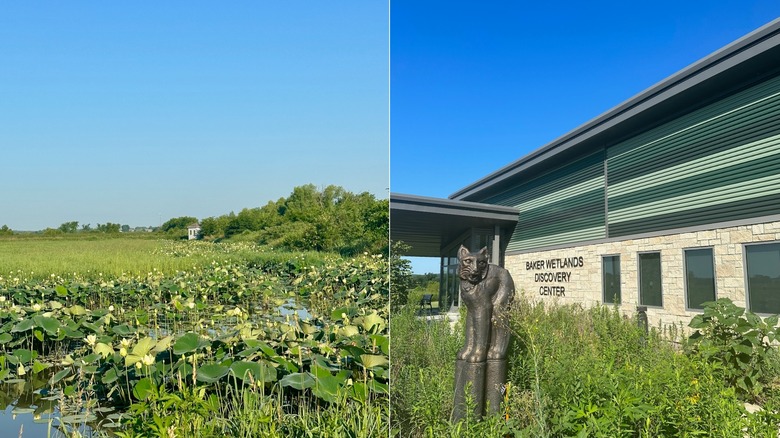
Baker University Wetlands is one of the best birdwatching destinations in Kansas, with over 275 bird species that have been seen here. Fall and spring are particularly great times for birding; Kansas is a part of the Central Flyway that runs from Mexico up through Canada through the center of the continent. Many of the migrating birds like to stop in the wetlands to feed and rest here on their journey. There's an abundance of waterfowl and shorebirds, like cormorants, white-faced ibis, American bittern, songbirds, bald eagles, Franklin's gull, and more.
There are also dozens of fish species here along with a variety of amphibians and reptiles, like the smallmouth salamander, ornate box turtle, and snapping turtles. When it comes to mammals, you might spot beavers, white-tailed deer, and squirrels.
To learn more about what you can see while you're out here exploring, the Baker University Wetlands Discovery Center has exhibits on the area's history and ecosystem. Built in 2015, it's the perfect place to bring curious kiddos; it runs a "Nature Tots" monthly programming. And in the Wonder Room, kids (and kids at heart) can touch and examine various artifacts from the region, like rocks, furs, nests, and more. Throughout the trail system, there's also signage that tells you more about the flora and fauna. The Baker University Wetlands Discovery Center is open from 9 a.m. to 12 p.m. and 1 p.m. to 3 p.m. Monday to Friday.
A consolidated history of Baker University Wetlands
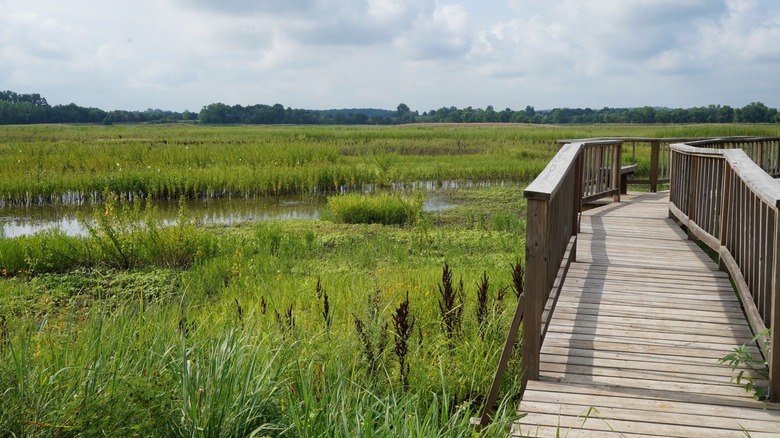
The Baker University Wetlands seem like a fairly pristine and natural place, but it took a lot of work and a lot of time to make them that way. Glacial activity hundreds of thousands of years ago first helped shape the areas around Lawrence, including the Baker Wetlands. Before the area was developed by European settlers, it was used by a number of indigenous tribes, including the Kaw Nation, the Osage Nation, and the Kickapoo Tribe.
The land was homesteaded in the 1850s, and some wagons on the Oregon and California Trails crossed the Wakarusa River in the area. In the 1880s, the federal government bought land to be a part of a training school for indigenous children removed from their families; it's now the Haskell Indian Nations University. Much of the area's wetlands were drained for agriculture, and by the 1950s, the area was being developed with just under 600 acres still remaining. Before these last acres could be developed, Dr. Ivan Boyd at Baker University helped spearhead the preservation of the land with the goal of returning it to a healthy wetland environment, and Baker University took control of the land in the 1960s and work began to restore it to wetlands. In the 2000s, the wetlands were reshaped again with the development of a nearby highway, which had caused years of arguments. Then in 2025, this beautiful place was officially protected from development.
For more outdoor adventure nearby, Clinton State Park along Clinton Lake, with excellent fishing and fun trails, is about a 20 minute drive away. And if you're looking for some sensational city views, you can climb to the top of the dome at the Kansas State Capitol building in Topeka; it's 30 minutes from Baker Wetlands.