
Arizona's Walkable Phoenix Neighborhood Near Downtown Has Charmingly Quirky Homes And Urban Comforts
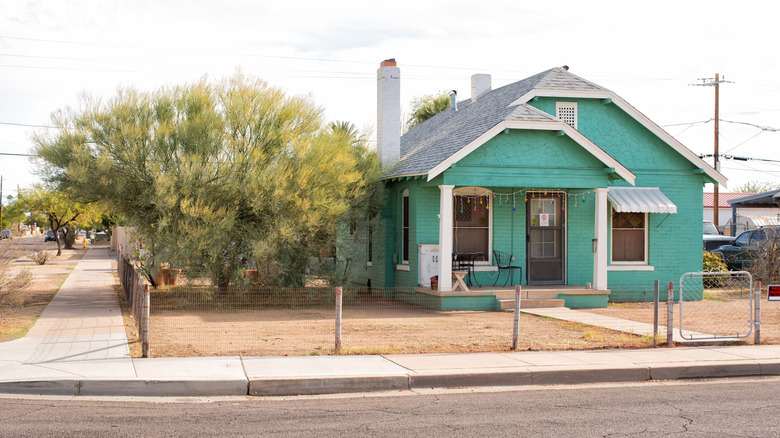
Colorful walls, prim sidewalks, and craftsman-style architecture: Coronado District is easily the prettiest neighborhood in Phoenix, Arizona. If director Wes Anderson ever filmed a movie in Maricopa County, he'd almost certainly use Coronado as a shooting location. This rectangular neighborhood covers about 1,200 acres and encompasses about 4,000 houses, but you can bet most Phoenicians have daydreamed about living here. This is one of the most walkable neighborhoods in the Valley of the Sun, a checkerboard of manicured desert flora and well-swept pavement. Tourists tend to overlook Coronado, but these blocks make for a delightful cool-weather stroll — and can feel like time travel.
In a youthful Southwestern city like Phoenix, "Mid-Century Modern" generally passes for historic architecture, and there are many fine local specimens from the 1950s that exemplify the minimalist dwellings where so many Baby Boomers were reared. Yet Coronado is even older, dating back to the early 20th century. The moment Phoenix secured a consistent water supply, developers poured into the valley, building in the homey suburban style of the 1920s. Here you'll find bungalows and Tudor homes, the kind you might see in old Northeast or Midwestern suburbs. In the decades before air conditioning, builders used porches and windows to keep residents as cool as possible during the infernal Arizona summers.
Miraculously, the majority of these old dwellings have survived. Even as Phoenix's population exploded over the course of seven decades, the Coronado District has maintained its distinctive character. The Ahwatukee Foothills may be Phoenix's most desirable neighborhood, with its family-friendly dining and outdoor thrills, but Coronado wins a lot of local admiration. And it's just a stone's throw from the city's vibrant downtown.
The retro appeal of Phoenix's Coronado District
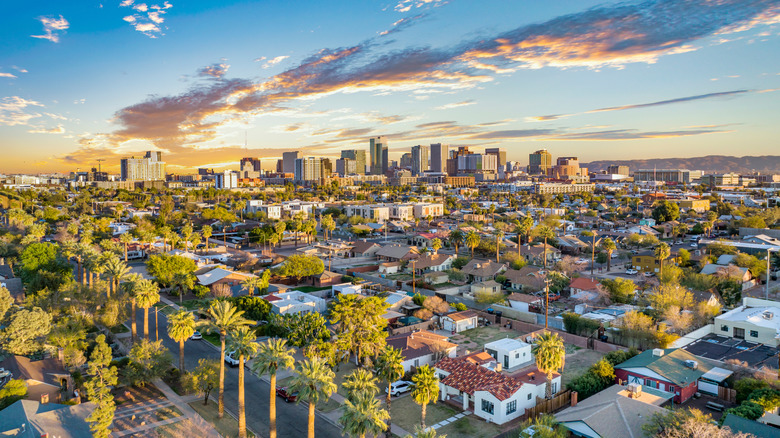
The Coronado District begins north of E. Fillmore Street, the de facto edge of "Downtown Phoenix." In these gridded flats, you could easily drive down and have no idea Coronado is there. But if you turn onto one of its narrow residential streets, you'll see the difference as the one-story commercial buildings and endless parking lots suddenly transform into stately older houses. There's a noticeable lack of strip malls, and most retail is clustered along the neighborhood's edges. If you're accustomed to Maricopa County's newer subdivisions, with ranch homes extending for miles, the houses of Coronado can look more varied and customized. And that's no accident: The highly motivated Coronado Neighborhood Association has worked hard to cultivate its aesthetics since its founding in 1985.
However, Coronado isn't some fussy bedroom community. The district is home to prosperous businesses, such as Ollie Vaughn's Kitchen & Bakery, Mexican restaurant Cielo Rojo, and the boutique confectioner Urban Cookies Bakeshop. One of the most popular spots is The Coronado PHX, an upscale, award-winning diner with a completely plant-based menu. Phoenix is well regarded for its dining scene, and these eateries represent some of its best qualities: tasteful atmosphere, culinary invention, and an independent spirit.
Coronado is easy to navigate on foot, and many visitors will be content with its retro-style scenery. If you need somewhere specific to go, consider Coronado Park, an 11-acre parcel with a tennis court, a playground, a ball field, grills, and that most desirable asset in the desert, a public swimming pool. The area's hippest attraction is Oak Street, a long alleyway covered in public murals. These wall-sized portraits are diverse in style and subject; here you'll find pop culture figures, Day of the Dead skeletons, natural landscapes, and pure abstraction.
Planning your visit to the Coronado District in Phoenix, Arizona
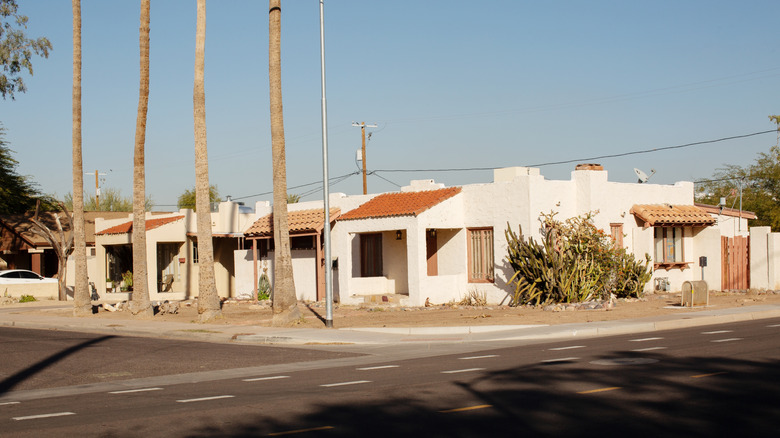
There are no hotels in the Coronado District, so most visitors stay the night elsewhere. But this isn't as forbidding as it may seem: Many of these historic homes double as Airbnbs, which can generally be rented for $100-200 per night (at the time of writing). Downtown Phoenix is packed with accommodations, and many guests can reserve a room for under $100. You can drive from any of these hotels to Coronado Park in a matter of minutes, and in the cooler months, you could walk or ride a bike there as well. Maricopa County is surprisingly pleasant for cyclists; hidden canals in Phoenix provide miles of scenic paths, waterfalls, brews, and bites.
Each year, millions of travelers arrive in Arizona by way of Sky Harbor International Airport, a major Southwestern hub. About a dozen rental car companies are based at Sky Harbor, and Phoenix is a very automotive city, so you'll likely be able to secure a vehicle here. You don't have to, though; the 24th Street light rail station is located right outside the airport, and you can quickly hop on a train to Downtown Phoenix. To the surprise of many, Phoenix's urban center is very pedestrian-friendly, and ride-share apps are popular; Uber used to test its self-driving vehicles in Arizona. In short, you can explore the inner city and Coronado District without splurging on your own wheels. For truly restless walkers, check out the epic Maricopa Trail outside Phoenix, which loops through gorgeous Sonoran Desert landscapes.