
Europe's Most Accessible City For 2025 Is A World-Class Top Bucket List Destination

The ability to see the world's most iconic destinations is something travelers cherish deeply. Many may take this freedom for granted, but jet-setters with mobility challenges or medical conditions know that travel plans can hinge on accessibility options. The inclusivity of people with disabilities is becoming the norm, not the exception, and major European cities are making adjustments to be within reach for those with mobility challenges. Many destinations have made exceptional progress, particularly these cities that are the best for wheelchair accessibility.
In 2024, travel insurance company Good To Go conducted a study to determine the most popular European cities best for travelers with disabilities. Based on a metric that considered a destination's public transportation, flight times, healthcare, and accessible restaurants and attractions, the top honor went to the City of Lights and the most visited city in the world: Paris, France. A Reddit user who has visited Paris multiple times using a wheelchair agrees with this ranking, stating, "It is 100% possible to go to Paris with limited mobility and/or health difficulties, and to have a great time!"
There are certainly ways to plan your dream vacation with mobility limitations, and many other European cities on the list are must-visit places, too. Despite its reputation for steep hills and cobblestone streets, Lisbon, Portugal, which Rick Steves compares to San Francisco, came in second. The Italian cities of Milan, Florence, and Venice came in third, fourth, and fifth, respectively. Although navigating unfamiliar surroundings is a challenge for mobility-impaired individuals, considering the strides made in accessibility, the rewards received from experiencing the world's greatest cities are well worth the effort.
Tips for accessible travel in Paris
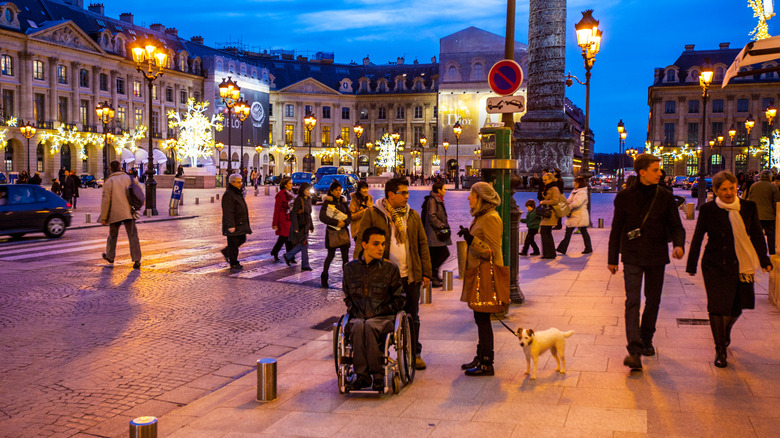
While Paris does have some limitations in the realm of public transport and accessible attractions, overall, the city is well-prepared to accommodate visitors of all abilities. Sage Traveling, a website dedicated to accessible travel, recommends using the city buses instead of taxis. Most bus lines are handicapped-accessible, and wheelchair passengers ride for free, while those with other disabilities are eligible for a 50% discount. Within the Paris subway system, only Metro Line 14 is entirely accessible. In addition to buses, the city's trams, which serve Paris and its surrounding metro area, have floor-level ramps and wide doors for obstacle-free entry and exit. Hailing an accessible taxi is more costly, but they operate 24/7 and are a great option when you're too exhausted for a bus or train.
The above-ground RER network of trains connects Paris to outlying suburbs, airports, and attractions, such as Disneyland Paris and the Palace of Versailles. All the regional trains are equipped with manually-operated wheelchair ramps. Reservations or requests for assistance can be made before boarding, but some stations may have minimal staff at certain hours. If you are traveling internationally by rail, you'll most likely depart from the Gare du Nord station — plus, other domestic rail lines are here. Gare du Nord is fully wheelchair accessible and has support for passengers with visual, motor, hearing, and mental disabilities.
Paris' accessible museums and attractions
Visiting the world's greatest art museums and historical sites provides a lifetime of memories and personal enrichment, and Paris tops the list not only in quantity but also in its level of service and accessible features. Many museums offer free entry, a dedicated entrance to bypass long queues, and specialized services to make the visit more enjoyable and fulfilling, but it's important to note that some sites will require a proof of disability card.
The Louvre offers free admission and priority access to disabled persons and those accompanying them. The museum even has a map of recommended trails for optimal ease and comfort. To avoid the crowds, visitors of all abilities may want to check out these underrated alternatives to the Mona Lisa. Visitors with mobility issues may also borrow wheelchairs, folding or rolling chairs, and rubber-tipped canes free of charge. The Musée de l'Orangerie, famous for its vast collection of impressionist art, offers free priority entrance.
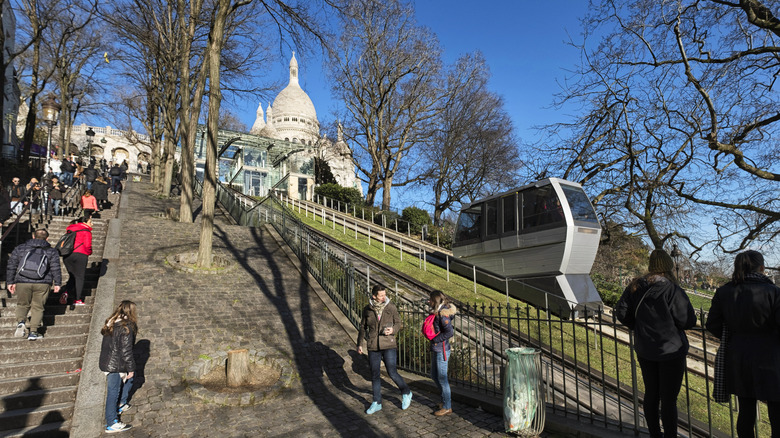
One of the most beautiful sites in Paris, the Basilique du Sacré-Cœur de Montmartre, sits atop a steep hill with panoramic views of the city. To avoid the hundreds of steps to reach the top, the fully accessible funicular will get you there in under two minutes. To access the basilica, there's an elevator, but the top of the dome can only be reached via 300 stairs. Both the Eiffel Tower and Arc de Triomphe also have accessible features and reduced prices or free entry, but they may not be as easy to navigate as other attractions. When in doubt, the Paris Je T'aime mobile app is filled with invaluable information on navigating Paris specifically for visitors with disabilities. The CityMapper app also features transit information for travelers with mobility challenges.