
5 Iconic Movies Rick Steves Says To Watch Before Your Visit To Rome
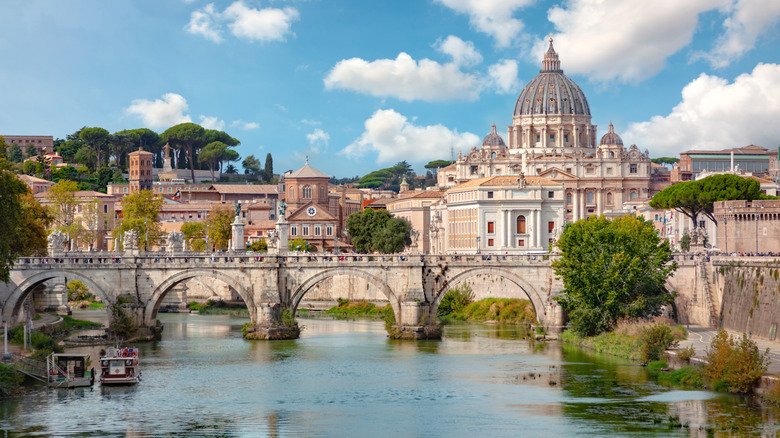
The Eternal City of Rome, resting regally on its Seven Hills, ancient in its vestment, glorious in its legacy, possesses a sacred aura that has taken many a soul's breath away. For over two millennia, Rome has held a central role in European history, culture, and art, serving as a focal muse for countless painters, sculptors, architects, and movie directors. All have contributed to its magnificence, and so when one walks into Rome, the feeling of walking into a movie set full of gardens, luxury, and old charm is immutable. That is why for Rick Steves, a lifelong lover of the city, the following five underrated movies are a must-watch before stepping unto its ancient cobblestones.
Without its awe-inspiring grandeur overwhelming you before your visit, in the weeks leading up to your trip a cinema marathon can help mentally prepare you. There is no shortage of fascinating themes that cover the innumerable variety of social, cultural, and political climates that make up Rome. We have celebrated masterpieces like "The Great Beauty", exploring themes of hedonism within modern Rome's high society and the search for meaning through the lens of a jaded writer. From satirical narratives like the coming-of-age story "Caterina in the Big City", to genre-defining Hollywood historical epics such as "Ben-Hur," which portrays Rome in all of its ancient glory, there is something for everyone.
After all, there has been no lack of reverence and homage paid to this city by countless directors, producers and movie stars, created by movie gods such as Federico Fellini, Sophia Loren, and Marcello Mastroianni. There are countless movies to see, from Oscar-winners to arthouse flicks, but where to begin? Dive into this non-exhaustive list pulled from European travel authority Rick Steves and see what catches your eye.
Rome as 'The Great Beauty,' Paolo Sorrentino (2013)
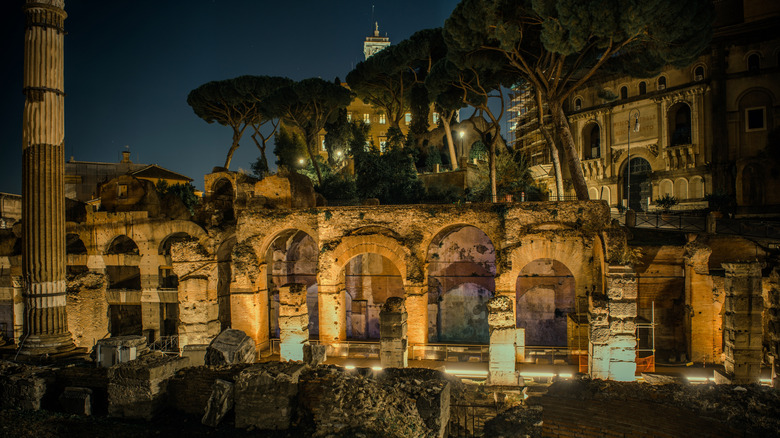
For Neapolitan-born film director and writer Paolo Sorrentino all of Rome, especially in her resplendent nocturnal beauty, serves as the principal set for "The Great Beauty," which earned him the Oscar in 2014 for Best Foreign Language Film. Considered by many to be the director's love letter to Rome, it follows the life of Jep Gambardella, a jaded writer and socialite. At the turn of his 65th birthday, the news of a long lost love's passing sets him off on a deep existential search for meaning and understanding, focused on the nature of beauty, both inner and outer.
Rome's breathtaking locations are captured in Sorrentino's camera work with such a calculated, reverent, slow pace that the contrast with the film's colorful cast of comical, tragic, and absurd characters wrestling with their own unique search for beauty around the protagonist is one of theatrical genius on a grand scale. The film itself is akin to a walk, following Jep Gambardella throughout the Eternal City, setting to setting, from the Baths of Caracalla to the banks of the city's river Tiber to the Aventine Hill. There is no central plot. Instead, it's a sequence of dialogues, events, and poetic encounters, such that "The Great Beauty" is considered by many, as even the New York Times notes, the "La Dolce Vita" of the 21st century.
For Paolo Sorrentino, the city of Rome itself is more than a filming location. It's a main character central to the cast, a "great beauty" unto herself. With his immersive, borderline serenading camerawork, and a vivid cornucopia of characters scattered across his masterpiece, "The Great Beauty" corrects everything that Hollywood movies get wrong in terms of Italy and its noble capital.
'La Dolce Vita,' Federico Fellini (1960)
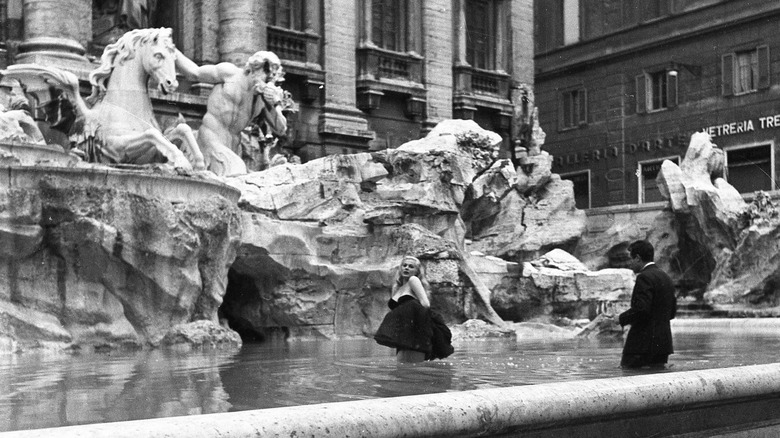
When "La Dolce Vita" hit the screens in 1960, its release was akin to a cannon shot heard across the world of film. Directed by the legendary titan of Italian cinema, Federico Fellini, his magnum opus is considered to be one of the greatest films ever made, with a deserving current score of 95% on Rotten Tomatoes. The masterpiece itself has become as iconic to Rome's culture as the beautiful Trevi Fountain, which was immortalized in one of cinema's most famous scenes, Anita Ekberg hypnotizing audiences with her dance in its waters as actor Marcello Mastroianni watches, spellbound.
Shot across some of the most iconic landmarks of Rome, including the luxuriously decadent Via Veneto street, Saint Peter's Basilica (the most famous of the must-see churches in Rome), as well as the lush Tivoli gardens, Fellini had no shortage of opulent locations to bring this story to life. Split into seven "episodes", it follows anecdotes from the wanderings of a melancholic tabloid reporter Marcello Rubini (Mastroianni), drawn into the hedonistic thrills of Rome's high society, yet called towards a more meaningful existence during moments of self-reflection.
What was the magic ingredient that set "La Dolce Vita" as the standard bearer of Rome's beauty? The answer may lie in its formula of being a whirlwind of visual extravaganza, full of symbolically loaded locations oozing with allegory and hidden meaning, as well as constant motion, both physical and emotional. The title itself, roughly translatable as a state of "the sweet life," calls the audience to witness that a glamorous, vice-laden life of revolving thrills and cheap pleasures may leave a deeply bitter aftertaste in the soul.
'Bicycle Thieves,' Vittorio De Sica (1948)
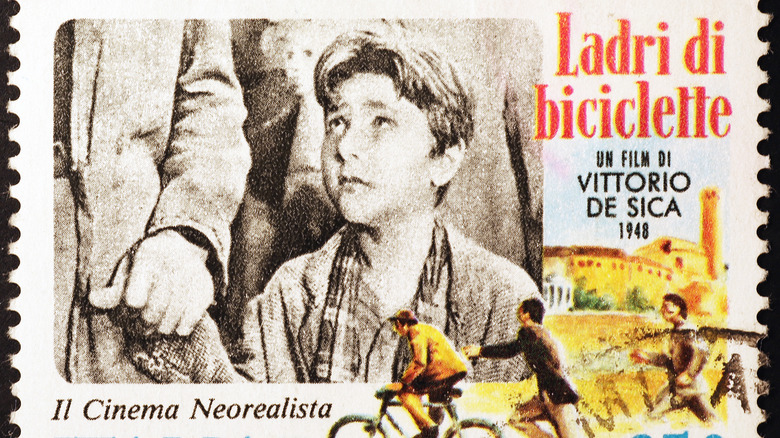
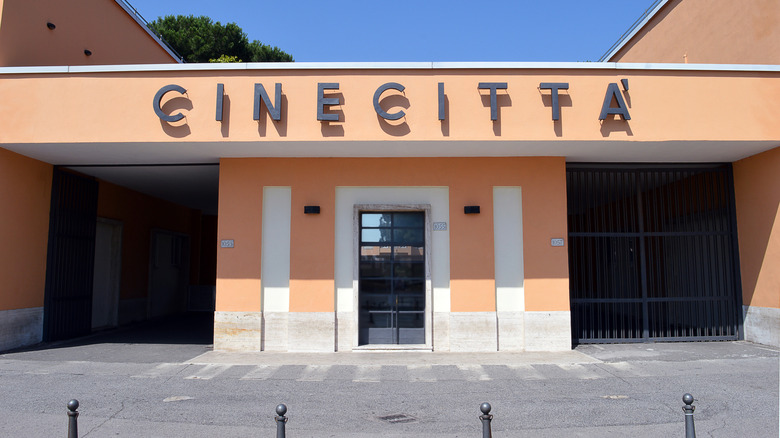
Rome isn't always the illustrious maiden of romantic ideals painted in rosy hues, however. The somber and tragic aftermath of World War II left a dark stain on Italy's artistic psyche, giving birth to the genre known as Neorealism. It came from the destruction of the renowned original Cinecittà film studios, the mecca of Italian filmmaking (since then rebuilt and active to this day), combined with a strong disillusionment of many directors who believed that Americanized, escapist feel-good cinema no longer resonated with a mostly working class audience struggling during post-war. This new genre served to bridge the gap and tell stories focused on everyday life struggles, poverty, and social unrest. Enter "The Bicycle Thieves."
"The Bicycle Thieves" is considered by many critics to be the most poignant and relevant film of the Neorealist genre. Focused on the struggle of trying to start anew in the midst of scarce opportunities and shaky morality, it tells the tragic story of a young husband and father having his bicycle stolen on the first day of a new job, a lifeline meant to feed his family. With his son as a symbol of innocence to accompany him, he sets out across Rome to find the thief, encountering the many layers of the city's struggling masses, making the viewer an uncomfortable witness to the harsh realities of human nature.
"The Bicycle Thieves" was voted as the best film of all time in 1952 by the British magazine Sight and Sound. The locations include the housing projects of Citta Valmelaina, Porta Pinciana, and the Piazza Vittoria. The niche film won an honorary Oscar in 1950 as the most outstanding foreign language film.
'Caterina in the Big City,' Paolo Virzi (2003)
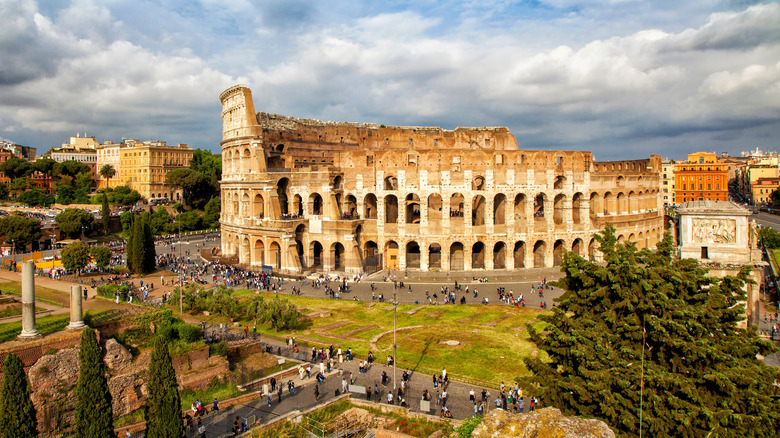
This picture is positively going to stand out as one of the most underrated movies on this list, as it catered more to its native Italian audience than to the worldwide box office. While the film is relatively unknown to most American viewers, the themes explored are familiar to most of us. A heartwarming, honest, and human coming-of-age story centered around changes, family, and finding your tribe, "Caterina in the Big City" is a cleverly crafted timeless classic for most Italian millennials.
After moving to Rome from a sleepy provincial town due to her father's work, Caterina finds herself having to start anew in the bustling metropolis. Immersing herself in her new school proves to be challenging, as she discovers the tribal divisions and cliques of her classmates encompass not only personalities, but also political backgrounds and social status. Developing new friendships on both sides of the political and social spectrum, she is challenged with a crisis of understanding who she is and where she belongs. It's a common theme for most teenagers struggling to adapt to change.
Released in 2003, and directed by Paolo Virzi, the film was primarily filmed in Rome and in the province of Lazio, a breathtaking region of Italy worthy of a day trip by a short train ride from the capital. Despite grossing only 4.5 million worldwide, it was highly rated on Rotten Tomatoes, with a score of 90%. The site concludes that there's a critical consensus that the film is a "modest teen coming-of-age story and a satirical microcosm of Italy's political climate."
'Ben-Hur,' William Wyler (1959)
Whereas grandiose spectacles of ancient Rome have become standard thanks to such modern blockbusters as "Gladiator," by Ridley Scott, it was not always so. Some dared to do much more, and before the advent of CGI. Fueled by sheer commitment, laced with wild imagination, this epic left an indelible mark on cinema. When one thinks of a classic Hollywood epic of literal biblical proportions, "Ben-Hur," directed by William Wyler and boasting a record-setting 11 Academy Awards, is impossible to ignore.
A remake of the original 1925 silent film, the 1959 "Ben-Hur" featured an astounding 15,000 extras to film some of its scenes, and was a massive financial gamble for the Metro-Goldwyn-Myer studios. Having put up 15 million dollars for the production of the film, their vision was assuredly rewarded when it brought in an astounding 74 million, the highest box office at the time.The tale begins with Judah Ben-Hur, a young Jewish prince, played masterfully by Charlton Heston, reuniting with a Roman childhood friend Messala, who spitefully betrays him once the former refuses to subjugate his people further in Jerusalem.
Filmed diligently in the Cinecittà film studios, which deserve a visit themselves when you're in Rome, some of the movie sets took up as much as 18 acres, which was the size of the set for the scenes of the famous chariot races. If you wish to travel back in time through the magic of the camera lens to witness the ancient Roman Empire, "Ben-Hur" is a must see. Having checked these movies off your list, your visit to Rome is sure to be a well-rounded experience, blending a more intimate understanding of its fabric, and the recognition of some of its most outstanding landmarks.