
North Carolina's 5 Most Beautiful Parks In The Blue Ridge Mountains With Breathtaking Views
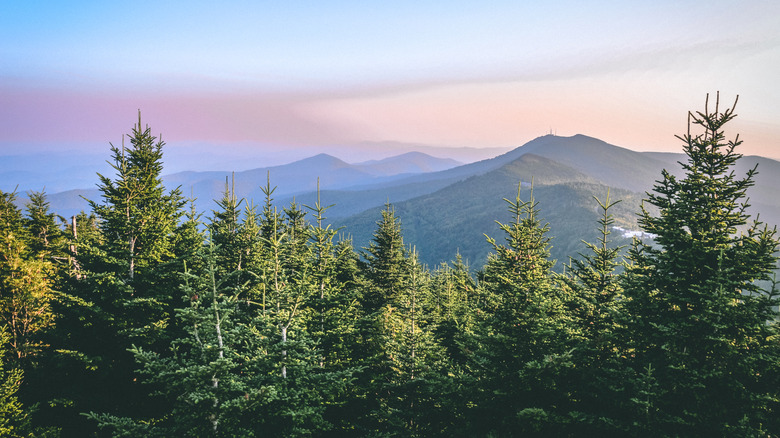
North Carolina is arguably the premier destination for mountain vacations east of the Mississippi River, none more famous than the epic views and scenic trails of the Great Smoky Mountains (America's most-visited national park). Of course, North Carolina shares Great Smoky Mountains National Park with neighboring Tennessee. Yet even if the Tennessee side gets most of the Great Smokies' best-known destinations (like the one-of-a-kind LeConte Lodge and the tourist-friendly mountain town of Gatlinburg), North Carolina's borders contain plenty more spectacular mountain parks that rival the Smokies in epic beauty and thrilling outdoor adventures.
Most of North Carolina's mountainous regions are part of the heavenly Blue Ridge Mountains province of the much larger Appalachian Range. The Blue Ridge Mountains technically stretch from Pennsylvania all the way to Georgia. However, many of the most iconic Blue Ridge views are found along the western side of North Carolina, where the Blue Ridge Mountains (and the Appalachian range as a whole) reach their crescendo.
With such sublime natural scenery at hand, North Carolina's Blue Ridge regions have more than a few stunning parks that share this incredible beauty with visitors from all around the world. Many of these parks, despite their pristine characteristics, are within a convenient distance of major North Carolina tourism centers like Asheville. While it's virtually impossible to find a bad outdoor destination among the numerous state and national parks in North Carolina's Blue Ridge Mountains, these five in particular stand out for their unsurpassed beauty, breathtaking viewpoints, and outstanding recreational opportunities.
E.B. Jeffress Park
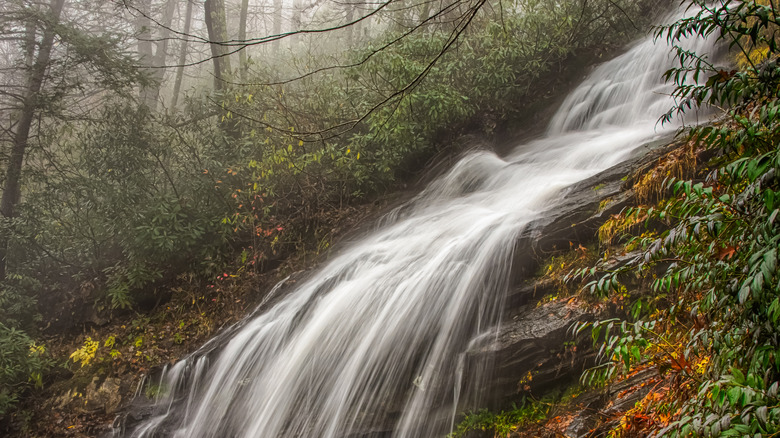
The E.B. Jeffress Park is far from the biggest park in North Carolina's Blue Ridge Mountains. In fact, at only around 600 acres, E.B. Jeffress could fit into many of the more prominent Blue Ridge Mountain parks — several times over. Despite its size, however, E.B. Jeffress Park packs quite a punch in terms of spectacular scenery.
One advantage that E.B. Jeffress has over larger Blue Ridge Mountain parks is location. It sits at milepost 272.5 along the iconic Blue Ridge Parkway. The parkway as a whole is one of America's premier scenic drives, stretching 469 miles through the most magnificent mountain views of North Carolina and Virginia. Sightseeing motorists can find plenty of amazing parks to stop at along the way, including much larger Blue Ridge Parkway recreation areas like the 7,000-acre Doughton Park. Still, the deceptively modest E.B. Jeffress Park may have them all beat when it comes to scenic hikes and unique topographical features.
While the park's size limits its quantity of scenic viewpoints, E.B. Jeffress's main viewing area may be the most convenient along the Blue Ridge Parkway. There's a cozy picnic area just off the parking lot, situated in front of a gap in the trees, offering breathtaking views of the Blue Ridge Mountains while you enjoy a peaceful lunch. From the trailhead just off the parking lot, you can hike a 1-mile nature trail loop to one of the Blue Ridge range's hidden gems. At 200 feet high, the aptly-named Cascade Falls is one of the most eye-grabbing waterfalls along the parkway. The trail provides excellent viewpoints of different sections of the falls, making E.B. Jeffress Park one of the best destinations for waterfall scenery in North Carolina.
Chimney Rock State Park
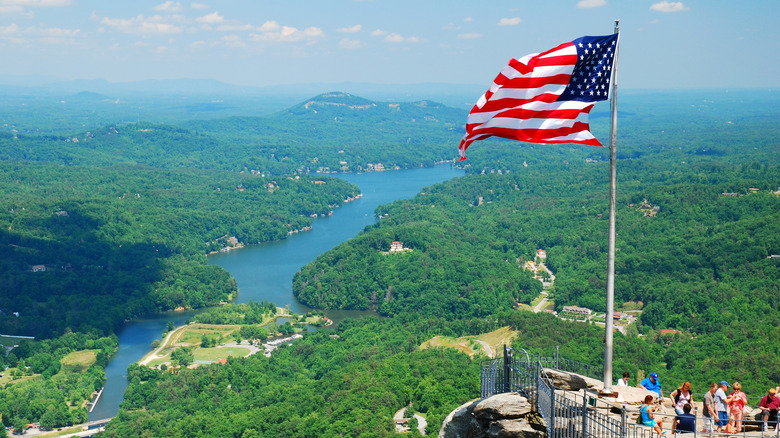
The Blue Ridge Mountains are much better known for rolling, tree-clad Appalachian summits than the kinds of bare rock faces you'd find out west. However, there are exceptions to this, none more spectacular than the central feature of North Carolina's unforgettable Chimney Rock State Park. Located about an hour away by car from Asheville, Chimney Rock State Park sits in a strikingly picturesque section of the Blue Ridge Mountains, where some of the range's most dramatic peaks mingle with vast valleys and mountain lakes. The park itself straddles the gorgeous Hickory Nut Gorge, a 14-mile-long canyon system cutting through the Blue Ridge Mountains like an Appalachian Grand Canyon.
Photo-worthy views of Hickory Nut Gorge alone would earn Chimney Rock State Park a spot among the most scenic North Carolina parks. However, Chimney Rock State Park's defining feature is the eponymous Chimney Rock, a prominent rocky monolith that towers over 300 feet above the surrounding mountain terrain. As a geological wonder that wouldn't look out of place in Yosemite, Chimney Rock is a sight to behold all on its own. At the same time, the observation area atop the rock provides unsurpassed panoramic views of Hickory Nut Gorge and the Blue Ridge Mountains.
Remarkably, the Chimney Rock viewing area is quite accessible for most visitors, thanks to a convenient elevator and well-maintained stairs. Chimney Rock State Park also contains the 404-foot-high Hickory Nut Falls, one of the highest waterfalls in the eastern U.S. and a spectacular photo opportunity of its own. Parts of the neighboring Rumbling Bald mountain (a top North Carolina rock climbing destination) also fall within Chimney Rock State Park's borders. While at the time of this writing, day-use access to the Chimney Rock viewing area costs $17 for adults ($8 for children), access to Rumbling Bald is free.
Grandfather Mountain State Park
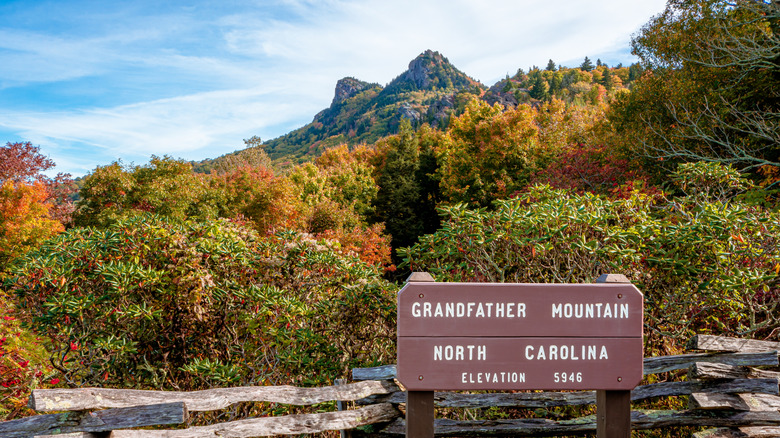
Though it's not the range's highest peak, the timeless Grandfather Mountain occupies a special place of distinction in North Carolina's Blue Ridge. With an elevation of 5,946 feet, Grandfather Mountain certainly stands out against the surrounding landscape, while also offering extraordinary views from the summit. Grandfather Mountain, however, has a lot more going for it than "just" prominent views. The mountain's topography is notably dramatic compared to other Blue Ridge Mountains, with precipitous cliffs, stark drops, and inclement weather contrasting with the mountain's prestigious grandeur. Still, these natural forces do serve a crucial purpose. Grandfather Mountain's foreboding elements forge one of the Blue Ridge region's rarest and most diverse ecosystems, with 16 distinct eco-regions and about 72 endangered species all thriving in the roughly 5,000 acres surrounding the mountain. Thanks to its prominent ecological significance, Grandfather Mountain is recognized as part of an official UNESCO Biosphere Reserve.
With such resources at hand, Grandfather Mountain State Park boasts some of the best views and experiences in the entire North Carolina state park system. The state park portion of Grandfather Mountain contains many of the area's pristine backcountry areas, with perfect, unadulterated views of the peak and its surrounding forest ecosystems. There are also plenty of challenging yet rewarding trails, including parts of the scenic Grandfather Trail and hiking routes to nearby mountains like Calloway Peak.
Grandfather Mountain is also home to the privately-owned Grandfather Mountain Park, which offers a more modern (yet still magnificent) mountain viewing experience. Alongside its sublime views and hiking trails, Grandfather Mountain Park also features scenic summit drives, a nature museum, and even dining options. Grandfather Mountain Park's most famous feature is perhaps the breathtaking Mile High Swinging Bridge and its majestic mountain views.
Mount Mitchell State Park
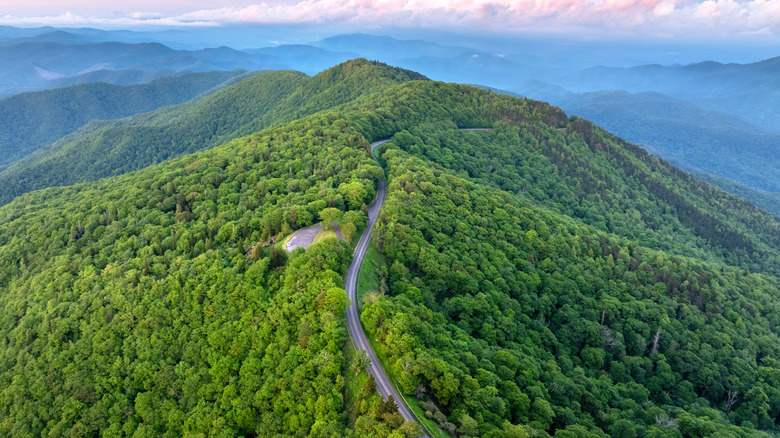
Even compared to other Appalachian states, North Carolina is positively saturated with prominent mountains. Yet among the state's impressive collection of amazing Appalachian peaks, one particular mountain stands out (literally). At 6,684 feet, the iconic Mount Mitchell is not only the highest point in both North Carolina and the Blue Ridge Mountains as a whole — it's also the highest point in the United States east of the Mississippi River. When a mountain can beat out other East Coast titans like New Hampshire's Mount Washington and New York's Mount Marcy, you know it has to be special. Even without its record-setting height, however, Mount Mitchell is an unmissable Blue Ridge destination for epic hikes, picturesque forest scenery, and unforgettable views.
Mount Mitchell is part of a Blue Ridge Mountain subrange known as the Black Mountains. Despite their somewhat somber name (which comes from the dense covering of dark spruce and fir trees that cloaks their summits), the Black Mountains offer a rich tableau of bright Appalachian colors juxtaposed against the deep blue of the North Carolina sky. Much of Mount Mitchell itself is part of North Carolina's unmissable Mount Mitchell State Park.
Like the best state (and national parks), Mount Mitchell State Park does an excellent job of balancing its namesake feature's epic natural beauty with necessary visitor-friendly amenities. Throughout the park, you can find scenic roads, handicap-accessible paths, and even food concessions! The mountain's prominent summit features an observation platform with the highest-altitude views you'll find anywhere in the Eastern U.S. The park also has several excellent trails, including both an easy and a challenging route to the summit. Even better, Mount Mitchell State Park is accessible via the Blue Ridge Parkway and is completely free to enter!
Pisgah National Forest
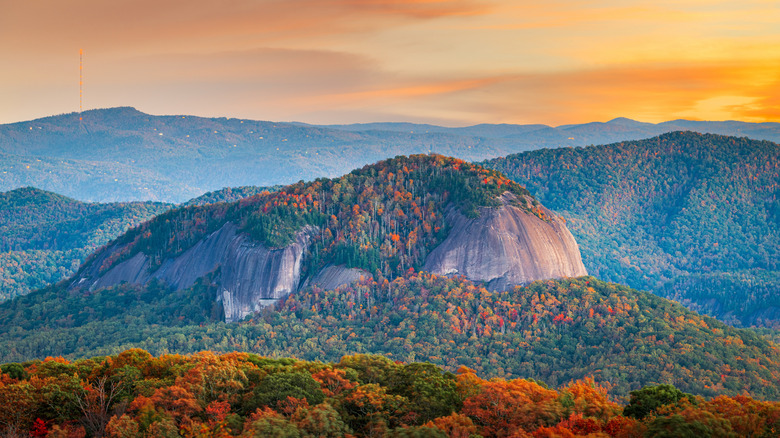
North Carolina has no shortage of incredible parks in its timeless Blue Ridge Mountains. However, no single park offers the size or the scope of the vast Pisgah National Forest. In fact, Pisgah National Forest is less of a single, localized park and more of an expansive preserve stretching across miles and miles of Blue Ridge peaks and charming mountain towns.
Pisgah's 500,000 acres make it nearly 1,000 times larger than E.B. Jeffress Park. And, like E.B. Jeffress, Pisgah wastes none of its acreage with anything less than spectacular views and recreational opportunities. As one of the four national forests in North Carolina, Pisgah National Forest falls under the jurisdiction of the federal government, via the U.S. Forest Service. This arrangement provides both protection and public access to the park's vast hardwood forests, prominent Blue Ridge peaks, and ravishing waterfalls.
Pisgah National Forest consists of three separate administrative divisions: the Pisgah Ranger District, the Appalachian Ranger District, and the Grandfather Ranger District. Each of these districts contains enough remarkable sights to stand out among any other park in the Blue Ridge region. For example, the Grandfather Ranger District contains the outstanding Linville Gorge Wilderness, which showcases both the monumental Linville Gorge (the deepest gorge in the eastern U.S.) and the 2,000-foot Linville Falls. The Appalachian Ranger District features wonders like the rhododendron-rich Roan Mountain and the hiking and rafting haven of Pisgah's Hot Springs Area. Other prominent sights within the forest are the lovely Craggy Gardens Picnic Area, the tranquil French Broad River, and the picturesque meadows of Max Patch Mountain. No matter where you go in Pisgah National Forest, you'll likely find ancient old-growth forests, eye-catching waterfalls, and some of the nation's most scenic hiking trails.
Methodology
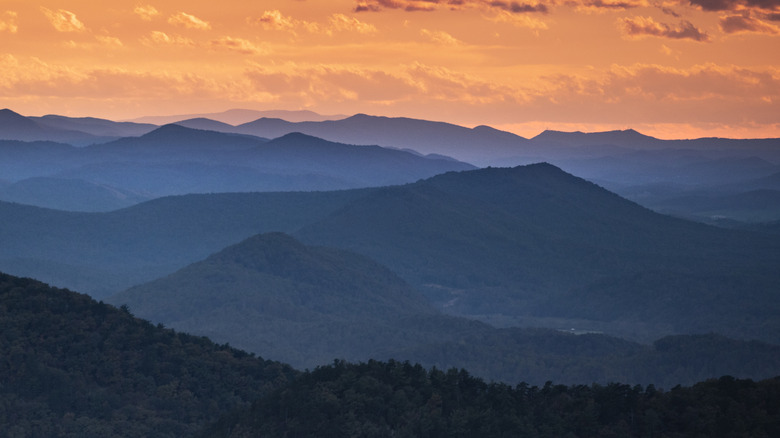
North Carolina's Blue Ridge Mountains are vast, with dozens of national, state, and local parks scattered throughout. Given the area's immense beauty, no North Carolina Blue Ridge park can be said to have "bad" scenery. In narrowing this list down to just five parks, we looked at factors like unique viewpoints, scenic trails, and sightseeing options. At the same time, we sought to include parks of different sizes to better portray the spectrum of scenic park offerings within North Carolina's Blue Ridge Mountains.
E.B. Jeffress Park and Pisgah National Forest represent two extremes in terms of size. E.B. Jeffress is a relatively small park, protecting only 600 mountainous acres off the Blue Ridge Parkway. Pisgah National Forest, on the other hand, is a vast, federally-administered public land consisting of around half a million acres. Yet both parks represent the one-of-a-kind beauty of the Blue Ridge Mountains in their own way and contain some of the region's most scenic hikes. E.B. Jeffress Park, despite its size, packs a huge punch in terms of scenery — including one of the most beautiful waterfalls in North Carolina. Pisgah National Forest features miles and miles of grandiose mountain views that rival the more famous Great Smoky Mountains National Park nearby.
In between these two extremes, the three state parks on this list represent epic Blue Ridge scenery and unique features found nowhere else in North Carolina. The centerpiece mountains of each park (Chimney Rock, Grandfather Mountain, and Mount Mitchell, respectively) stand out among the Blue Ridge Mountains for their distinctive features, or (in the case of Mount Mitchell) notable size. Each of these state parks includes plenty of scenic viewpoints of its defining mountain feature, while also offering plenty of high-elevation observation areas with spectacular views of the surrounding Blue Ridge.