
Texas' Under-The-Radar State Park Is A Hidden Gem Outside Fort Worth With Scenic Trails And Eye-Catching Waterfalls
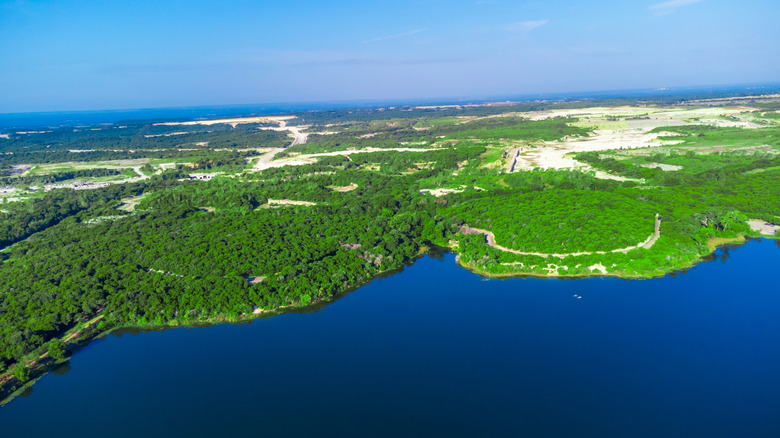
Though it often gets overshadowed by its larger next-door neighbor, the Texas city of Fort Worth is an underrated destination rich in cowboy charm and western culture. Within Fort Worth itself, visitors can find plenty of amazing attractions that rival anything found in the neighboring Dallas, like the tranquil cascades of Fort Worth Water Gardens in the heart of the city's urban beauty. Outside of Fort Worth, however, lies a wealth of superb outdoor destinations that offer a much-needed break from the busy Dallas-Fort Worth metro area. Just an hour south of Fort Worth is Texas' underrated Cleburne State Park, a surprisingly rich outdoor oasis that seems worlds away from the DFW area's expansive metropolitan corridors.
Sitting in the heart of the rugged American Southwest, Texas isn't exactly known for its forests. And yet much of the Lone Star State does bear a lush woodland cover that may, at times, give the famed forests of the Northeast a bit of competition. Cleburne State Park boasts some of Texas' best forest views, with a diverse canopy of trees spread across the region's rocky hills. At the same time, Cleburne offers exceptional lakeside views, putting it among the top spots for water recreation outside of Texas' Gulf Coast. Even more impressive are the park's constructed features. Though a century of human development may seem like a detriment to a park's natural beauty, the remnants of past work done by the Civilian Conservation Corps (CCC) blend in with Cleburne's natural features in a unique (though no less stunning) scene. In fact, one of the most prominent CCC-built spots in Cleburne State Park takes advantage of natural water drainage to create one of Texas' most eye-catching waterfalls!
Discover Cleburne State Park's natural wonders
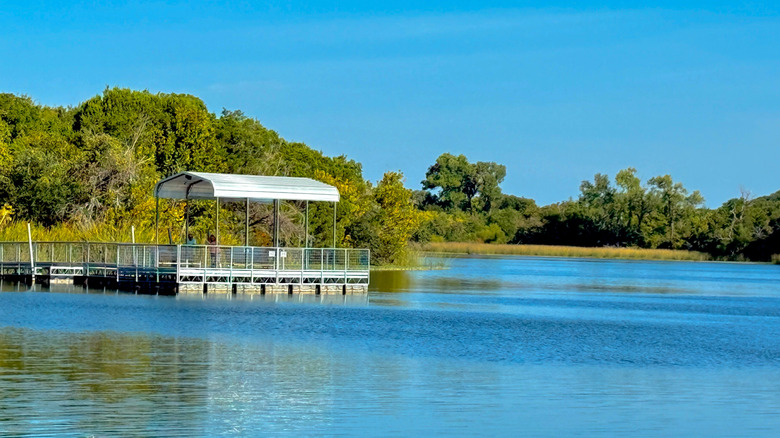
Though its natural setting is undeniably beautiful on its own, Cleburne State Park actually owes its existence to one of America's greatest public works programs. Before the Great Depression, the area that is now Cleburne State Park was a sparsely populated valley near old cattle driving routes. When the CCC was created in the 1930s, many previously unemployed men went to work transforming beautiful but undeveloped lands into top-notch parks. The Cleburne area south of Fort Worth was already rich in natural springs flowing through a scenic valley. To create Cleburne State Park, CCC workers constructed an earthen dam and a three-level spillway, resulting in a picturesque spring-fed lake. These skilled workers also constructed the roadways, bridges, boathouses, bathhouses, and other essential pieces of infrastructure that are still found in the park today.
The park's main water feature, the 116-acre Cedar Lake, offers ravishing views and excellent water recreation. Around the lake, Cleburne shines with lovely forests of juniper, oak, elm, and other types of trees. The park's open fields are also home to dream-like gardens of bluebonnets and other wildflowers. Several animal species make their home in Cleburne, including white-tailed deer, rabbits, and armadillos. Birdwatchers will have a wonderful time observing the many species of birds found in the park, including herons, cormorants, sandpipers, and so many others. However, the park's most eye-catching feature is, ironically, a byproduct of its human development. The three-layer Cleburne spillway, constructed during the creation of Cedar Lake, transforms into a one-of-a-kind waterfall after every rainstorm. And though Texas has several breathtaking waterfall destinations around Austin and other cities, the distinctive three-tiered cascade at Cleburne creates a unique scene you won't soon forget!
Hike, bike, or swim through Texas history in Cleburne State Park
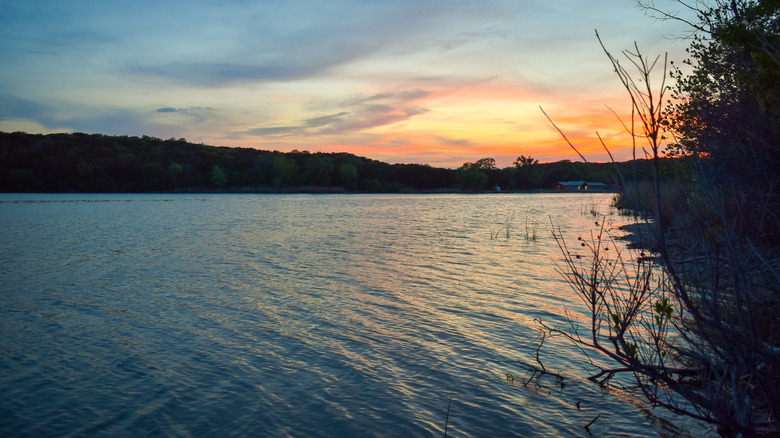
At 528 acres, Cleburne State Park is the perfect size for a day of fun outdoor recreation. Much of the dedicated CCC work that went into the creation of the park also created a network of excellent hiking trails. The park's trails range between easy and moderate difficulty levels, with trail lengths measuring from less than a mile to a few miles. The Fossil Ridge Loop Trail, for example, is a roughly 4-mile tour of Cleburne's entire perimeter, with plenty of photo-worthy shots of Cedar Lake. The White-tail Hollow Trail, on the other hand, is a short 1.8-mile jaunt that passes the park's famed spillway (and, depending on water levels, the park's waterfall).
Cleburne State Park's water features also mean that you don't have to limit your activities to dry land. Cedar Lake is an excellent spot for no-wake boating, with a self-serve boat rental kiosk and a boat ramp built by the very same CCC workers who constructed the lake itself. Cedar Lake is also stocked with largemouth bass, channel catfish, crappie, and sunfish, with fishing available from either a boat or the shore. The northern edge of Cedar Lake even has a swimming beach!
At the time of this writing, day-use entry to Cleburne State Park is $6 for visitors 13 and older (younger children get in for free). The park's campsites include both full hookup RV sites and tent camping sites with electrical outlets, plus a primitive group campsite available for youth groups. Cleburne also has three cabins that can accommodate groups of up to eight people, as well as reservable group barracks, screened shelters, and kitchens. And while its terrain can be hilly, much of Cleburne's infrastructure (including the fishing pier and some restroom facilities) is handicap accessible.