
'America's First Highway' Is A 170-Mile Maryland Road With Dozens Of Secret Stops And Historic Sites
One morning in 1888, Bertha Benz, wife of automotive pioneer Karl Benz, and her two sons set off on a 60-mile trundle from Mannheim to Pforzheim. Taking her husband's sputtering, wheezing automobile and its 0.88-horsepower engine across rough cobbles and rutted wagon tracks, Bertha Benz zipped through the German countryside at speeds of up to 10 mph and arrived at her destination, relatively unscathed, that evening. In so doing, she had essentially invented the road trip, a concept that America has since popularized and made its own. And where better to get a sense of the American road trip dream than at the nation's first highway? Running between Baltimore and Grantsville, Maryland, is the 170-mile stretch of road called the Historic National Road Scenic Byway — also known as "America's first highway" — and you can still drive along it today.
The road was authorized when Thomas Jefferson was still in the White House, with construction beginning in 1811 as part of a 620-mile route between the Potomac and Ohio rivers. Cars wouldn't become commonplace for another century or so, meaning the National Road was mostly used by settlers in wagons and stagecoaches, migrating westward in search of their fortunes. The introduction of rail networks looked to signal the National Road's demise in the late 19th century, until it was integrated into the coast-to-coast U.S. Route 40 in 1926.
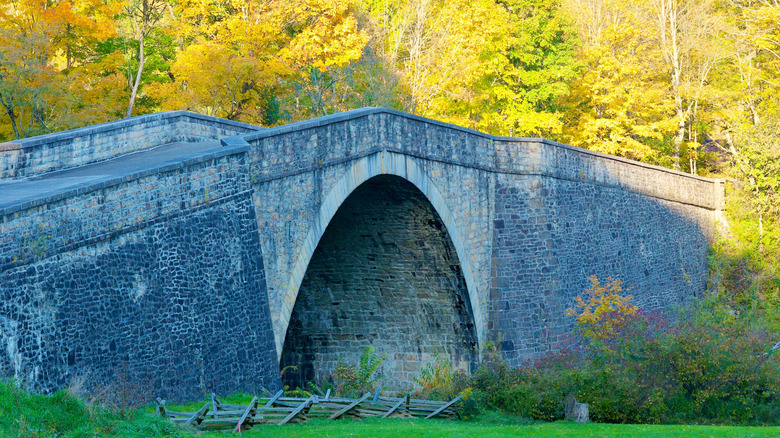
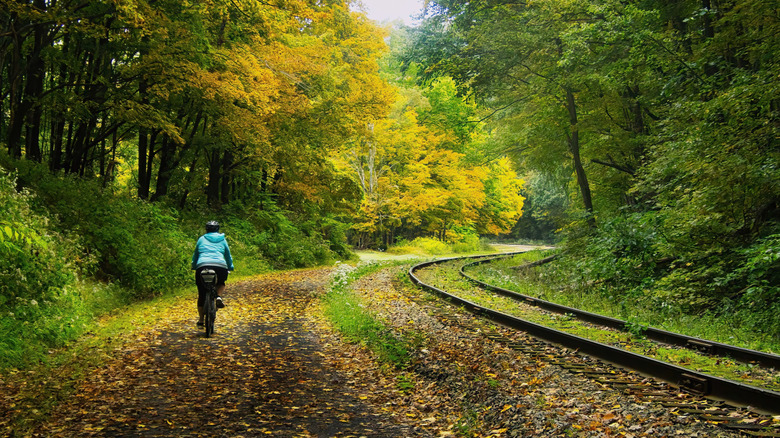
Along the Historic National Road Scenic Byway's 170 miles, you'll find two centuries of history, including Mile Marker "0" near Cumberland, where the first section of road was laid down. Period-style buildings, towns that retain their frontier feel, old way points, and historic stone bridges are also on offer. And if you take time to stop, you'll be rewarded with secret discoveries, like leafy trails running alongside railway tracks or hilltop guesthouses with gorgeous scenery.
Driving through the heart of the National Road
Start your road trip in Grantsville, a quaint mountain town with river views and an old-school candy store that's about 2 hours southeast of Pittsburgh, Pennsylvania. Driving eastward, you'll soon come to Allegany County and the town of Cumberland, where the Mile Marker "0" stands. There are a couple of museums in the county exploring the history of Allegany, including how the National Road and vehicular innovation transformed travel in the region, and a tollgate house from 1835 guarding the gap between the Wills and Haystack mountains.
Adventure travelers may want to take a detour through the state parks and Appalachian beauty of the Great Allegheny Passage, an entirely off-road trail running all the way to Pittsburgh. If you opt to hike or cycle along this route, you might be glad of some cozy accommodation afterward. The Town Hill Hotel Bed & Breakfast surveys the 44,000 acres of Green Ridge State Forest from its mountain perch and offers more hiking trail access as well as a gazebo and pavilion area.
Also hidden along the byway are impressive displays of visual art, namely in Hagerstown. The Washington County Museum of Fine Arts hosts a permanent collection of more than 6,000 pieces, including paintings, prints, and sculptures, and diverse rotating exhibitions. The Hagerstown Cultural Trail, connecting the city's art district with its main park, features arresting murals and sculptures by various modern artists. In Boonsboro, just outside Hagerstown, you'll find the oldest museum dedicated to the National Road — appropriately called the National Road Museum — while the state park atop South Mountain hosts the first completed monument dedicated to George Washington. Avian enthusiasts take note: the rough-hewn, grey stone tower welcomes raptorial birds, like eagles and falcons, in early autumn.
The Road to Baltimore
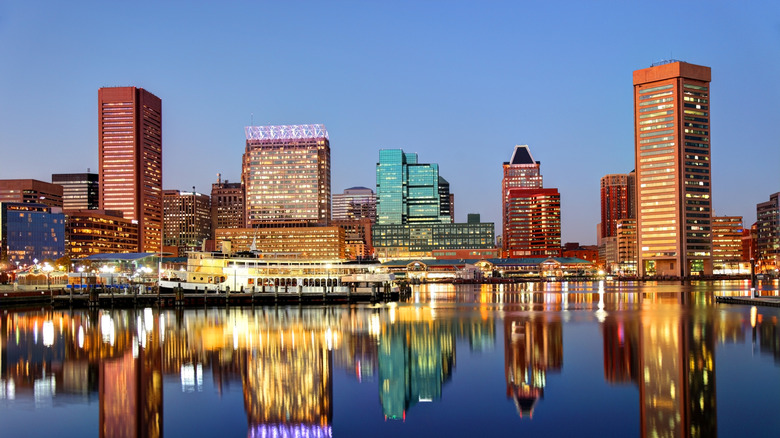
The final stretch of the Historic National Road Scenic Byway brings you into Baltimore, Maryland's largest city. In Ellicott City, a former milltown in the Baltimore suburbs, stop to shop for antiques from yesteryear at Antique Depot or Attic Antiques 'N Things, and don't miss the free-to-enter Baltimore and Ohio Ellicott City Station Museum, hosted in America's oldest surviving official railroad station, built in 1831. Then make your way into "Charm City."
In some quarters, Baltimore has gained a notorious reputation — "Mobtown" was one of its more ignominious monikers — but it can make a great end point to your historic road trip. It's home to underrated neighborhoods like Remington, full of quirky shops and trendy food joints, a handsome harbor perfect for an afternoon stroll, a wax museum dedicated to America's Black history, the popular Ravens and Orioles sports franchises, and the hipster-y Hampden neighborhood, with its chic coffee shops, craft cocktail bars, and high-quality eateries.
If you're overnighting in Baltimore, the city's boutique hotels are worth the splurge. Built in the 1912 Latrobe Building, Hotel Ulysses has a selection of beautifully appointed rooms and common areas, bringing to life famous figures from the past like Edgar Allen Poe and Billie Holiday. Located in Fell's Point, the harbor-facing Pendry Baltimore is even grander, fusing old-world charm with contemporary style. The hotel's pool and patio offer unmatched views of the port on which Baltimore once built its fortunes.