
Breaking One Unspoken Campsite Light Etiquette Rule Will Earn You Side-Eyes From Neighbors
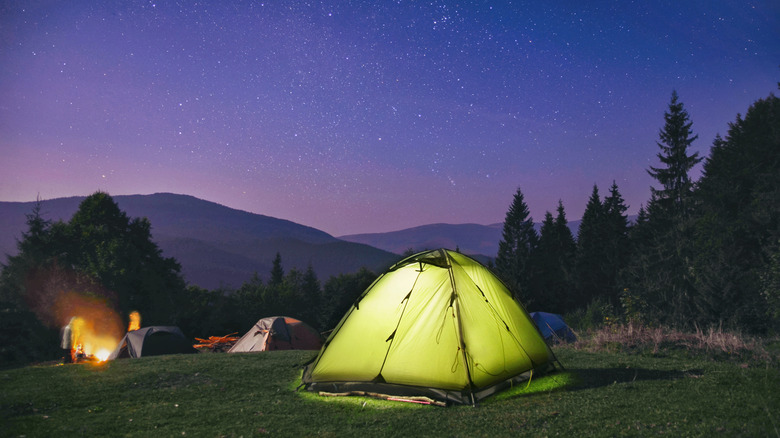
Campgrounds are a real melting pot, a place where people from all walks of life gather together to enjoy nature. And, while images of serene camping setups abound on social media, unless you're staying deep in the wilderness at a lone walk-in site, you'll be sharing space with other people. If you've ever been blinded by a flashlight that must generate at least 3,000 lumens, or tossed and turned all night thanks to your neighbor's ultra-illuminated campsite, you know the importance of light etiquette. The generally-accepted rule of thumb is to keep bright lights off at night unless absolutely necessary. The National Park Service (NPS) doesn't provide any specific rules regarding light usage, but instead urges campers to always be considerate of those around them.
As it instructs, "Consider how your lights affect others who may be trying to sleep or enjoy the darkness a campground can provide. Keep lights shielded and pointing down. You may want to turn it off completely so you can enjoy that beautiful night sky." Once the sun goes down, you should turn on just enough light to cook, get ready for bed, and move about safely. If you need to set up camp after dark, turn your headlights off — your car battery will thank you, too. Keep your flashlight angled down when walking around the campground at night and consider using low-lumen lights, or lanterns with low-lumen settings. For instance, this Duracell 3000 Lumen camping lantern from Costco has an eco-setting that produces just 65 lumens — enough to cast a gentle glow.
Why keeping your lights off is so important
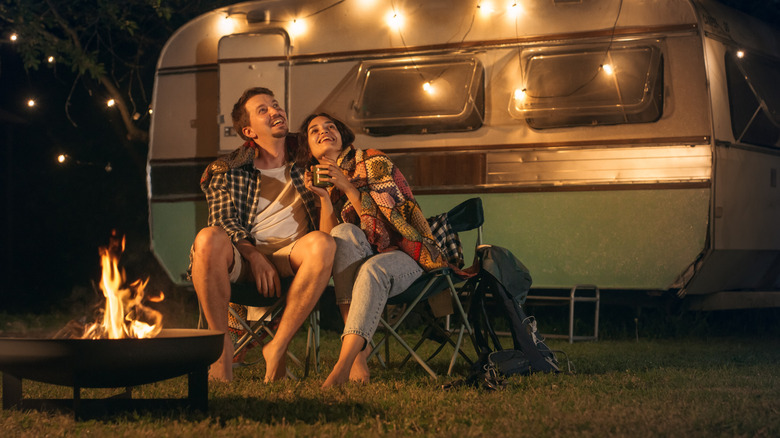
Besides disturbing your neighbors' sleep, even a small amount of light pollution can also significantly alter the stargazing experience, for yourself and others. In a high-traffic thread on Reddit's r/camping subreddit, a newbie camper inquired about whether keeping string lights on overnight would be inconsiderate. The general consensus was that any non-necessary lighting after dark is a major no-no. "When camping pretend you're a Ninja, you don't want anybody to knowing youre there. People didn't leave the city light to look at your lights all night," urged one commenter in a sentiment shared by many other respondents.
Most of us can generally agree that protecting water, green spaces, and indigenous animals is important. However, dark skies as a cultural resource that needs urgent safeguarding is a concept that's only just beginning to take root. The NPS does an admirable job of highlighting the way night skies have influenced cultural practices. This includes indigenous Hawaiians who navigated their way by using the stars, to the role of constellations in indigenous North American star lore.
Projects like DarkSky International have highlighted the value in reducing light pollution since 1988. North Carolina's pristine Cape Lookout National Seashore offers some of the darkest starlit skies on the East Coast, while Hawaii's Volcanoes National Park hides a one-of-a-kind camping experience and pitch black skies against flowing lava. Keep in mind that certified DarkSky parks must enforce specific light restrictions to earn their designation. As such, if you're ever unsure of the rules, simply ask the rangers or staff on duty during your stay.