
These 5 Personality Traits Make You Just Like A New Englander

When I tell people, "I'm from New England," there's often a short pause. I can see it in their faces: They're trying to remember the names of the six states, and which goes where. They might imagine lobster boats, autumnal forests, or snowy ski runs. Some get excited because this region feels so quirky and different from the rest of the country. Others stiffen up because they've heard New Englanders are frosty elites or wisecracking thugs who like to pahk tha cah in Hahvahd yahd. More than one stranger has assumed New England is part of Canada.
As a native Vermonter who lives in Rhode Island, I feel New England is a special place — oddly shaped, tucked into the corner of the Northeast, and the only region in the U.S. not named after its location (The South, the Midwest, etc.). The New England accent is actually several different dialects, although visitors may not hear the differences. Locals often balk at the very concept of New England, taking much more pride in their state, county, or town. Around my neighborhood, a popular T-shirt reads, "I Never Leave Rhode Island." You could spend a lifetime living in one part and never think to drive New England's best road trip route that tours the region's gorgeous small towns and charming cities.
So what are New Englanders like? What personality traits bind this loose collection of states together? Once you move beyond the stereotypes of Winslow Homer paintings and South Boston mobsters, Pats fans and Phish heads, I find certain qualities are common across the region. And if any of these sounds familiar, you might fit right in.
You work hard (and play hard)

For starters, living in New England has never been easy. The land is rocky, forests are dense, and weather can be harsh, especially in long, dark winters. Famous early trades included farming, lumberjacking, and whaling — all involving hard physical labor. It says a lot that Pilgrims showed up on New England's shores and decided this forbidding wilderness was the place to stay, even though half of them starved to death. The Puritans set a precedent for stubbornness that, believe me, survives to this day. Later, New England was a fulcrum of the Industrial Revolution, and many of the hallmark-style villages you'd think to visit started as hardscrabble mill towns.
As a result, the Yankee work ethic is fairly legendary. We've also been pegged — for generations — as practical and penny-pinching. It's impossible to assess whether the average New Englander works any harder than anyone else, but it's a reputation we don't seem to mind cultivating. Lots of people think of lobstermen in Maine and dairy farmers in Vermont, waking up early and quietly toiling all day, but this extends to academia as well: Four of the eight Ivy League schools are located in New England, along with hundreds of other colleges. Boston is often known as the "Brainpower Triangle," thanks to Harvard, Tufts, and the Massachusetts Institute of Technology.
Yet the opposite is also true: New Englanders take their fun seriously. Sports fans are diehard. We can pick from hundreds of craft breweries and New England is full of unforgettably unique summer vacation activities.
You like being outside (regardless of weather)
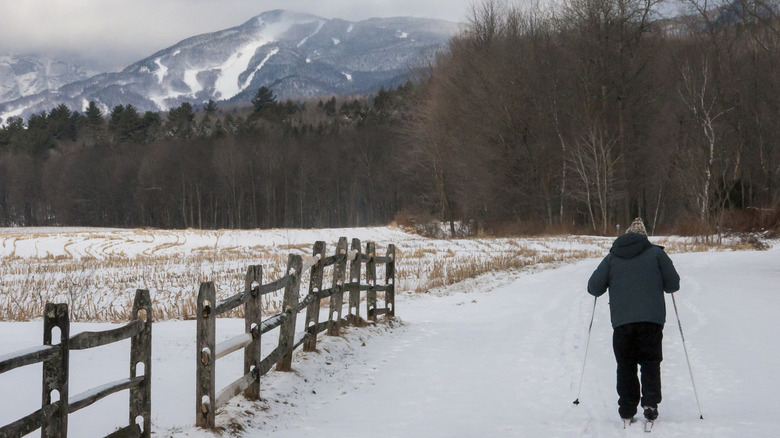
New England is a fantastic place to be outside — as long as you come prepared. The region has thousands of miles of seashore, from beaches to cliffs to walkable piers; Maine alone technically has a longer coastline than California. The interior is punctuated with several mountain systems, such as the Berkshires, Green Mountains, and the Presidential Range, and the vast rural landscape is a patchwork of woods and farmland. New England has thousands of lakes and ponds, plus scenic rivers like the Connecticut and the Blackstone. Most skiers know New England has some of the most incredible ski resorts on the East Coast.
Most New Englanders like to spend time outside, whether it's sailing on Narragansett Bay or deer-hunting on New Hampshire game lands. The weather patterns vary a bit, but this is a solidly four-season region, and visitors can find wide-ranging pastimes any month of the year. That said, this climate can be tricky for newcomers — winters can be bitter, summers are often muggy and buggy, and in between is our infamous "Mud Season." Intrepid travelers can adapt, but it's vital to bring the right clothing and gear. Visitors can find seasoned outfitters and guides — for any outdoor activity imaginable — and topics like fishing and mountaineering are a great icebreaker with locals. This extends to urbanites as well: Boston summers are busy with cyclists, joggers, and sculling crews.
You like your personal space

In general, New Englanders like their personal space — and this can bewilder and alienate visitors to no end. Robert Frost immortalized this mentality with his poem, "Mending Wall," about two men repairing a stone wall between their properties, concluding that good fences make good neighbors. We have a reputation for being grim and negative, as well; writer Steve Calechman riffed on this idea for an article in Boston Magazine titled, "How to be a Real New Englander? Complain." This is a subject for endless debate about whether New Englanders are actually rude or just shy and private.
Reddit has a lot to say on the matter, contemplating, "Do people in New England just hate everyone who's not from New England or am I missing something?" The Redditor described a lonely visit to Boston and New Hampshire, where every local either ignored him or was openly hostile. One commenter replied, "It's difficult to explain but chatty strangers can come off as desperate or suspicious to us." Another added, "New Englanders are notoriously cold up front, and famously loyal once friended." Many people like to contrast the stoicism and cliquey nature with Midwestern nice and Southern hospitality, generalizations that feel far warmer in other parts of the country.
In my experience, most New Englanders aren't misanthropes — most folks are polite, but we take a while to invest in strangers. On the bright side, this region can be paradise for introverts, which gets more extreme as you venture north. You might enjoy a whole road trip through Maine or New Hampshire without a full minute of small talk.
You connect with the past

So much of New England is described as historic, from Paul Revere's house in Boston to the Portland Head Light in Cape Elizabeth to this unsung town on the Massachusetts coast that brims with classic charm, history, and quaint streets. Modern names like Concord and Lexington instantly hark back to the American Revolution, and entire towns have been converted into — or built as — museums, like the colonial settlement of Plimoth Patuxet or the 19th century cottages of Old Sturbridge Village. Many tourists come here just to see the old architecture and storied landmarks, and there are plenty of historical societies and reenactments to keep a history buff busy.
In short, New Englanders tend to perk up at tales of the past. This interest has only grown richer in recent years, as the history incorporates more diverse voices. Boston has its Black Heritage Trail, which parallels the more traditional Freedom Trail while focusing on important figures in African American history. The Cape Verdean Museum in Pawtucket, Rhode Island celebrates the half-million New Englanders who originally migrated from this African archipelago, and the Wampanoag Museum in Mashpee, Massachusetts explores Indigenous life from pre-Columbian times to the still-persevering tribe.
You think like a locavore

If you love picking apples, cracking open fresh oysters, or stepping into a sweet-smelling sugarhouse, New England is the place. This region boasts more than 31,000 farms and ranches, according to Public News Service, and there are hundreds of farmers' markets across the region, per Mass.gov, many of which continue right through the winter. Every town seems to have its artists, crafters, and novelists, and New Englanders are well known for supporting their local harvests, whether that comes in the form of home-delivered milk or blown-glass vases.
This locavore support may seem to contradict New England's antisocial nature, but it makes perfect sense when you're here. Communities are proud of their heritage and love to come together for markets, exhibits, and performances, and it's a wonderful thing to be part of. Attending these kinds of small businesses and grassroots events is also one of the best ways to meet people around here — and maybe find out how much you have in common.