
The 5 Best Affordable Cities To Retire In Asia

We often hear about young backpackers making their way across Asia during gap years, or digital nomads settling in surprisingly affordable Asian cities amidst rising costs of other popular hubs. But another demographic has been eyeing Asia's long-term affordability as well: retirees. In the search for cities that offer warm weather, the low cost of living, health care, and a great quality of life at affordable prices, retirees are looking at countries like Thailand, Malaysia, the Philippines, Indonesia, and Cambodia to call home for their well-deserved golden years.
But whittling down a retirement city requires careful consideration. While Asian capitals like Bangkok or Manila remain vastly cheaper than American ones, smaller cities off the tourist radar are often the smarter choice when it comes to affordable retirement destinations. Guided by official embassy websites, official tourism boards, retirement program information, and insights from expats who have made the move, here are the best affordable Asian cities to retire in.
Penang, Malaysia
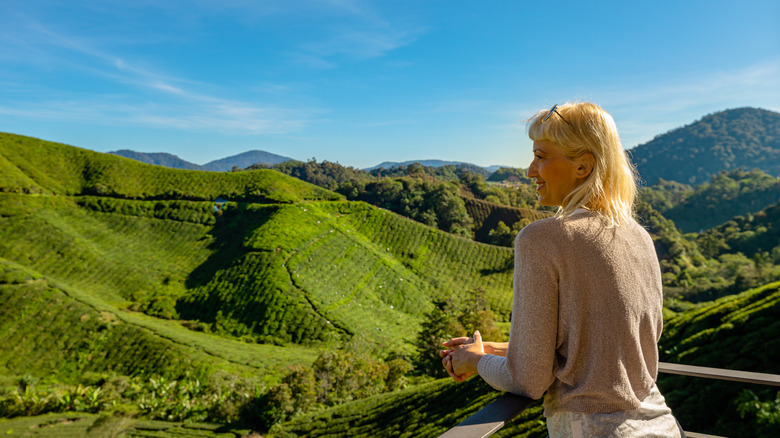
Packed with culture and coastlines, Malaysia makes the cut as one of Asia's best retirement destinations. Penang has become a popular choice for foreign retirees looking to while away their days at a slower pace than Kuala Lumpur offers. The state consists of two parts: the mainland along Malaysia's western coast and, across the water, Penang Island — which houses the state capital George Town and connects to the mainland via two bridges.
Penang has plenty of appealing qualities for foreign retirees, starting with its affordability. Malaysia's National Property Information Centre reported prices of detached housing in Penang averaging $246,500 (997,086 Malaysian ringgit) in the first quarter of 2025 — vastly more affordable than new homes in the U.S. which average $499,000 to $518,000 according to Trading Economics. This bodes well for retirees entering the country through the Malaysia My Second Home (MM2H) visa program offering foreigners a 10-year multiple-entry visa with foreign income tax exemptions in exchange for property investment and a fixed amount in bank deposits.
Retirees in Penang appreciate the laid-back pace and colonial charm of George Town, that's history-steeped architecture earned a UNESCO World Heritage Site designation. Residents have access to some of Malaysia's best hospitals, and health insurance plans remain surprisingly affordable: One U.S. retiree in Malaysia told Business Insider he pays just $85 a month (340 Malaysian ringgit) for a basic health plan with hospitalization coverage. Retired couples can live well on $2,000 to $2,500 a month — rent and living expenses included — whether in a modest city apartment or a high-rise flat with sea views. Between the variety of activities and sightseeing opportunities, a warm climate offering year-round access to beaches and nature, a thriving expat community, and a general feeling of safety, Penang is a retiree's dream destination.
Dumaguete, Philippines

Choosing a city to retire across the Philippines can pose a dilemma — a good one, that is, because with over 7,640 islands, you're spoiled for choice. While big cities like Manila or Cebu often get the spotlight, Dumaguete City, the capital of Negros Oriental province in the central Philippines, balances urban amenities with rural charm. The World Travel Index ranks Dumaguete as the Philippines' safest city in 2025, scoring an 81.36 over 100 for daytime and nighttime safety, violence, scams, and theft.
Affordability is one of Dumaguete's biggest draws. Forbes estimated $1,000 to $1,800 as a solid monthly budget for a couple living in the city. Meanwhile, a retired engineer, John Hawkins, explained on his blog that $2,000 (125,000 Philippine pesos) sufficiently covered the basics like rent and health insurance while leaving enough to splurge on dining out, local trips around the country, and regular sports and leisure activities like scuba diving. "It's not luxury, but it's stress-free and comfortable—ideal for retirees who want independence and leisure without overspending," Hawkins concluded, via Live Life The Philippines. The city boasts a slew of cultural festivals, amazing beaches and diving spots, competent medical facilities, and an airport that gets you to Manila in a little more than an hour.
Settling in the Philippines as a foreign retiree is a fairly straightforward process with the Special Resident Retiree's Visa (SRRV). Available to retirees aged 50 years and older, the SRRV requires proof of pension and Social Security benefits, plus a minimum cash deposit in a Philippine bank.
Ubud, Indonesia

If a slower pace of life is what you're looking for, falling into step with Ubud's laid-back rhythm comes naturally. Known as Bali's artsy neighbourhood in the jungle, Ubud comes with essential elements that cater to rest and relaxation. There are a number of sacred Hindu and Buddhist temples to discover, rice terraces and waterfalls to visit, and a wealth of museums and artistic centers highlighting Indonesia's arts and crafts scene — enough to keep retirees pleasantly occupied. Despite the traffic and tourists, one Redditor described Ubud as a "liveable and loveable" retirement destination. "There are a lot of retired expats in Ubud — quite an active paddle ball community and various other social clubs and activities," the Redditor explained.
Settling in Ubud, which is an hour inland from Bali's coast, is definitely something to consider when the numbers are crunched. Live and Invest Overseas estimates the cost of renting a centrally located two-bedroom villa with a pool to be around $300 to $500. Factoring in utilities, groceries, household help, and leisure activities, a retired couple can live comfortably in Ubud on $980 to $1,200 a month.
Now let's talk visas: Indonesia offers two retirement visa options. Foreigners 60 years or older looking to settle in the country long-term can apply for KITAS — a temporary stay visa for the elderly — which is renewed annually for up to six years. The Silver Hair Visa grants foreigners a five-year stay in the country, and can be extended once for a maximum of 10 years.
Chiang Mai, Thailand

At the mention of Thailand, images of little-known islands with postcard-worthy beaches immediately come to mind. But for retirees looking to take their foot off the gas, Chiang Mai's stately mountain ranges, lush jungle landscapes, and 300-plus temples are a welcome respite from bustling beach towns like Phuket or fast-paced Bangkok.
Nestled along the Ping River and bookmarked by neighboring Laos and Myanmar, this northern city embraces diversity when it comes to food, culture, and artistic traditions. The city has more than enough adventure and activities for retirees to discover at a leisurely pace. Chiang Mai's low cost of living certainly doesn't hurt: according to cross-border payment firm Remitly, $1,000 easily covers a single person's monthly living expenses, rent included. A retired Navy veteran living in Chiang Mai, drawn to the city's low crime rate, excellent food options, and welcoming community, noted on the blog Poppin' Smoke that $1,500 to $3,000 a month buys a very comfortable lifestyle.
Thailand's retirement visa (Non-Immigrant Visa "O-A") is open to foreigners 50 years old and above. The visa renews yearly and requires an 800,000 Thai baht security deposit (approximately $25,800 as of writing) and health insurance, among other requirements. Every 90 days, retirement visa recipients are required to check in with the city's immigration or police authorities.
Siem Reap, Cambodia
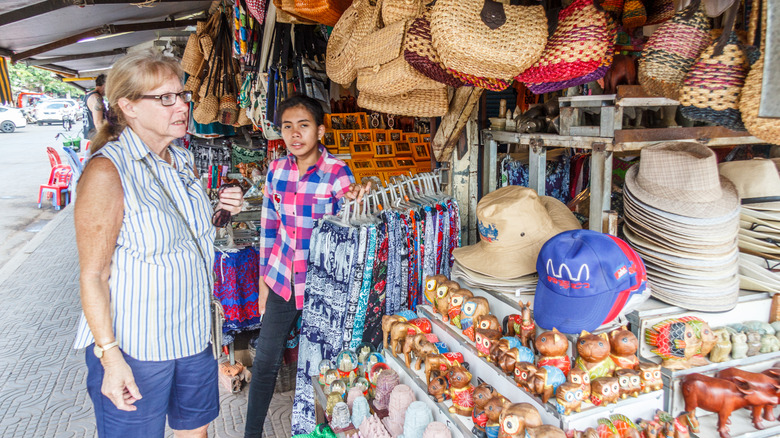
Though primarily known for Angkor Wat, the famous ancient temple complex, Siem Reap's appeal to retirement-age foreigners extends beyond its temples and cultural offerings. Retirement savings stretch further in Cambodia's second largest city, where residents can live modestly or grandly as desired with monthly living expenses of $600 to $1,200 while renting a central one-bedroom apartment for anywhere between $250 to $600 a month. Factor in expenses for internet service, groceries, travel, and restaurant splurges, and retirees can settle into a comfortable middle-class lifestyle for only $1,500 to $3,000 a month.
Another huge draw is Siem Reap's commitment to ramping up urban infrastructure development. During the pandemic, bike lanes were refurbished and added to ease traffic around the city, while plans for a major expressway passing through Siem Reap are in the works. Traveling by air to neighboring countries just got easier with the 2023 opening of Siem Reap Angkor International Airport, giving retirees access to major cities around Asia for travel and leisure.
Foreigners aged 55 and older can apply for Cambodia's ER retirement visa, which allows them to stay for a year at a time. However, it's crucial to enter the country on an ordinary visa (E visa), as tourist (T) visas can't be converted to retirement visas. "Even if a traveler ends up not settling here, the Ordinary visa is still the best bet if there is a chance they will. It's only $5 more than a Tourist visa, which is certainly less expensive than 'paying the right people,'" shared one Redditor.
Methodology

For this article, we focused on five affordable Asian cities with the most straightforward retirement visas. We consulted up-to-date information from visa consultancy firms, official government and embassy websites, and tourism boards of these five Asian countries. Personal blogs and interviews from retirees on the ground informed us about daily and monthly living costs in these different cities. Furthermore, we referred to Reddit discussions for valuable additional insights and input to help gather evidence of a city's viability as a retirement destination.