
5 Best US National Parks To Visit This Winter For Hiking, According To Reviews
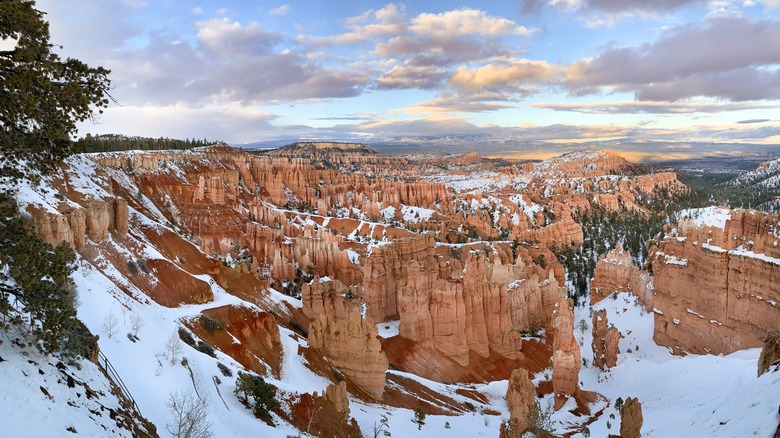
The United States, for all its many cities and suburbs, is jam-packed with some of the world's greatest hiking trails. Although dedicated hikers can find terrific hikes in almost every American park, the U.S. National Park System protects many of the nation's most acclaimed and scenic hiking routes. National park hiking trails also showcase an impressive diversity of difficulty levels, with everything from America's best hiking trails for wheelchair users to technically challenging and dangerous routes that are only for experienced hikers. Regardless of a trail's difficulty level, however, the standard for assessing a national park hike is usually its qualities during the peak summer season. And yet, while national park trails are certainly amazing in the summer, many offer a distinct (yet no less marvelous) outdoor experience during the cold winter months.
Given the complex assortment of climates and eco-regions found within the National Park System, winter hiking in American national parks can offer a striking diversity in weather conditions and scenery, depending on where you go. Many of America's desert parks, like California's Death Valley and Arizona's Saguaro, remain warm and arid even in the depths of winter. Other parks further north, like Minnesota's Voyageurs and Washington's Mount Rainier (not to mention the eight national parks in Alaska), see some of the continent's snowiest conditions. Still, when it comes to truly breathtaking winter hikes, a few national parks stand out—at least in terms of reviews on trusted outdoor recreation platforms like AllTrails. From abundant hiking and snowshoeing routes to unrivaled winter scenery, these five American national parks are the best-reviewed for epic winter hiking adventures.
Zion National Park
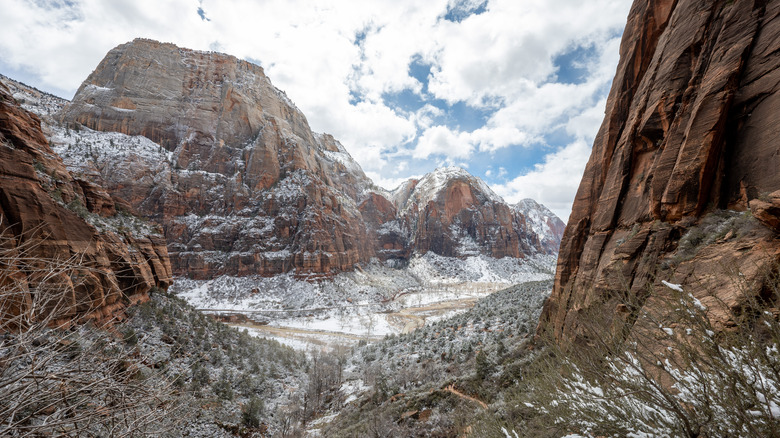
Throughout the year, Zion National Park is consistently one of the most popular national parks in the United States, welcoming nearly five million visitors in 2024 alone (second only to the Great Smoky Mountains among all national parks). Zion's southern Utah climate makes winter a unique experience for national park hikers. On one hand, the winter months are when the park sees most of its annual precipitation. On the other hand, winter weather creates a truly magical effect on the landscape, with sublime scenes of the park's iconic red rock cliffs decorated in a crystalline layer of white snow. Despite the snow (and occasionally slippery ice that hikers should watch out for), winter temperatures in Zion tend to be more moderate, especially at lower-elevation areas. Even better, winter brings a respite from the huge crowds that often clog the park's major trails during the summer!
If you're already inclined to seek out winter hikes, you may find many of Zion's best trails to be even better in winter. The short and sweet Zion Canyon Overlook Trail provides once-in-a-lifetime shots of the epic Zion Canyon decked out in its finest winter whites. And with a mere 1 mile in length and only 157 feet in total elevation gain, the Zion Canyon Overlook Trail is a perfectly "easy" hike for taking in the park's fabulous winter scenery without having to contend with strenuous, icy terrain. If you're up for more of a challenge (and don't mind a bit of ice and mud), Zion's Emerald Pools Trail showcases its stunning namesake pools decked in gem-like wrappings of ice, while the heavier winter precipitation often means that the trail's many waterfalls are at full force.
Grand Teton National Park

Wyoming's Grand Teton National Park and its Teton Range forge many of the most postcard-worthy shots in the entire National Park System. And this exalted status certainly doesn't change when winter rolls around. Grand Teton in the winter offers a quieter wonderland of snow-draped tranquility, as the park's iconic mountains turn bright white under the blue Wyoming sky. Though a few areas of the park may close during the winter due to adverse conditions or impassable roads, many of Grand Teton's best trails remain open for winter hiking, showshoeing, or cross-country skiing. As a result, winter visitors have the opportunity to observe one of the world's most beautiful mountain ranges adorned in unadulterated winter splendor.
The Teton Range, sitting high in Wyoming's vast Rocky Mountains, rarely lacks for snow during the winter. Grand Teton's many hiking trails are therefore prime destinations for anyone looking to trek through a formidable layer of snow on their skis, snowshoes, or just their own two feet. Of course, exact conditions will vary depending on the weather, and it's certainly possible that a particular trail (like the popular Taggart Lake Loop) will be closed on the day of your visit due to dangerous winter conditions. Still, several Grand Teton routes rank among the best-reviewed hikes for snowshoeing or snow hiking. According to reviews on AllTrails, top Grand Teton winter hikes include the easy, 2.6-mile Lakeshore Trail and the more challenging, 6.7-mile Phelps Lake, Lake Creek, and Woodland Loop. If you're only looking to capture some extravagant shots of Grand Teton's winter beauty, you can also hike along the park's Mormon Row, where you'll find picture-perfect views of the world-famous T.A. Moulton Barn decorated in snow, and juxtaposed against even snowier Teton mountains in the background.
Sequoia and Kings Canyon National Parks

Though they are "officially" two separate parks, California's Sequoia and Kings Canyon National Parks protect a single, contiguous, jointly-administered area in the heart of California's Sierra Nevadas. With one entry fee gaining you access to both, a visit to Sequoia and Kings Canyon provides two national park visits for the price of one. As you can probably tell from their names, the twin parks feature extraordinary forests of California's towering giant sequoia trees, and the monumental, glacially carved Kings Canyon valley between dramatic Sierra Nevada peaks. Both of these features are arguably even more beautiful during the winter, when visitors get the rare sight of enormous sequoia trees dressed in snow, alongside the fearsome, yet wondrous, vision of snow-covered mountains.
Like Wyoming's Teton Range, the Sierra Nevadas do not tend to lack snow in the winter, and the parks' trails offer many of California's most scenic winter hiking routes. As with other "wintery" parks, both Sequoia and Kings Canyon can experience trail closures during winter weather. However, many of the parks' most famous hikes are normally open during the winter months, letting visitors experience notable sights from a little-seen winter angle. Two of these routes center around the famous General Sherman Tree in Sequoia and the General Grant Tree in Kings Canyon. Both trees rank among the largest on Earth, and both the General Sherman Trail and the General Grant Trail are short, relatively flat hikes even in harsh winter conditions. For more of a technical challenge, hikes like Kings Canyon's Big Baldy Ridge Trail offer formidable, though worthwhile, journeys through the heart of the park's winter landscape. Expect awe-inspiring panoramic views of Kings Canyon, the Sierra Nevadas, and the adjacent sequoia forests dressed in their snowy best.
Yellowstone National Park
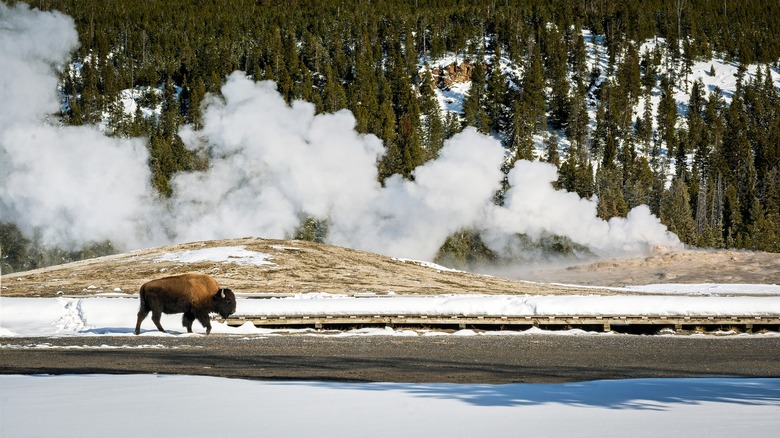
Yellowstone National Park is both the first and (arguably) the most famous national park in the world. With such a lofty status among the global outdoor community, Yellowstone boasts a seemingly endless collection of impressive hiking trails. The combination of the extraordinarily biodiverse Greater Yellowstone Ecosystem, the monumental expanse of the Rocky Mountains, and the somewhat infamous Yellowstone Caldera supervolcano creates an unforgettable landscape of mountains, forests, canyons, and explosive geothermal features. Winter does not dampen these features in any way; on the contrary, winter weather may make Yellowstone's diverse scenery even more beautiful, especially if you're already inclined towards the snowy side of things.
Before setting off on a Yellowstone winter hike, though, there are a few considerations to keep in mind. During the winter, only the park's North Entrance remains open for vehicle traffic, and many other roads and hiking routes close for the season. The North Entrance, however, does provide excellent access to many of the park's best winter hikes. Most notably, the fairly easy, 2.2-mile Mammoth Terraces Trail, just south of the North Entrance, showcases the astonishing Mammoth Hot Springs, one of the park's more underrated hydrothermal features. Better-known features, like the famous Old Faithful Geyser, are also accessible via hiking in the winter, though you may need to book a snow coach or snowmobile tour to get there. Other highly reviewed Yellowstone trails for winter hiking or snowshoeing are the Beaver Ponds Loop Trail, the Specimen Ridge Trail, and the Lava Creek Canyon Trail. Yellowstone's biologically rich Northern Range also boasts plenty of top winter hikes at the Blacktail Plateau, Tower Falls, and Slough Creek (among others). Northern Range trails have the added benefit of excellent wildlife watching opportunities alongside their heavenly winter landscapes.
Bryce Canyon National Park
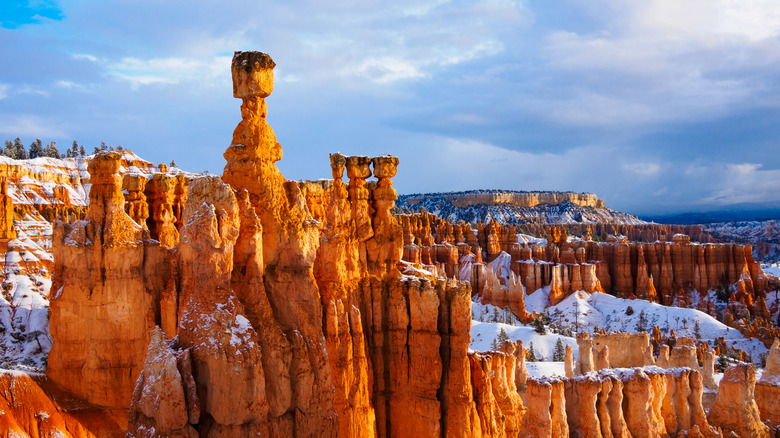
While one cannot definitely "rank" the five national parks in Utah, you can make a strong argument that Bryce Canyon National Park has the most eye-catching scenery. Though it has the word "canyon" in its name, Bryce Canyon is actually more of a vast natural amphitheater with a mind-bending collection of naturally occurring hoodoos, rock spires, and other bizarre geological formations. Though Bryce Canyon's central features resemble a human-made modern art project, they are actually 100% natural, forming from the long-term erosion of Utah's distinctive red rock foundation. Seeing the marvelous Bryce Canyon Amphitheater puts you face-to-face with the world's largest single collection of hoodoos. And, as with Zion National Park, Bryce Canyon's Utah location creates a unique combination of elements in the winter. The park's red rock hoodoos and green pine trees contrasted with a pure white layer of snow is a type of beauty you're unlikely to experience anywhere else.
Bryce Canyon certainly has the "well-reviewed" part down among hikers. According to AllTrails.com reviews, Bryce Canyon's Navajo Loop and Queens Garden Trail is the single best hike in the entire United States! Other highly-rated Bryce Canyon trails are the more challenging Peekaboo Loop Trail and the beautiful (and free) Fairyland Loop Trail through much of Bryce Canyon's most iconic scenery. Hiking these trails in winter does bring a few additional considerations. Specifically, the Wall Street side of the Navajo Loop Trail closes for the winter season, and heavy snow cover on any trail will likely necessitate the use of snowshoes. Still, winter scenery in Bryce Canyon has no equal in any national park, and, with such highly reviewed trails, Bryce Canyon National Park deserves a top spot on your winter hiking bucket list.
Methodology
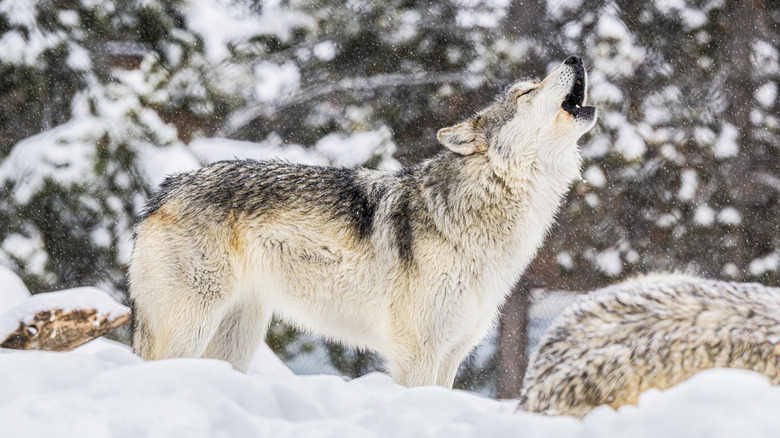
With 63 national parks in America to choose from, we needed to look at a combination of a few different factors in determining the five best ones for winter hiking. First, we looked for parks that have notable winter scenery and trails that are open (or at least accessible) during the winter season. This is somewhat challenging, since "winter scenery" denotes ample amounts of snow and ice, conditions that tend to force the closure of roads and trails in many national parks. To resolve this issue, we allowed for certain considerations in the nature of the winter hike in each park. Many trails referenced on this list require snowshoes or cross-country skis to manage significant snow layers. Still, while the parks on this list do get heavy snowfall during the winter months, they also can see lighter precipitation that adds a distinct snowy effect on natural features while leaving trails more or less passable.
To determine how well-reviewed each park's trails are, we focused on user reviews from AllTrails.com. Each of the parks on this list has several trails with ratings of 4.5 or above on AllTrails, often with several thousand user reviews. For example, according to the AllTrails.com algorithm, Bryce Canyon National Park's Navajo Loop and Queens Garden Trail is the highest-rated hiking trail in the United States, with a 4.9 rating from more than 31,000 individual reviews. Zion, Grand Teton, Sequoia/Kings Canyon, and Yellowstone also have multiple trails with a 4.5 or above rating and several thousand reviews. More importantly for our list, each park has several highly-rated trails that are open during the winter.