
5 Best US National Parks For Winter Camping, According To Visitors
With some of the country's most beautiful landscapes and ecological variety, it's no surprise that America's national parks are also home to many of the nation's top camping destinations. Most of the 63 U.S. national parks offer diverse and memorable camping options, from opulent "glamping" in cozy resorts to primitive backcountry camping in a remote wilderness. While avid campers and outdoor adventurers have different opinions on which American national parks offer the best camping experiences, several of the more popular parks consistently stand out for their scenery, campground amenities, and variety of options. That said, most campgrounds — in national parks or elsewhere – are typically evaluated through the lens of peak summer travel. Wintertime, by contrast, brings a different set of considerations altogether. Still, winter is an underrated time to visit America's national parks, and a few stand out for excellent camping experiences in the off-peak months.
Because the national park system spans nearly every climate zone in the United States, winter conditions vary widely from park to park. Parks in mountainous regions tend to experience classic winter weather, including snowfall and freezing temperatures. Meanwhile, parks in desert or subtropical regions often enjoy milder winter conditions that can feel relatively comfortable compared to summer extremes. While winter weather may limit access to certain amenities, camping remains possible across a range of climates.
With all these factors in mind, these five national parks offer arguably the best winter camping opportunities in the U.S., with experiences ranging from warm desert escapes to classic winter wonderlands of snow and ice.
Rocky Mountain National Park
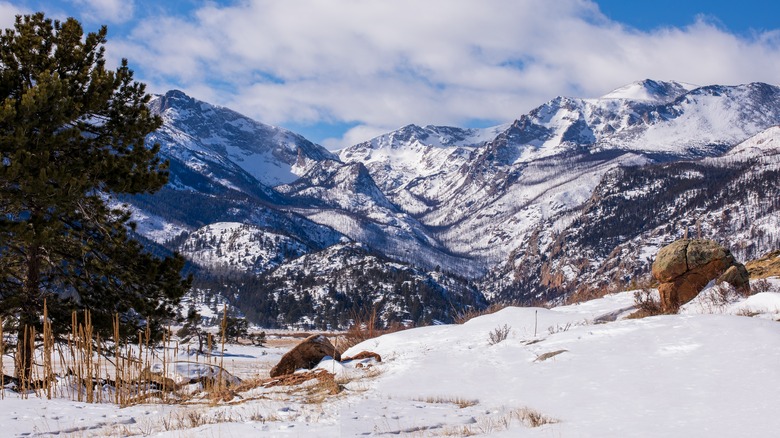
Many U.S. national parks showcase the heavenly grandeur of the Rocky Mountains, but Colorado's timeless Rocky Mountain National Park is the only one with the range right in its name. Located about an hour west of Denver, the park protects a striking stretch of the Rocky Mountain Front Range, with soaring summits, alpine meadows, and some of the most scenic mountain lakes in North America. Its landmarks include famed Colorado 14ers such as Longs Peak.
Summer draws the largest crowds, but the park delivers distinct experiences year-round. For example, during the autumn months, Rocky Mountain National Park offers one of the nation's best fall foliage experiences. And yet, despite some fairly harsh conditions, winter in Rocky Mountain National Park has a unique type of magic you won't find anywhere else.
Through all the heavy mountain snowfall and often-impassable roads, Rocky Mountain National Park offers plenty of unforgettable winter recreational experiences. This includes camping, and the park's year-round favorite Moraine Park Campground remains open during the winter. The campground sits in the park's scintillating Moraine Park area, a mountain valley carved by ancient glaciers in the heart of the Rocky Mountains. The campground features 155 tent sites, 88 RV sites, and 49 sites with electric hookups. Electric campsites generally cost $55 per night as of this writing, while non-electric sites cost $35 per night. A reviewer on Tripadvisor noted that the campground's "weather was beautiful, the wildlife were [sic] abundant ... [and the site is] very conveniently located within the park." During the winter, however, Moraine Park takes on a uniquely enchanting facade of whites and blues as snow settles across the mountains. While some amenities are limited, its icy isolation is perfect for cold-weather travelers.
Death Valley National Park
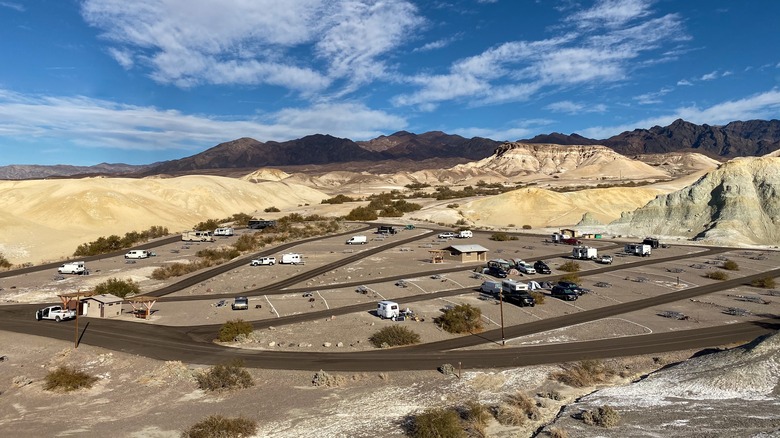
In sharp contrast to the heavy snowfall of the Rocky Mountains, Death Valley National Park offers one of the warmest winter camping experiences you can find in the U.S. The park is famously one of the hottest places on Earth, with much of the valley lying in a deep basin within the Mojave Desert. The park's geological formations create an expanse of mountains, dunes, and salt flats, all of which support a surprisingly rich biodiversity despite the extreme conditions.
Death Valley's infamous heat makes it one of the few national parks better to visit in winter than in summer. Summer daytime temperatures climb well into the triple digits, creating conditions that can quickly become dangerous. Winters, by comparison, are warm enough to be comfortable but not so warm as to threaten visitors' health and safety. These milder winter conditions are also well-suited to camping.
Unlike most parks, many of Death Valley's campgrounds close during brutal summers and open from fall through spring. Campgrounds such as Furnace Creek, Texas Springs, and Mesquite Spring have 136, 106, and 40 available campsites, respectively. Campers specifically praise Furnace Creek's clean facilities and helpful staff, as well as its electric hookups and dump sites. As of this writing, overnight rates at Furnance Creek range from $30 per night for standard tent/RV sites to $44 for full-hookup sites (plus group sites that cost $40 to $60 per night). Rates at Texas Springs and Mesquite Spring are $20 per night. Cooler winter temperatures also open up primitive backcountry camping to more daring travelers. Regardless of where you camp, the ideal conditions of Death Valley winters allow you to enjoy this otherworldly landscape without constantly contending with dangerous heat.
Capitol Reef National Park
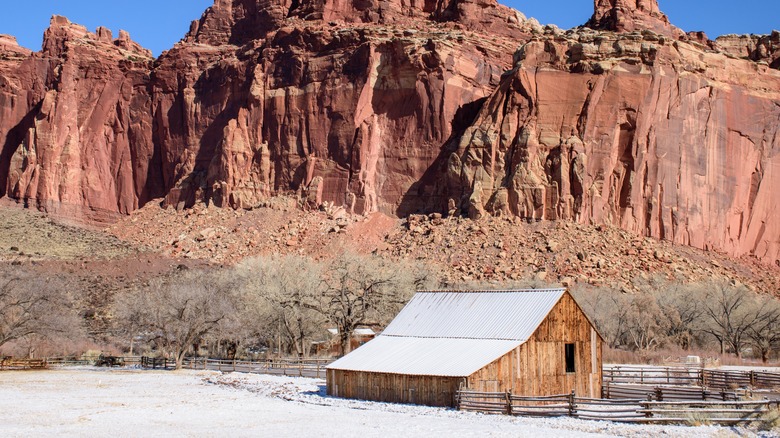
While winter campers can't go wrong choosing any of Utah's "Mighty Five" national parks for camping excursions in mild Utah winters, Capitol Reef National Park deserves a special mention. The park's eponymous "Capitol Reef" is the geological complex of the Waterpocket Fold, a distinctive uplift in the Earth's crust that displays intricate canyons, mesas, cliffs, and other geological artistry.
Thanks to Utah's semi-arid desert conditions, Capitol Reef National Park generally experiences mild to pleasant conditions in the winter. Air temperatures tend to be slightly colder in winter, with average highs ranging from 40 degrees to 50 degrees Fahrenheit. However, despite the chill, the overall conditions are ideal for exploration. Winter falls outside Capitol Reef's summer monsoon season, so you'll see less precipitation to sully your trip. Still, the park has more than enough high-elevation points that gather a photogenic sheen of snow while visitors below stay dry.
Winter is also a great time to enjoy the famed Fruita Campground. As one of the more popular campgrounds in the National Park System, Fruita is often completely booked during the peak summer season. Fewer visitors during winter means better chances of getting coveted camping reservations and enjoying Capitol Reef's oasis-like Fruita Historic District. Visitors have raved about Fruita's amazing views and convenient proximity to top amenities, with one Tripadvisor reviewer noting: "Beautiful red rock cliffs. Stream. Mule deer wandering everywhere. Clean bathrooms ... And the stars. My oh my." Fruita's 71 campsites have a flat rate of $25 per night as of this writing, which includes restrooms, dump stations, picnic tables, fire rings, and potable water. Unfortunately, camping here in the winter means that the famous fresh pies from the nearby Gifford Homestead are out of season, but you can still tour the area's historic orchards in their quiet winter glory.
Big Bend National Park
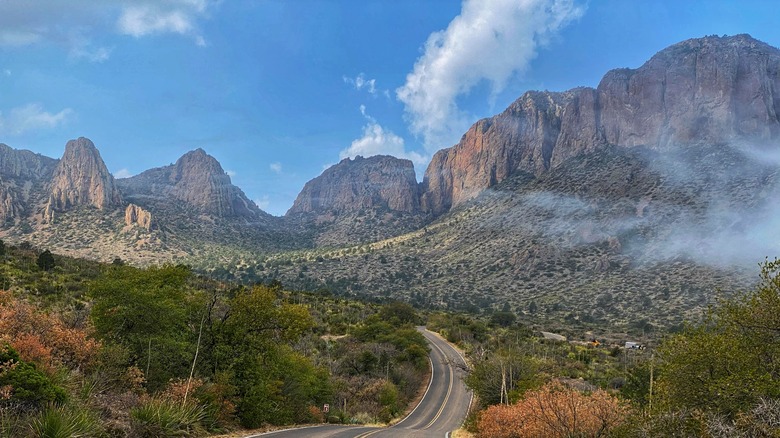
Much like Death Valley, Texas' beautiful but boiling Big Bend National Park is arguably best experienced during winter. Sitting in the Chihuahuan Desert, Big Bend often sees summer temperatures that exceed safe limits for outdoor travel. Winter, on the other hand, brings much cozier conditions to the park. From December through February, highs in Big Bend tend to max out in the low 70s in the lower-altitude Rio Grande Village, and even plunge to the 50s in the higher-altitude Chisos Basin. While there can be occasional cold snaps that bring temperatures below freezing, Big Bend National Park, on average, has warmer, more pleasant winters than most other national park sites.
This respite from triple-digit summer highs gives visitors ideal conditions to explore the park's incredible features without being distracted by the heat. And Big Bend is certainly worth exploring. The "Big Bend" of the park's name refers to a major bend of the Rio Grande as it cuts along the Texas-Mexico border. Around this hydrological landmark lies a breathtaking expanse of canyons (particularly the 1,500-foot-high Santa Elena Canyon, which rivals the Grand Canyon in scenery), fossil-rich rocks, and the rugged Chisos Mountains.
Big Bend is also home to several highly reviewed campgrounds open in winter. This includes the 56-site Chisos Basin Campground, which draws particularly favorable reviews for its "great view" and "easy access" to drinking water and scenic hikes like the Window Trail. Amazingly, its campsites only cost $16 per night as of this writing. Winter campers can also stay in Big Bend's quieter 22-site Cottonwood Campground or the larger, more developed Rio Grande Village Campground (both are $16 per night).
Yosemite National Park
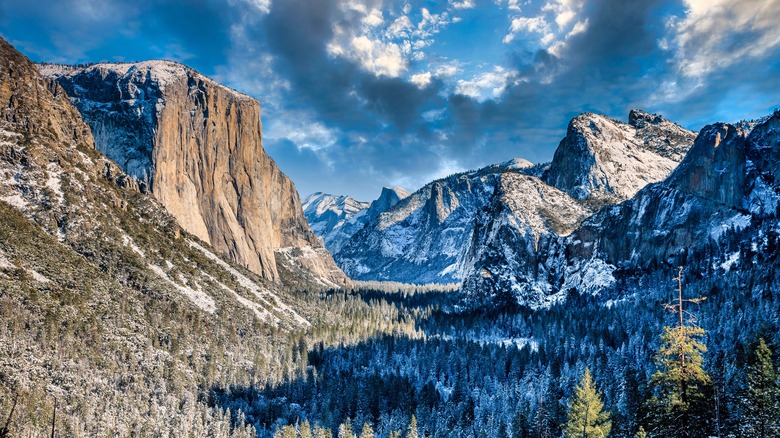
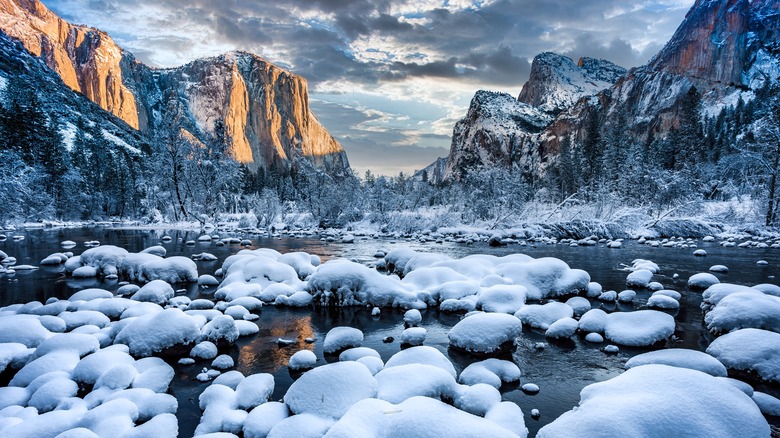
Thanks to a certain Donner Party back in the 1840s, California's monumental Sierra Nevada Mountains have a somewhat foreboding reputation during the cold winter months. Fortunately, modern infrastructure and amenities have significantly reduced the risk of misadventures, allowing visitors to explore magnificent Sierra Nevada destinations like the iconic Yosemite National Park well into winter. Not that Yosemite's winter conditions are free of danger. The park's mountainous climate often brings heavy snowfall and cold temperatures, and many park roads — like the popular Tioga Road – do close to vehicles for the season. Still, if you're willing to brave the elements (and maybe invest in some tire chains for your car), you can experience the sublime beauty of Yosemite Valley and its famed rock domes adorned in a blissful layer of snow, while also enjoying a distinct lack of the large crowds that tend to flock to the park during the summer.
Remarkably, a handful of Yosemite's campgrounds remain open through the winter season. This includes Upper Pines Campground, which usually has around 90 campsites available during winter for $36 per night. Upper Pines is a particular favorite of visitors, with many campers noting that the site is "spacious" with easy access to "all major trails and ... Curry Village." Winter campers also have access to Yosemite's campgrounds at Hodgdon Meadow ($28 nightly), Wawona ($28 nightly), and Camp 4 ($10 nightly), each offering visitors lovely snow-laden views of a different side of Yosemite. It's important to note that reservations are no longer accepted in the winter, and camping sites are available on a first-come, first-served basis. If you're feeling particularly daring (and you have the relevant experience and equipment), you can also experience some authentic winter backcountry camping in Yosemite's pristine wilderness areas.
Methodology
Not every national park offers camping during the winter season. However, enough parks do in some form that we considered a few factors in compiling this list. The main question we sought to answer was simply: "What constitutes winter camping?" At a basic level, "winter camping" can refer to any camping done during the winter season, regardless of a park's climate. However, the phrase may evoke specific images of snow, ice, and generally cold conditions, elements usually absent from hot desert and subtropical parks. At the same time, those very same snowy conditions often cause closures of camping facilities and roads in cold-weather parks, while warmer parks are more likely to keep most facilities open through winter.
We therefore sought to achieve a balance between traditional cold-weather camping and alternative warm-weather camping in hot climates. The "warm" parks on this list stand out for their impressive camping features and generally pleasant winter conditions. Death Valley and Big Bend National Parks are arguably at their best in the winter, as the colder months offer a break from brutal summer heat. Capitol Reef offers similarly mild conditions, while fewer park visitors mean more spots in Fruita Campground. For cold-weather camping, Rocky Mountain and Yosemite National Parks offer the best combination of campgrounds that remain open in winter and beautiful winter views. Finally, to determine consensus among winter visitors to these parks, we looked at campground information and visitor reviews on platforms like Tripadvisor to highlight what makes each park's camping experience stand out for winter travel.