
Portland's Charming Eclectic 'Dream Neighborhood' Is One Of America's Oldest Planned Communities
Most people know Portland for the quirky vibe embodied by its unofficial slogan of "Keep Portland Weird." In the words of "Unipiper" Brian Kidd — the costumed unicycling bagpiper who's become an icon for the city — "Portland's weird spirit comes from its culture of freedom and acceptance...really, keeping Portland weird means preserving the things the city built its reputation on in the first place." When you look at it from that angle, you can see how the Rose City's less boisterous neighborhoods still reinforce that unique identity. The quiet and historic residential neighborhood of Laurelhurst is a prime example, combining a distinctive history and identity with a small-town feel that belies its proximity to the city center.
Laurelhurst is in the central area of Portland, across the Willamette River and about four miles east of downtown. It shares its western border with Kerns, America's "coolest neighborhood," and a great place to check out the local restaurant and café scene. To its east is the Tabor area, home to Mt. Tabor Park, a century-old park perched atop a cinder cone volcano.
Laurelhurst has plenty of green space, too, including Laurelhurst Park, a shining example of the City Beautiful movement from the late 19th and early 20th centuries. The rest of the neighborhood has a similarly park-like vibe, with trees lining the curving streets that radiate around Coe Circle. These walkable streets are part of what makes Laurelhurst a dream neighborhood, but the people are a part of it, too, with a close-knit community that makes the area popular with families.
Laurelhurst's historic charm
Laurelhurst is one of the oldest neighborhoods in Portland, and its historical significance goes deeper than mere age. It was one of the first modern planned neighborhoods built in the United States, developed by the Laurelhurst Company, which got its name from a similar neighborhood outside Seattle, Washington. The prior owner, dairy farmer W.M. Ladd, consulted with famed architect John Charles Olmsted on the land's residential development. Olmsted's ideas were retained in the final plan, giving the neighborhood the feel of one of his designs.
Many of the homes in Laurelhurst were built between 1910 and 1925, and feature a mix of architectural styles popular in the early 20th century, including Bungalow, Spanish Revival, Arts and Crafts, and Portland Foursquare. That housing stock, combined with the neighborhood's distinctive design, has earned it a Historic District designation with the National Register of Historic Places. Several individual homes, as well as Laurelhurst Park, have separate listings in the register, as well.
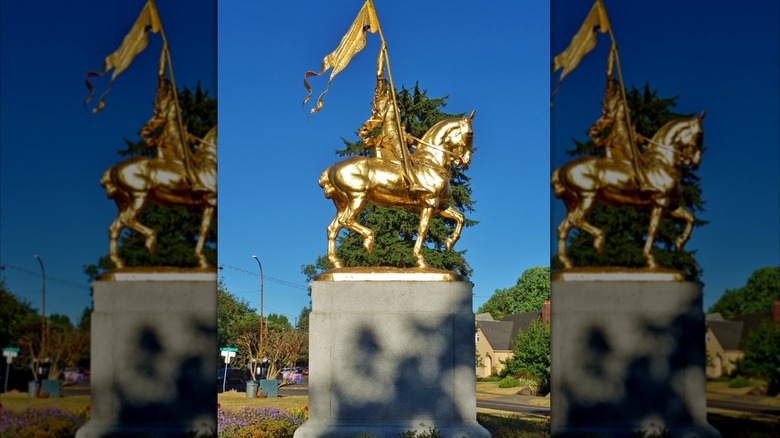
Laurelhurst residents have developed two self-guided walking tours for visitors who want to dig deeper into this history. The first tour is a two-hour loop that starts and ends at Laurelhurst Elementary School and highlights the overall history of the neighborhood and landmarks in the north and southwest quadrants. Stops include buildings like the W.N. Everett House (Laurelhurst's oldest home, built in 1910) and the Laurelhurst Club, one of Portland's first country clubs. The tour also features landmarks like four of Laurelhurst's heritage trees, original horse hitching posts, and Coe Circle, where you can see the bronze Joan of Arc statue donated to the city by Dr. Henry Waldo Coe in 1925. The second walking tour loops out from the Laurelhurst Club and focuses on Laurelhurst Park and its surroundings.
Top things to do in Laurelhurst
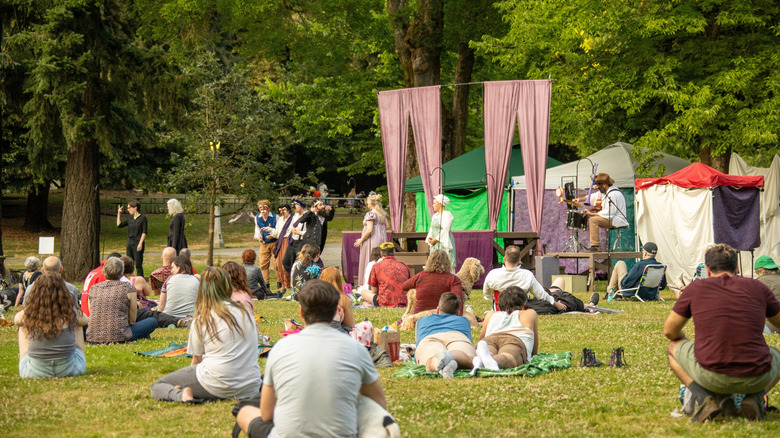
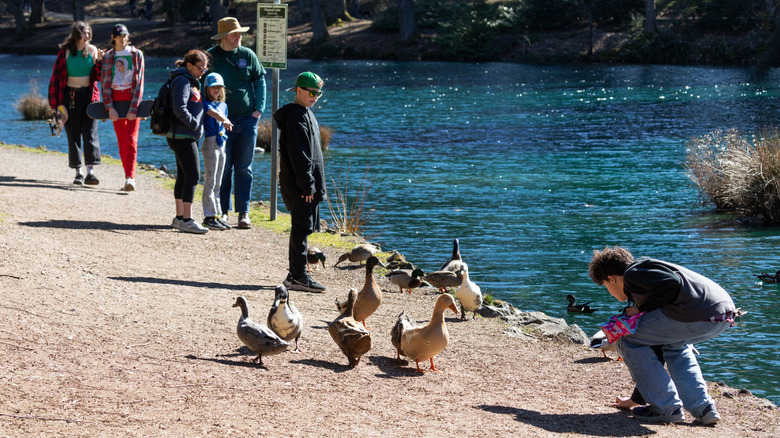
The top must-visit attraction in Laurelhurst is Laurelhurst Park, an under-the-radar city park named one of the most beautiful on the West Coast as far back as 1919, and still lives up to that accolade. The park is especially beautiful in the spring, when it's one of the best places in America to see cherry blossoms. Throughout the summer, it hosts free events like Friday night Comedy in the Park and plays from Original Practice Shakespeare. Fall hosts the Portland Water Lantern Festival, an all-day celebration with live music and food trucks where attendees float decorated rice paper lanterns on Firwood Lake (also known as Ladd's Pond to locals). Laurelhurst Park is an idyllic setting for a stroll, with playgrounds, picnic areas, and courts for a variety of sports sprinkled throughout its 32 acres.
While much of Laurelhurst is residential, the commercial corridor of Sandy Boulevard cuts through its northwest corner. This is where you'll find nightlife spots like Chopsticks, a karaoke bar with pool and ping-pong tables, plus a late-night menu of Chinese-American noodle dishes and bar food. For a drink without the off-key tunes, head to The Shaku Bar, which offers its own entertainment line-up of trivia, live music, and cornhole on the back patio, along with unique house cocktails and a menu of burgers and rice bowls.
For brunch after your night out, Petite Provence serves French-inspired dishes with a Pacific Northwest twist, like Northwest Salmon Hash and Avocado Burrata Tartine. There are also restaurants in the southern part of the neighborhood, like Laurelhurst Market, a butcher shop and steakhouse described by "Bon Appetit's" Andrew Knowlton, as "all the good steakhouse cliches (fun, raucous) without all the bad ones (super-expensive, boys' club)."