
5 Essential Tips For Camping In The Mountains
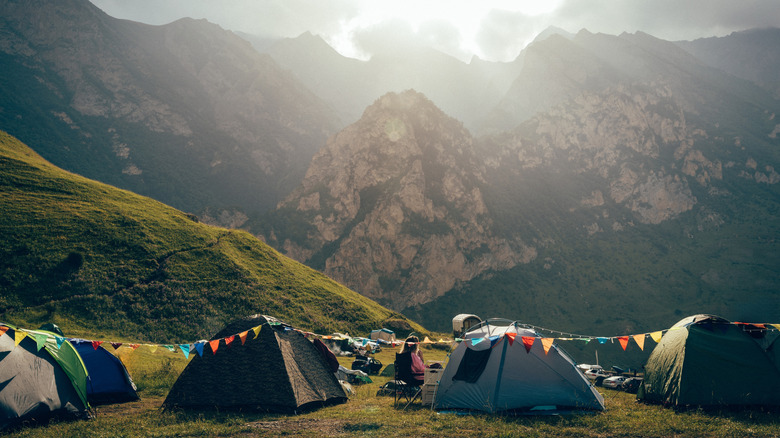
Camping is booming in the United States. According to KOA's 2025 Camping & Outdoor Hospitality Report, a record 58 million American households made the outdoors a focal point of their travels in 2022, while up to a quarter of all leisure trips are now camping-based.
Many of those will be in the mountains, which now host some of the country's most unique campgrounds and backcountry camping destinations. That could be anything from California's highest drive-to campground just outside of Yosemite to the remote camping spots in the Great Smoky Mountains. And that's just in the United States. Mountain camping can be done all over the Alps, the Andes, the Himalayas — the list goes on and on.
If, like so many other Americans, you're tempted to pitch up and venture out to the peaks this year, then this guide is for you. It's a string of five essential tips for folks looking to get into the highlands with the canvas and the cooking gear. It's the product of research across leading camping blogs, bolstered by plenty of first-hand knowledge of camping in the mountains.
Choose the right destination (and pack accordingly)
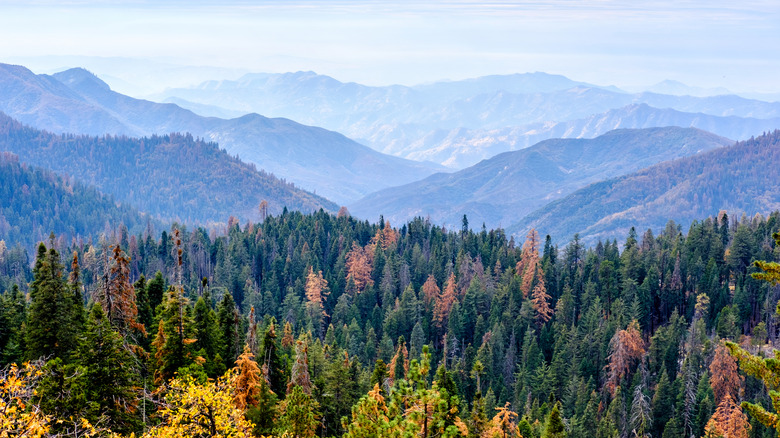
One of the most oft-mentioned tips of all is this: Choose the right place to go a-camping. It's a tip that applies long before you set off, long before you even assemble that gear and check all tent poles are present. The reason? Your destination and chosen campground will have a huge impact on what you pack, how you plan, and more.
Let's take the United States as a case in point. Not all mountains in the stars and stripes are the same. Far from it. Out west, you have the Sierra Nevada, where giant sequoia trees spread along granitic ridges that can be covered in snow from November to May. In the east, there are the forested valleys of the Blue Ridge Mountains, while the Pacific Northwest has glacier-topped volcanoes like Mount Rainier.
Those present quite different terrains and come with quite different weather patterns, meaning your preparation will need to change accordingly. Take this as an example: Some folks on the r/norcalhiking subreddit say you can get away with a 40-degree-rated sleeping bag in the peak summer in the Sierra Nevada. Meanwhile, a post on SmokyMountainNationalPark.com says winter campers in the Smokies should get a bag with a rating of at least 10 degrees less than the lowest outside temperature they expect — that could be under 20 degrees Fahrenheit in the depths of January! You'll need different equipment for different mountains and weather patterns, so picking the right spot is the first thing to consider. Once that's done, you can worry about the rest of your planning.
Get to grips with the local wildlife

The mountains can make it seem like you're the only thing around for miles on end, but that's rarely the case. The highlands of the world are unique habitats for rare creatures that demand respect and attention from would-be campers. That's not simply because paying heed to the local inhabitants is one of the seven Leave No Trace principles — a set of ethical guidelines the National Parks Service says can be applied to all recreation in the outdoors. It's also because being aware of the native fauna is an important part of staying safe when camping in the wild.
Take bears. Often greatly feared by campers and hikers, these hulking ursine beasts are present from Texas to Alaska. But they don't have to pose a threat. Cris Hazzard, a professional hiking guide and author who writes the Hiking Guy blog, outlines a few key bear safety rules. The main one? Remove all scents and temptations from your campground, and keep your food tightly stored away. Everything from odor-proof bags to using on-site bear lockers can help with that.
Of course, bears are just one in a multitude of animals that you'll need to pay attention to. The point is that knowing what's out there can help you prepare accordingly. You might want to avoid pitching a tent in rocky areas if you're camping in rattlesnake country, for example, or bring along plenty of mosquito spray for summertime camping trips to the Sierra Nevada, when the biters can come out in force.
Know how to pick sheltered backcountry camping spots
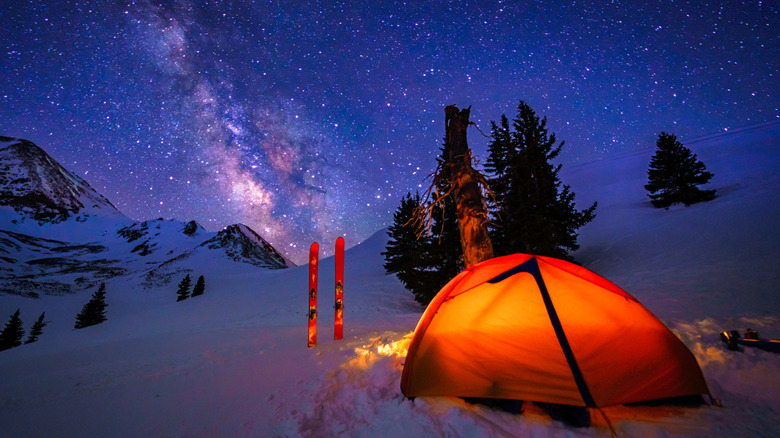
Calling all backpackers — this one's for you. If you dream of ditching the rumble of the RV generators and really want to stray off the beaten path in the mountains, then it's likely you're planning a spot of backcountry camping. That comes with its own set of rules and challenges, not least of all selecting a place to actually pitch that tent each night. With no designated campsite plan, nor ranger to help you, the placement of your camp is all your responsibility, and it really, really matters.
Kristen Bor, who runs the camping and hiking blog Bearfoot Theory, outlines a whole host of things you can do to choose a good backcountry campsite. This includes selecting a place that's flat and stable, ensuring you're far enough away from bodies of water not to contaminate them, and — a great tip for cooler mountain climates — pitching so as to get the first sun in the morning for added warmth.
If you're nearing the peak or crest of a ridge, it's also a good idea to choose the leeward side of it to set up shop. That means going for the side that's not in the way of prevailing winds, where the air tends to be warmer and there's generally less rain. Meanwhile, on the r/backpacking subreddit, one past camper also highlights the importance of choosing a pitch on safety grounds: "I look for widow makers, poisonous plants, signs of animals like bears or other animals that I don't want in my campsite and areas that seem prone to flash flooding."
Be weather alert
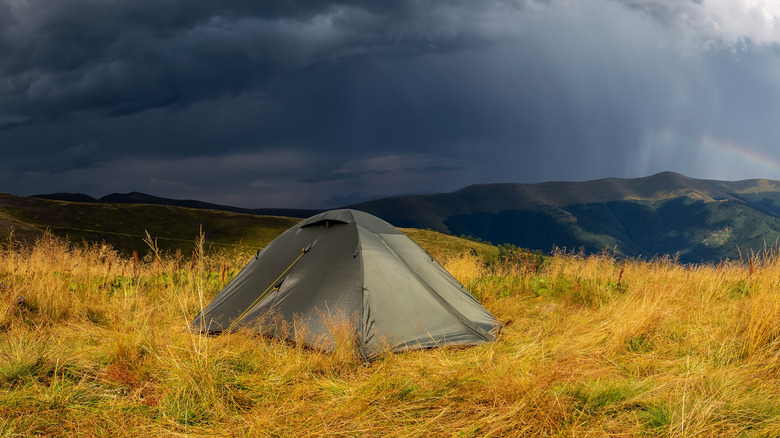
They say that the mountains make their own weather. Lurching out of nowhere to create colossal walls of rock and ice that force clouds upwards and temperatures down, the highland regions of the world have some seriously unpredictable weather patterns. They can impact everything, from local wind patterns to snowfall levels, and conditions can change suddenly.
The U.S. also happens to be home to peaks that have notoriously bad weather, such as Mount Washington, the beautiful but deadly mountain they call America's Everest — it might only be 6,288 feet tall, but the folks at the Mount Washington Observatory give it the dubious honor of having the "world's worst weather." Then there are whole mountain chains, such as the Sierra Nevada in California, which have climate patterns that are sure to influence your choice of where, when, and with what gear you go camping, especially since many of the campgrounds only open as the snows recede around April and May.
You should also be alert to the weather once you've pitched up, since things can go from sunny and pleasant to downright dangerous in a matter of minutes up in the mountains. On threads on the r/backpacking and r/camping subreddits, regular campers recommend using a mix of mobile phone services, apps, and satellite imagery to keep abreast of unexpected changes, while I personally like to remain highly flexible in my plans, always ready to pack up should the weather demand.
Remember the little gadgets
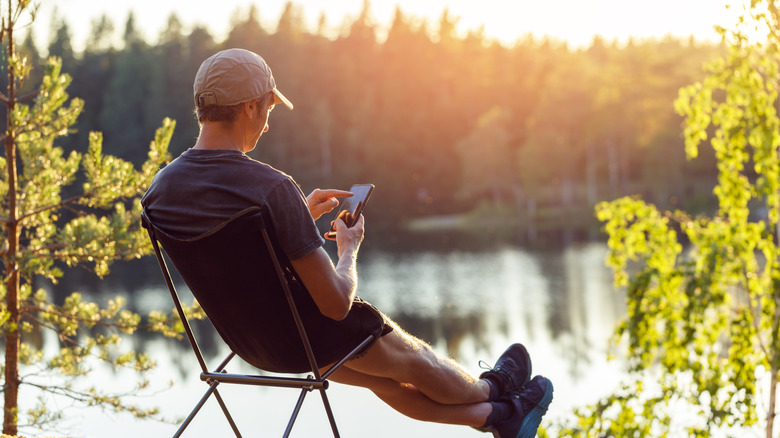
Reams and tomes have been written about the best backpacking tents, or what backpack to go for if you're a thru-hiker on the Pacific Crest Trail or the like. What doesn't get so much attention are the little things. And it's the little things, in my humble opinion, that will elevate a camping trip from basic to brilliant.
I'm talking about things like an extendable washing line, so you're not laying wet swimming gear out on camp chairs beside the fire pit. I mean a good headlamp, so you're not tripping over rocks and sticks when you head to the toilet in the pitch black.
For camping in the mountains specifically, there's a trio of nifty gadgets I wouldn't be caught without. First is a trusty blanket. It's a versatile addition to any camping setup, which can be used to lie on during the day, to add thickness to your bed at night, or as a wrap-around when the temperatures start to drop. Second is a decent food cooler, which is a doozy for campground camping when you want ice-cold drinks or good food preservation. Third is a water filter. No matter how tempting it can be to imbibe straight from a clear highland stream, it's never a good idea. The NPS even recommends a good filter, purification tablets, and boiling as a precaution for backpackers in the wild.
Methodology
This list of the most essential mountain camping tips is the product of research across leading camping blogs and camping guides, combined with several years of hands-on mountain camping experience — I've camped in multiple spots in the United States, along with the European Alps, the Peruvian Andes, and the Moroccan Atlas Mountains, to name just a few. I trawled through publications and lists of camping tips to form a shortlist of pointers for would-be campers in the highlands, and then whittled that down to just five of the most important using my own personal expertise.