
Washington's Wild Mountain Road Is One Of The Most Beautiful Drives In Any National Park
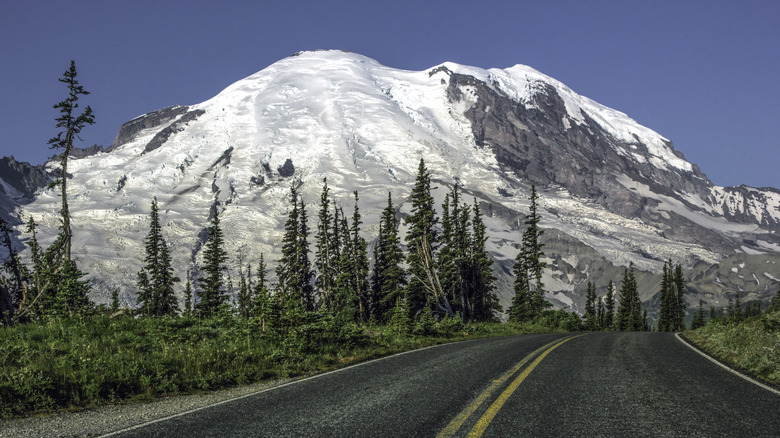
By their very nature, most national parks aren't visible from major urban areas. That point, however, does not apply to the namesake feature of Washington's Mount Rainier National Park. Hitting an elevation of 14,410 feet, Mount Rainier is the highest mountain in Washington and one of the highest in the lower 48 states. This prominence makes the acclaimed mountain visible from Seattle, despite sitting more than 80 miles away. And despite being an active volcano, Mount Rainier is home to many of the best hiking adventures in the National Park Service, including the challenging yet rewarding Wonderland Trail that circumnavigates Mount Rainier's entire base. Mount Rainier National Park actually contains hikes of all lengths and difficulty levels, from the easy and scenic Nisqually Vista Trail to the extremely dangerous trek to Mount Rainier's Camp Muir Snowfield. Yet while you'd assume that hikes would be a given in a national park, Mount Rainier's formidable mountain topography doesn't seem like an ideal place for scenic drives. However, not only does Mount Rainier have excellent scenic drives, but its acclaimed Sunrise Road route is one of the most beautiful drives in any American national park.
Purely from a marketing perspective, the name "Sunrise Road" is highly evocative of the magnificent views you'd expect from a scenic drive in Mount Rainier National Park. In practice, the road connects drivers with one of the park's most extravagant areas, while also providing unsurpassed views of the iconic mountain. These views are, in fact, the highest-altitude observation points of Mount Rainier that you can drive to. Even without this selling point, however, Sunrise Road offers an extraordinary blend of amazing scenery and worthwhile destinations, all of which place it quite high on the rankings of "best scenic drives in the National Park System."
Sunrise Road puts Mount Rainier in driving distance
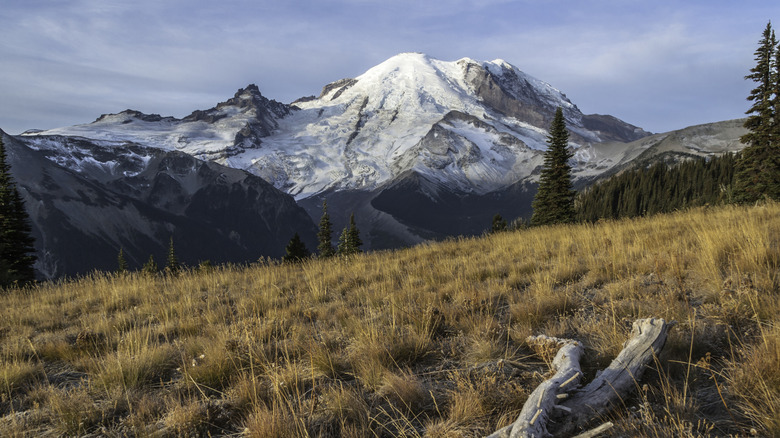
Mount Rainier National Park's Sunrise area sits at an elevation of around 6,400 feet, making it the highest point in the entire park that can be reached by private vehicle. This means that you can drive nearly halfway to the summit of one of the contiguous U.S.'s highest mountains, all while experiencing the lush flora of the Pacific Northwest. The National Park Service is acclaimed for successfully balancing natural resources with visitor-friendly infrastructure, and the road to Sunrise may be its crowning achievement in this regard. In Sunrise itself and during the drive there, you'll likely encounter heavenly views of the park's rich meadows, including vibrant displays of wildflowers in the summer. Such magical scenery is something of a rarity in even national park drives, so Sunrise Road truly stands alone here.
And yet, it's not just the high-elevation records or immediate scenery that make Sunrise Road one of the best scenic drives in an American national park. The Sunrise Point Overlook also takes advantage of its high elevation to showcase much of the surrounding Cascade Mountains landscape. On clear days, Sunrise visitors can catch unforgettable panoramas of Washington's epic Cascade peaks, including other prominent Washington mountains like the 12,276-foot Mount Adams, sitting several miles away. Sunrise's perspectives on its own mountain are likewise picture-perfect. From Sunrise Road, drivers can find plenty of full-profile shots of Mount Rainier. These include clear views of the mountain's unique geological aspects, like its many glaciers and the after-effects of a partial mountain collapse around 5,600 years ago. Sunrise also features some of the national park's top internal destinations, like the gorgeous Tipsoo Lake, the historic White River Patrol Cabin, and the national park's highest visitor center.
Planning your drive along Sunrise Road
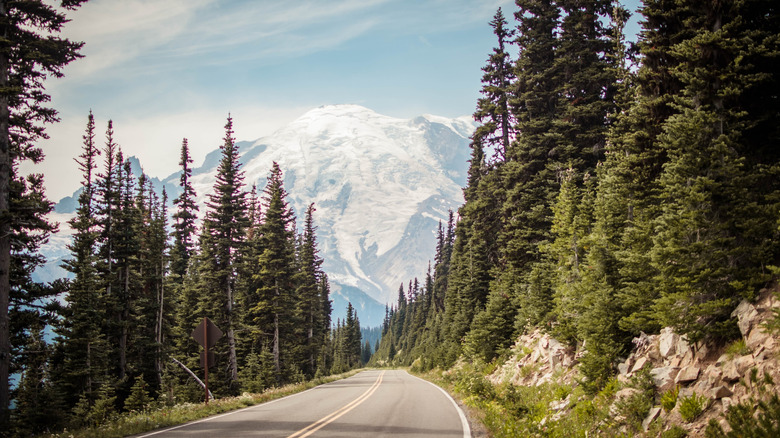
While driving to the Sunrise area is certainly less challenging than hiking there, Sunrise Road does have some considerations that prospective drivers should be aware of. The drive from Seattle to Sunrise Road is roughly two hours via Route 410. All private vehicles entering Mount Rainier National Park will have to pay a $30 entrance fee (note that Mount Rainier National Park does not currently accept cash, so drivers must prepare to pay with a credit card or mobile wallet). In the past, Sunrise Road required a timed-entry reservation. However, the National Park Service has announced that it will not implement timed-entry requirements for any Mount Rainier area in 2026. Still, this policy is subject to further change, so if you're interested in visiting Sunrise at a later date, make sure you check the latest entry requirements.
Although Sunrise Road itself is only around 15 miles long, the road's winding course and often steep terrain may make the drive fairly difficult, particularly for larger vehicles or cars with trailers. Mount Rainier's fairly extreme winter weather (especially at higher elevation areas) also means that Sunrise Road cannot serve as a public access route for much of the year. Currently, Sunrise Road and the broader Sunrise Area facilities are only open between early June and late September (though exact opening and closing dates may vary from year to year, depending on conditions). Even if you're planning on visiting during this window, it's a good idea to check the status of Mount Rainier's roads to ensure that the Sunrise Route is open. Also, pay attention to Mount Rainier's weather forecast, as sudden inclement weather on a road as precarious as Sunrise Road can easily turn disastrous.