
8 American Locations To Visit For A Healthy Dose Of '60s Nostalgia
The 1960s left a permanent imprint on American culture. It was an explosive decade defined by artistic experimentation, social revolutions, design breakthroughs, and a restless, roaming spirit. While plenty of cities have modernized to suit 21st-century tastes, pockets of the country still carry that unmistakable '60s energy. These are places where surf motels still glow with neon, where psychedelic murals and freewheeling bookstores continue to anchor neighborhoods, where mid-century motels and diners remain proudly untouched, and where the music of the decade echoes through record shops, indie galleries, and historic venues.
This guide spotlights eight American destinations that preserve the decade through counterculture mythology, like San Francisco's Haight-Ashbury neighborhood or Woodstock's beloved creative community in Upstate New York. Others are coastal getaways where retro roadside Americana still thrives, like Cape May's family-friendly boardwalk or Key West's bohemian, sun-soaked eccentricity. Some even offer the most immersive architectural time travel in the country, like Palm Springs, where mid-century modernism appears so intact it feels like stepping onto a perfectly restored movie set from 1964. Together, these destinations reflect the breadth of what made the '60s unforgettable. Each of these places offers a truly immersive connection to the decade and invites travelers to step back into a time of cultural boldness, bright colors, big ideas, and the kind of free-spirited energy that continues to shape American imagination.
Palm Springs is a mid-century modern design paradise
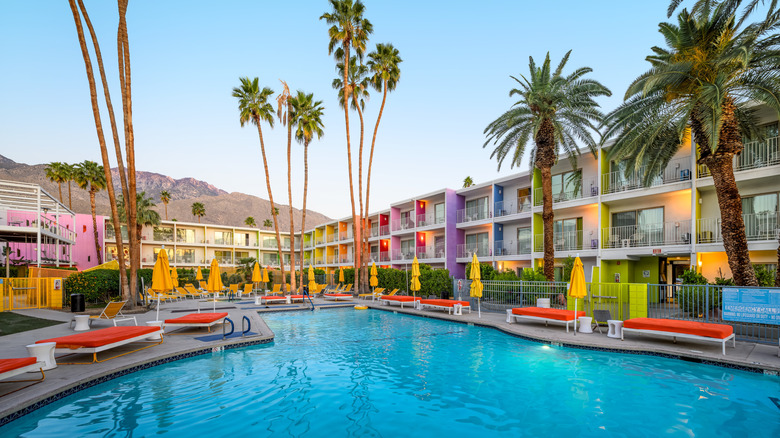
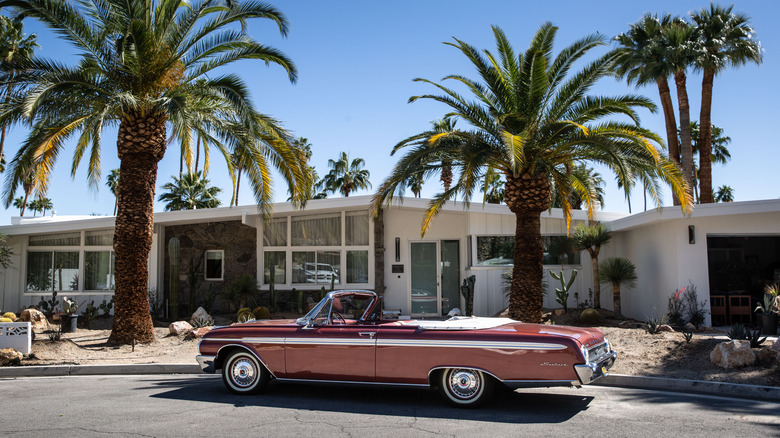
Palm Springs is arguably the most intact mid-century environment in America. The whole town is a living, sun-soaked museum of '60s architecture, glamour, and desert escapism. Neighborhoods like Vista Las Palmas, Twin Palms, Deepwell Estates, and Racquet Club Estates are treasure troves of California's mid-century modern homes designed by icons like Dan Palmer, William Krisel, and E. Stewart Williams. Flat planes, clerestory windows, breeze blocks, butterfly roofs, jewel-tone doors — every detail tells the story of a time when California modernism embraced sunlight and simplicity. Many homes still look exactly as they did in the 1960s, and design lovers can take guided tours of the neighborhoods, especially during Modernism Week.
The retro hotel scene is equally irresistible. Stay at the Ace Hotel & Swim Club for a polished desert oasis, The Saguaro for a rainbow-hued fantasy, or the Orbit In, a boutique property that feels like a time capsule with its fun, themed rooms. Downtown Palm Springs adds even more mid-century texture. Visit the Palm Springs Art Museum's Architecture and Design Center, a restored 1960 bank building with glass walls and steel lines that epitomize the city's style. Browse shops selling mid-century furniture, mod clothing, and desert-inspired art. Next, wander Palm Canyon Drive, where neon signs, historic theaters, and mid-century storefronts preserve that classic desert resort-town feeling. For a quirkier slice of nostalgia, check out the old trailer parks filled with polished Airstreams and pastel campers.
Woodstock is a pilgrimage for music lovers
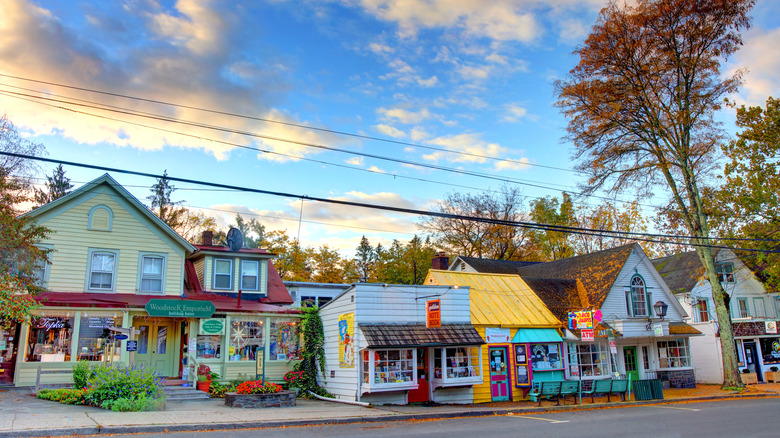
Even though the legendary 1969 music festival took place 60 miles away in Bethel, Woodstock has become synonymous with '60s music, art, and counterculture. This quirky, artsy town in the Catskill Mountains remains a pilgrimage site for music lovers. Stroll along Mill Hill Road and Tinker Street to see the hand-painted store signs, indie boutiques, colorful galleries, and community bulletin boards full of workshops and concerts. Record stores like Woodstock Music Shop sell old vinyl records and local pressings, and family-run restaurants like Pearl Moon double as open-mic venues. Galleries like Woodstock Artists Association & Museum celebrate the region's long-standing creative community, and the town's artistic infrastructure is a direct descendant of 1960s-era ideals that brought dreamers here.
For a deep dive into 1960s music culture, head to the Bethel Woods Center for the Arts, located at the original site of the 1969 festival. The onsite museum is one of the best explorations of counterculture in the country, with immersive exhibits on peace activism, social change, fashion, and, of course, the music. Standing on the hill where the crowd watched Janis Joplin, Jimi Hendrix, Joan Baez, and The Who is one of those experiences that totally transports you. Back in town, wander forested paths where artists once retreated for inspiration, shop for vintage fabrics, visit the historic Maverick Concert Hall, or stop at cozy eateries that feel like they've been hosting musicians and artists since their hippie days.
San Francisco has Haight-Ashbury's counterculture heartbeat
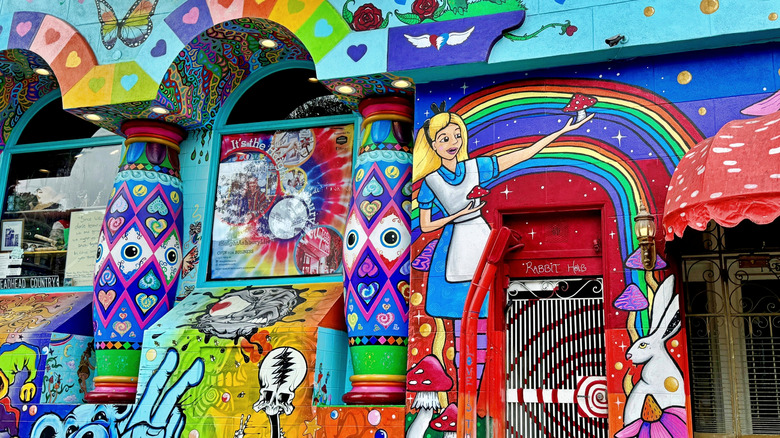
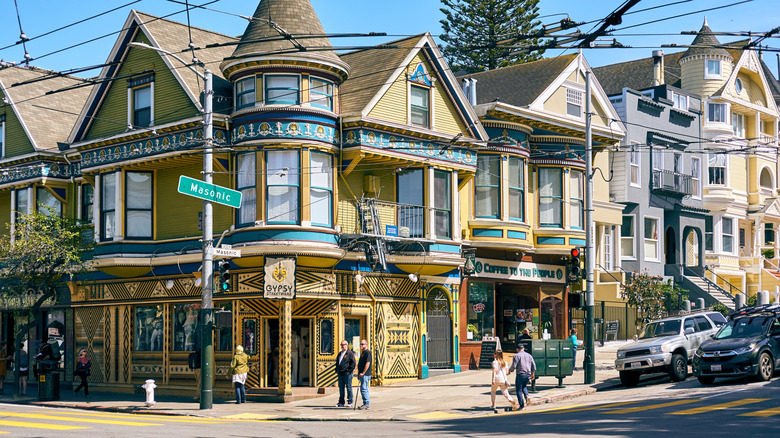
San Francisco is full of history, but nowhere preserves the 1960s quite like the Haight-Ashbury district. As the epicenter of the so-called "Summer of Love" in 1967, this was a neighborhood transformed by music, art, idealism, and rebellion. Today, the Haight still embraces that identity. It's colorful, psychedelic, a little messy, and endlessly fascinating. The corner of Haight and Ashbury remains the symbolic heart of the movement. Vintage shops overflow with clothing, record stores sell rare vinyl and posters, and boutiques like Love on Haight display bold tie-dye fabrics and handmade jewelry. Murals cover building walls, blending '60s iconography like peace signs and flowers with modern artistic interpretations.
Many landmarks of the era remain, like the Red House, rumored to be a former dwelling of music icon Jimi Hendrix, and the Grateful Dead House on Ashbury Street. Music venues also echo the city's '60s soundtrack. While some original spaces are long gone, Golden Gate Park continues to host free concerts and community events reminiscent of the 1967 gatherings that defined the counterculture. The Hippie Hill drum circles still draw crowds looking to embrace the district's easygoing, communal ethos.
Hollywood is full of swinging '60s landmarks
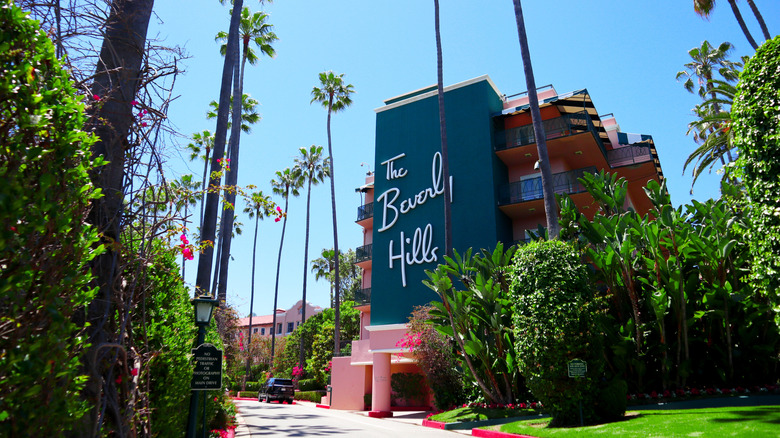
Hollywood in the 1960s was bold, stylish, messy, glamorous, and rebellious. The Sunset Strip became the epicenter of the era's nightlife, where musicians, actors, and cultural rebels crowded into clubs that still stand today. Walking down the Strip feels like stepping into a living mural of music and movie history. The Whisky a Go Go and The Roxy, iconic venues that helped launch bands like The Doors, still host shows, their neon signs glowing with the same electric promise. The Rainbow Bar & Grill, once a hangout for rock musicians and actors, maintains its historical aura with wood-paneled interiors and old photographs lining the walls.
Then there are the architectural landmarks. Googie-style diners like Mel's with their space-age angles, glittering theaters like New Beverly Cinema, and mid-century apartment buildings like the Hollywood Riviera. Many of these structures are unchanged, giving Hollywood a visual continuity that few modern entertainment districts can match. Vintage shops, retro cafés, and old-school film studios add even more layers of nostalgia. You can tour historic soundstages, stroll past the Paramount gates, or explore the museum inside Hollywood's oldest surviving movie studio.
St. Augustine delivers 1960s charm with sun-soaked, coastal vibes
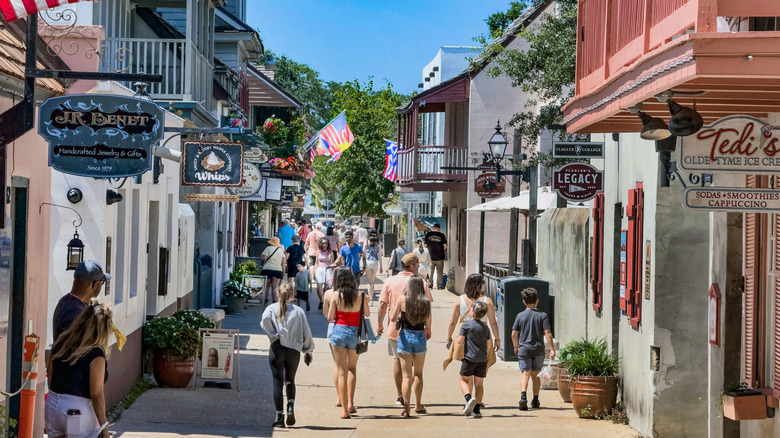
St. Augustine is a family-friendly coastal gem often celebrated for its deep Spanish colonial history, but it's also a major stop for American families road-tripping through Florida. In the 1960s, the Sunshine State was the quintessential vacation spot, and St. Augustine had everything visitors needed — walkability, atmosphere, and a pleasantly laid-back vibe. The historic district, with its coquina-stone buildings, narrow lanes, and courtyard cafés, feels as timeless as ever. Retro motels like The Local line the beach roads, offering an old-school alternative to chain hotels.
St. Augustine Beach and Anastasia State Park remain blissfully relaxed, just as they were when travelers arrived in station wagons with coolers full of sandwiches. You'll find nods to '60s tourism all over the place with miniature golf courses (a pastime that also had its heyday in the '60s), old-school diners like Georgie's, and quirky museums that lean into nostalgia instead of replacing it. Families can stop for ice cream, peek into souvenir shops, and climb to the top of the St. Augustine Lighthouse.
On top of the atmosphere, St. Augustine is a major historical point of interest regarding the Civil Rights Movement. Between 1963 and 1964, local branches of the Youth Council and Southern Christian Leadership Conference (SCLC), part of the NAACP, organized a series of protests that helped lead to the passage of the Civil Rights Act. While the Woolworth Department Store is no longer open, the lunch counter where the first of the protests took place has been carefully preserved in the nearby Lincolnville Museum.
Detroit is a soul and Motown time capsule
Few places capture the sound and story of the 1960s like Detroit. This is where Motown Records rewrote American music, where the voices of Diana Ross, Marvin Gaye, The Temptations, and Stevie Wonder shaped a cultural revolution. Today, Detroit honors that legacy with pride, preserving music landmarks and sharing them with visitors eager to step into the era's soul-filled world.
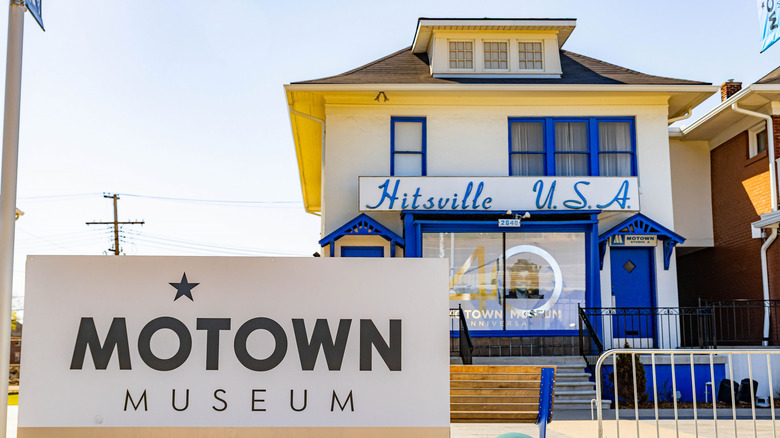
The heart of the experience is Hitsville U.S.A., now called the Motown Museum. Although the museum was established in the 1980s, it's actually still located in the original house where Berry Gordy founded Motown Record Corporation in 1960. The building looks modest from the outside, but inside it's pure history. Studio A is where countless hits were recorded, and you'll see displays of artifacts, documents, and photographs that tell unforgettable stories. Beyond Motown, Detroit offers additional mid-century discoveries like Black Bottom and Lafayette Park, and local establishments like The Clique Restaurant preserve the look and feel of 1960s urban eating.
Detroit's shops also reflect the city's roots, with racks of soul-era fashion and crates of vinyl waiting to be flipped through. Local jazz clubs also continue the music-first mindset that shaped Detroit's nightlife.
Memphis is a rock 'n' roll city with roots in the Civil Rights Movement
Memphis in the 1960s was a city of movement — social, musical, and cultural. It was a place where rock 'n' roll shaped the future while civil rights activism demanded change. Today, travelers can explore both sides of that era through neighborhoods, museums, and landmarks that keep the stories alive. The National Civil Rights Museum, built around the Lorraine Motel where Dr. Martin Luther King Jr. was assassinated, is one of the most powerful historical experiences in the country. Exhibits trace the long arc of the Civil Rights Movement, using immersive displays to help visitors understand the '60s struggle in a deeply personal way. The preserved motel room, frozen in time, forms an unforgettable emotional anchor.
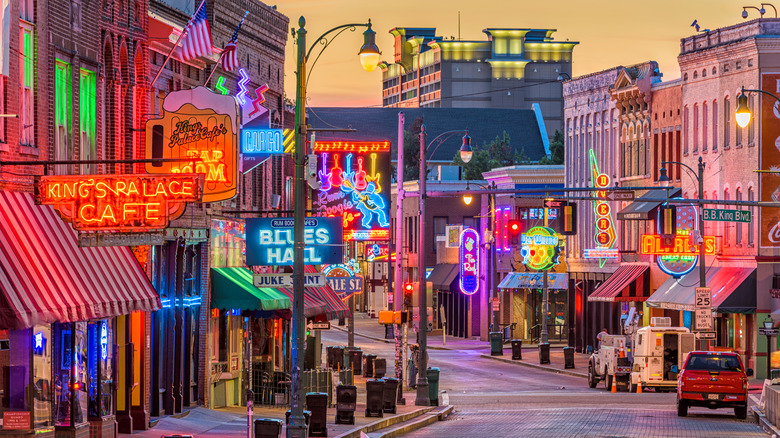
Music, meanwhile, is everywhere. Visit Sun Studio, where Elvis, B.B. King, Jerry Lee Lewis, and countless others recorded genre-defining tracks. The studio looks much as it did in the '50s and '60s, with vintage equipment and guided tours that tell behind-the-scenes stories. Historic Beale Street combines nightlife and history, blending jazz, blues, and rock with old storefronts that evoke the city's musical heyday. Local shops carry old vinyls, soul-era fashion, and handmade memorabilia. Memphis' food culture also retains mid-century flavor, with soul food restaurants, barbecue joints, and family-run diners that have been feeding locals for generations.
San Diego's surf culture is almost frozen in time
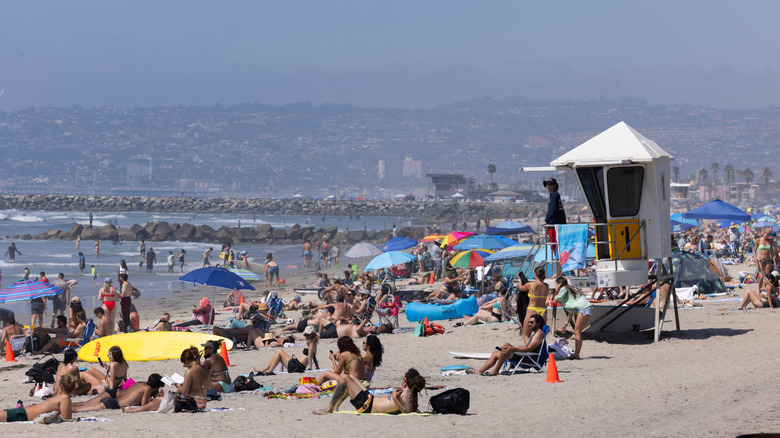
Although the sport of surfing goes way further back, San Diego boomed as one of the surf capitals of the 1960s, where longboards ruled, music celebrated endless-summer dreams, and beach motels welcomed travelers chasing waves. Today, San Diego still has pockets where that barefoot, '60s surf culture remains untouched. Start with Ocean Beach, where board shops sell longboards and independent boutiques offer vintage tees, locally made jewelry, and tie-dye prints.
Nearby, Mission Beach's boardwalk still delivers the classic SoCal experience with beach cruisers, palm trees, sandy paths, snack stands, and waves rolling in with dependable rhythm. Retro hotels like the Pearl Hotel in Point Loma complete the vibe with its breezy exteriors, colorful decor, and balcony rooms that look like they belong in a 1963 surf film. You can grab fish tacos, wander barefoot across beaches, listen to live surf rock, and watch the sun sink into the Pacific like a giant orange wave.
Methodology
The eight destinations were chosen through a deep dive into places where the 1960s still feel genuinely alive rather than repackaged or commercialized. We sifted through local tourism materials, preservation society resources, museum archives, and heritage documentation to find communities that actively protect mid-century architecture and cultural landmarks from the era. This meant prioritizing places where 60s-era design, music, and civic history remain part of the everyday streetscape. We also consulted firsthand travel guides and local reporting to be sure these identities weren't staged or recreated, but organically woven into the fabric of the community.
We also looked for mid-century motels still in operation, long-running music venues, psychedelic murals that survived the decades, and diners or neighborhoods where '60s culture still shapes local creativity. These details, combined with a focus on the era's major cultural touchstones, from surf culture and counterculture art to civil rights history and iconic musical movements, helped us assemble a list that feels both diverse and deeply rooted. The result is a collection of destinations where the '60s aren't just remembered in museums or marketing campaigns, but show up in real, vivid, everyday ways.