
America's 5 Most Educated Cities, According To A Nationwide Study
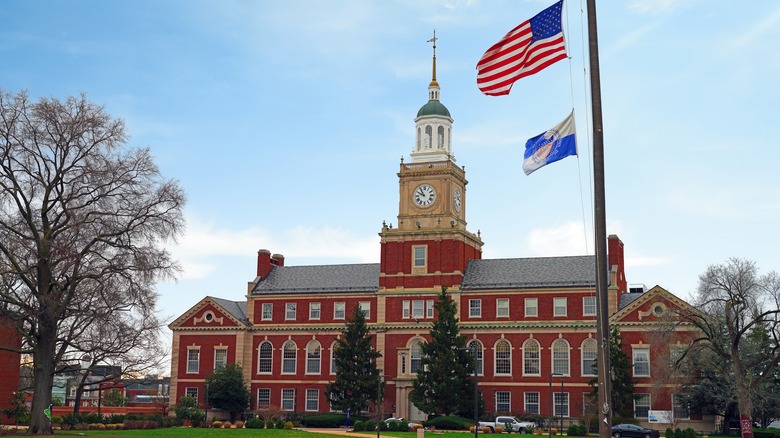
If a map of the United States came with yearbook superlatives, New York City would win "most popular," and Seligman, Arizona, would win "most nostalgic." As for "most educated," a nationwide study reveals the answers. A 2025 WalletHub study ranked the most educated cities in the United States, assigning each a score out of 100. Along with considering the percentage of adults who attained varying levels of education (high school diploma, some college, bachelor's degree, and graduate or professional degree), Wallet Hub evaluated factors such as the quality of the public school system, the average quality of universities, and the racial and gender education gaps.
Education is correlated with many desirable outcomes. As WalletHub analyst Chip Lupo explained in a statement released alongside the study, "Higher education doesn't guarantee better financial opportunities in the future, but it certainly correlates with it. The most educated cities offer good learning opportunities from childhood through the graduate level." Unsurprisingly, due to this, you'll find that many college towns ranked in the top five. The exact locations, though, may surprise you.
Washington-Arlington-Alexandria, DC-VA-MD-WV
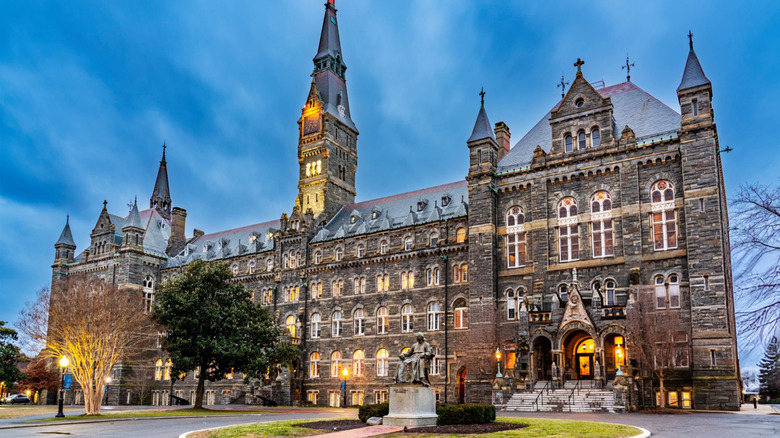
Whether you call it the Washington metro area, the DMV, or Washington-Arlington-Alexandria, DC-VA-MD-WV, Washington, D.C., and its surrounding cities come in at number five on the list. Along with being home to many people working in the federal government, the D.C. area is the location of many top colleges and universities, including Georgetown University, George Washington University, and Howard University in Washington, D.C.; George Mason University in Arlington, Virginia; and Washington University of Science and Technology in Alexandria, Virginia.
The DMV ranked fifth overall in the study and third in educational attainment; however, it lost points for educational quality and the attainment gap, placing it 35th among the 150 cities considered. A 2025 study by DC Action, a nonprofit that conducts research and analysis on current trends and developments in kids' well-being, found that while 94% of white D.C. students graduate high school in four years, only 77% of Black students and 75% of Latine students graduate in four years. So, though D.C. made the list, there is quite a bit of racial disparity.
San Jose-Sunnyvale-Santa Clara, California
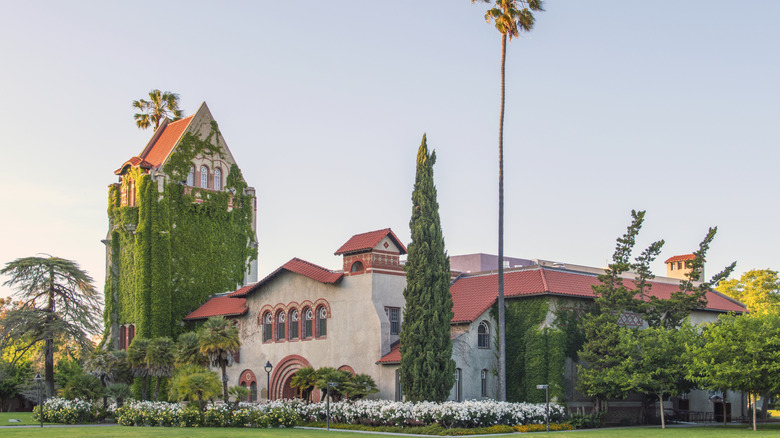
The San Jose, Sunnyvale, and Santa Clara areas make up a major portion of Silicon Valley, the Northern California region known as a global center of the tech industry. There, you'll find many high-tech companies that attract highly-educated employees, including Adobe, eBay, and PayPal in San Jose; Fujitsu and Trimble in Sunnyvale; and Upwork and Clumio in Santa Clara. Additionally, you'll find several colleges and universities, including San José State University and Santa Clara University. San Jose also ranked highly in several sub-lists in the WalletHub study: third in average university quality, the top level of graduate or professional degree holders (tied with several other cities), and second in the percentage of bachelor's degree holders.
However, similar to the D.C. metro area, the San Jose-Sunnyvale-Santa Clara area lost points in WalletHub's ranking due to the attainment gap, placing 16th in quality of education and attainment gap compared to 5th in educational attainment. A 2025 report from San Jose State University found that while the nine wealthiest Silicon Valley households earned $136 billion more in 2024 than in 2023, around 100,000 Silicon Valley residents had practically no assets. "The gap between the wealthiest and the lowest income residents is just exponential, and that is disheartening, and we don't see a change in that," said Anji Buckner-Capone, the assistant professor at San Jose State who authored the report, told The Mercury News.
Madison, Wisconsin
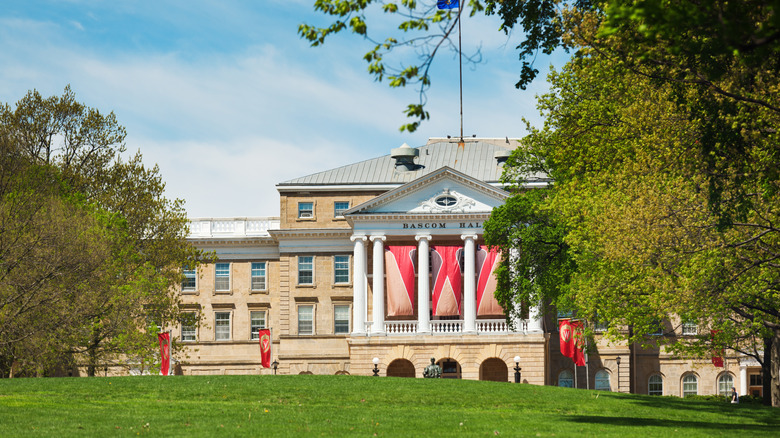
Madison, Wisconsin, came in third on the WalletHub study. Over 49% of the population aged 25 and older has at least a bachelor's degree, and more than 19% have an advanced degree. Additionally, Madison ranks No. 11 in university quality and has a low gender gap in education. Madison is Wisconsin's state capital, and it's home to several colleges and universities, including the University of Wisconsin-Madison and Edgewood University. The manufacturing, healthcare, agriculture, information technology, and bioscience industries all have a major presence in the city.
However, Madison has a high racial attainment gap. Specifically, it has the third-highest racial attainment gap, favoring white people in the country, outranked only by Bridgeport, Connecticut, and Omaha, Nebraska. In 2025, the National Assessment of Educational Progress found that Wisconsin had the largest racial disparities in math and reading scores in the United States. For example, just 5% of Black fourth-grade students in Wisconsin met or exceeded proficiency in math, compared to 51% of white fourth-grade students.
Durham-Chapel Hill, North Carolina
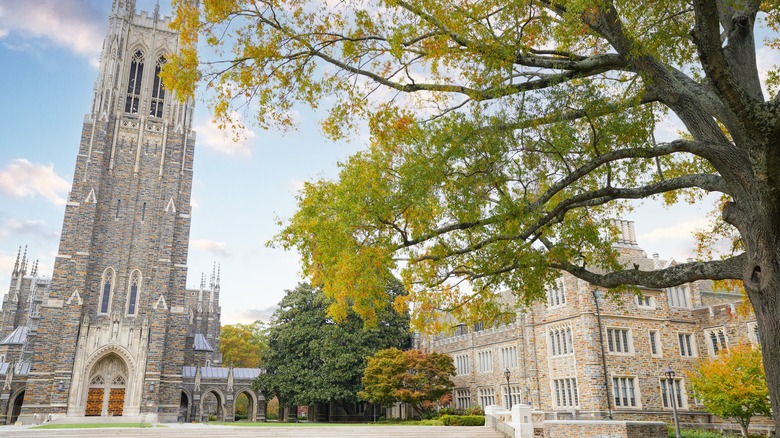
The Durham-Chapel Hill, North Carolina, area is the second-most educated metro in the country in WalletHub's study. More than 52% of the population aged 25 and older holds at least a bachelor's degree, and 26% have an advanced degree. Additionally, Durham ranks No. 8 for university quality and No. 16 for the most summer learning opportunities per capita. Durham-Chapel Hill also has a low gender and racial achievement gap. In fact, it ranks No. 1 in the country in WalletHub's quality of achievement and attainment gap category.
You'll find several universities and colleges in Durham-Chapel Hill, including Duke University and North Carolina Central University in Durham and the University of North Carolina at Chapel Hill. Durham and Chapel Hill make up two points in "the Triangle" (the third point is Raleigh, North Carolina), a region where the science, technology, and advanced manufacturing industries have a significant presence, attracting educated employees (the Raleigh-Cary, North Carolina, area ranked No. 6 on the WalletHub study).
Ann Arbor, Michigan
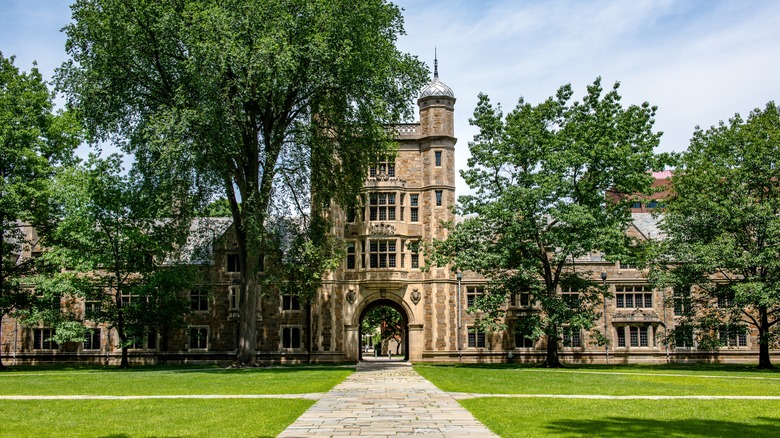
Finally, Ann Arbor, Michigan, is the most educated city in the country, according to WalletHub's criteria. WalletHub found that nearly 96% of Ann Arbor adults ages 25 and older have at least a high school diploma, over 58% have a bachelor's degree, and 31% have an advanced degree, ranking Ann Arbor among the highest in the country in each category. Ann Arbor also ranked No. 9 in the United States for university quality, No. 18 for public school system quality, and has a low gender educational attainment gap.
Ann Arbor is home to the University of Michigan and was previously recognized as America's best college town. Along with U of M, you'll find Concordia University Ann Arbor (CUAA) in the city. Ann Arbor is home to many industries, including education, manufacturing, tech, healthcare, and social services, and has a high proportion of remote workers. Impressively, 2025 marks the eighth year Ann Arbor has taken the top spot in WalletHub's annual ranking.