
Michigan's 'Mushroom Capital Of The United States' Has Camping, Trails, And Natural Beauty
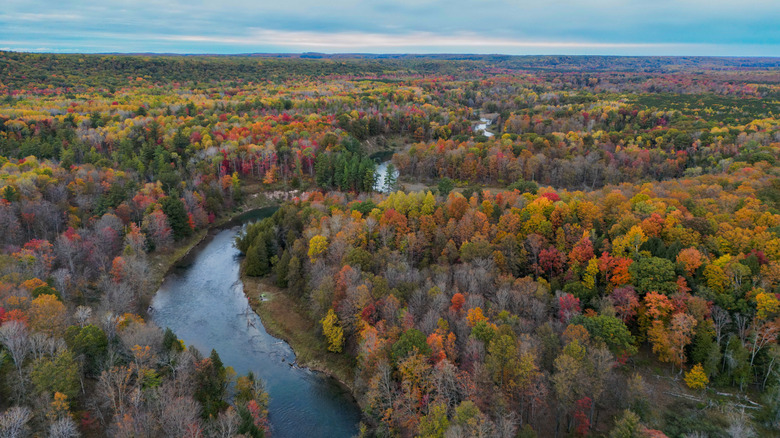
"Nature alone is antique, and the oldest art a mushroom," wrote Thomas Carlyle, the 19th-century Scottish writer and historian. Truly, mushrooms are magnificent. From art and cuisine to medicine, psychedelia, folklore, and even poison, fungi have long captured human imagination — appearing as symbols of death and decay, objects of witchcraft, sustainable materials, and whimsical homes for fairies and gnomes. Few value the mushroom more than Mesick. Pronounced "MEE-sick," the small village lies deep within Michigan's scenic Manistee Forest, where winding rivers, waterfalls, and woods create a backpacker's paradise, and ideal mushroom-growing conditions.
Mesick is 30 miles south of Traverse City and 21 miles north of Cadillac, where Evergreen Resort offers a luxurious golf-and-spa getaway, nestled along the Manistee River at the crossroads of state highways 37 and 115. Covering 1.34 square miles and home to just 415 residents as of 2025, the village is small even by rural Michigan standards. Yet it's known not only for its abundant natural beauty and outdoor recreation, but for a festival celebrating one of its most prized natural resources: the morel mushroom.
Settled in the 1880s as a lumber town, Mesick became a key shipping hub for hardwood timber along the Ann Arbor Railroad and incorporated as a village in 1901, earning Michigan the title of America's biggest lumber producer until the 1930s. Mesick eventually transitioned into an agricultural community as Michigan's timber industry declined, and the construction of the Hodenpyle Hydro-electric Dam reshaped the area, flooding Fletcher Valley to create what locals call "The Backwaters," a lake now designated for outdoor recreation. Anglers and vacationers soon followed. As conservation and forestry preservation expanded in the 1960s, sawmills gave way to evergreen farms — helping Michigan become one of the leading producers of Christmas trees, with over 500 farms statewide today.
Mesick's annual mushroom festival
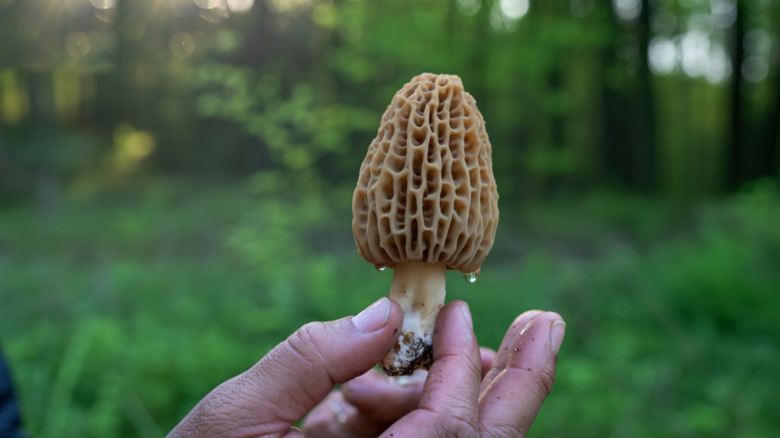
If mushrooms are magnificent, the morel is truly magical (though not in the psychedelic sense). Valued by foragers because they are difficult to cultivate, morels require specific soil temperatures and growing conditions, and are only found in the wild. They are prized by chefs and foragers alike for their unique flavor and texture. While the Manistee National Forest provides excellent growing conditions, morels remain unpredictable, making them all the more valuable and alluring to mushroom hunters who travel to Mesick each year. Morels also have toxic lookalikes, so anyone foraging should always confirm edibility with an expert before tasting.
May is the best time to search for morels, which is why Mesick has hosted its annual Mushroom Festival for more than 60 years on the second weekend in May (Mother's Day weekend). Established in 1959, the festival draws foragers from across the region to fan out through the Manistee woods hunting elusive morels, prompting the town's moniker of the "Mushroom Capital of the United States." The weekend also features vendors, a carnival, parade, sports tournaments, car show, and a 5K run.
The festival is held in conjunction with the annual Mesick Jeep Blessing, an event that began in 2001 with religious Jeep owners in nearby Boone. Today, hundreds — often more than 1,000 — Jeeps converge on Mesick for the philanthropic event, which includes vendors, a Jeep blessing, and off-road activities such as mud bogging. Altogether, the weekend transforms Mesick into a gateway to the area's abundant outdoor recreation, from paddling and swimming on the lakes and rivers to hiking, foraging, and camping in the forests and on the trails.
Mesick is a gateway to year-round outdoor adventure
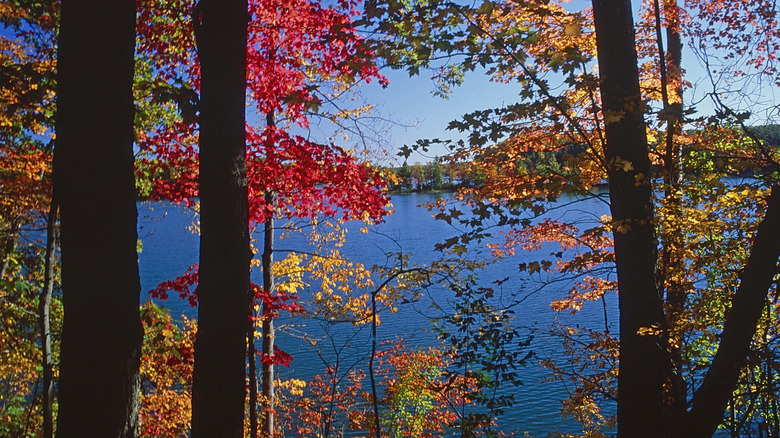
Despite its tiny size, there's plenty to do in Mesick throughout the year beyond the Mushroom Festival. Northwest Michigan's outdoor adventures don't stop when summer ends. Snowmobiling, cross-country skiing, and hunting are popular, while trails that are lively in summer take on a new glow in autumn as leaves turn. The North Country Trail and Manastee River Trail are major hiking destinations, and the region boasts about 450 miles of snowmobile trails across neighboring counties. Climb nearby Briar Hill, often cited as the highest point in Michigan's Lower Peninsula, for scenic views. Crystal Mountain Ski Resort offers storybook winter vibes and is less than 20 miles away. Furthermore, the Antioch Hills Golf Club serves 18 holes and seasonal tee times, while Northern Lavender is one of the largest organic lavender farms in the U.S. "Well worth a visit," wrote one Tripadvisor reviewer. "Come to feed the alpacas, pick lavender, and learn about regenerative farming."
Campgrounds abound in and around Mesick: Northern Exposure includes tent and RV sites, Pat's RV Park has hookups, cabins, and even boat rentals, while Seaton Creek provides a quintessential forest camping experience. Dispersed camping is also available almost anywhere on public lands, including the national forest. But if you're not a camper, Mushroom Cap Hotel offers 16 budget-friendly rooms with kitchenettes.
Mesick's compact village center serves as the community's heart, with a few local businesses that host festival events and remain active year-round. The Mesick Historical Museum offers a time-capsule glimpse of local history through artifacts and exhibits, while dining options include Trailside Tavern for hearty burgers, Jennifer's Roundabout for family-friendly meals plus homemade baked goods, and Brew Há for creative coffees and smoothies. Bucksnort Bar rounds out the lineup for those looking for a classic dive bar to stop in for a drink.