
5 Nostalgic Michigan Towns That Feel Straight Out Of The '50s
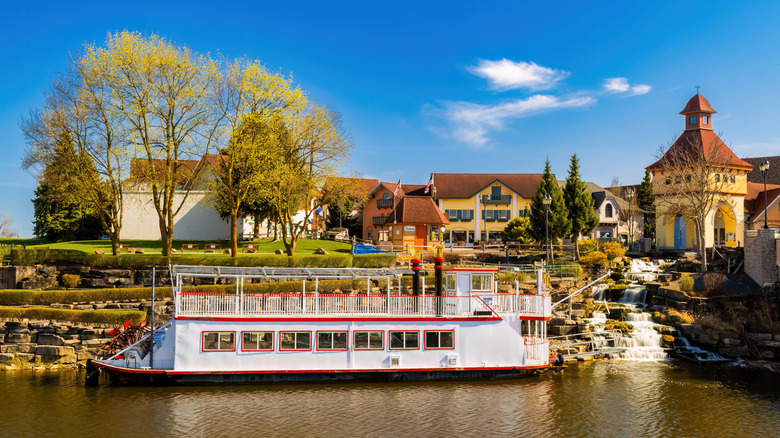
Michigan in the 1950s was at a peak. Detroit was the fifth-largest city in the United States and was the center of a booming auto industry. The economically thriving city fueled widespread homeownership, freshly minted suburbs, and people buying up cottages in growing lakeside resort towns, many of which are still picture-perfect small towns along Michigan's Great Lakes shores. In a 1950s Michigan scene, you'd see busy lakeside beaches with wooden bathhouses, main streets lined with clapboard buildings, and two-tone sedans pulling into neon-lit drive-in diners.
Part of the 1950s nostalgia of Michigan is that it was a time that symbolized the state's flourishing, followed by the age-old story of population shrinkage (in Detroit, specifically) and autoworkers losing their jobs en masse. But that didn't wipe out the charm of Michigan's statewide towns. Many of them retain a mid-century chic, with cultural holdovers from that era that are still in operation and buildings befitting a vintage atmosphere. We chose five of the best towns that have preserved a 1950s feel, offering a mix of mid-century architecture, family-run diners and ice cream parlors, and traditions carried through the decades. These are towns where you could make a whole 1950s-themed itinerary, from walking down historic main streets to spending an evening at a drive-in theater or lakeside marina.
St. Joseph
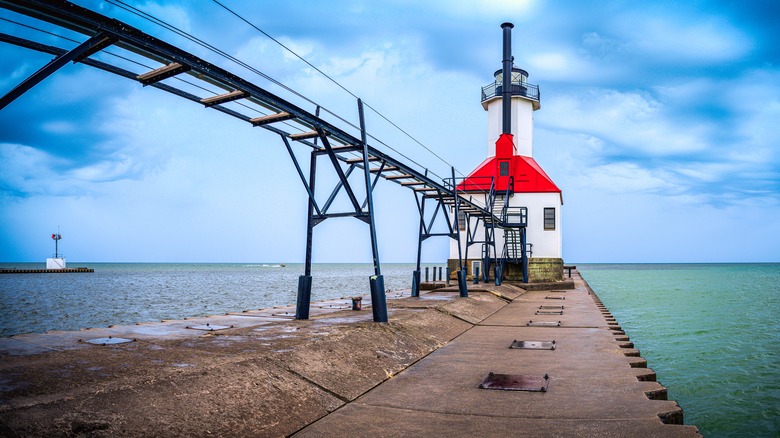
Some of Michigan's most picturesque towns, with the charm and polish of mid-century idealism, dot the state's shores, lapped by the Great Lakes. On the shore of Lake Michigan, St. Joseph is a stunning example with year-round fun and historic sites. The city has been continuously settled since the late 18th century, but experienced a boom in the 1900s. From 1890 to 1950, the town's population count nearly tripled, and it continued to grow until reaching a peak in the '70s.
In the 1950s, St. Joseph would have been a busy beach town with candy-colored storefronts and a lakeside amusement park called Silver Beach, complete with a roller coaster and carousel, that operated from 1891 to 1971. Though the amusement park no longer exists, you can still visit Silver Beach for a day by the water and ride the Silver Beach Carousel, a replica of the original one that stood here and a fun time capsule of the midcentury.
Running parallel to the beach is State Street, a lovely, walkable shopping street with lots of whimsical stores and historic architecture, accented by white upright lampposts. Stop by Elephant's Breath Antiques, rated 4.4 stars on Google at the time of writing, to browse a wide selection of curios (perhaps even some pieces dating back to the '50s), or grab a sweet crepe at the 4.9-star rated Full of Crepe shop. St. Joseph is about a 1.5-hour drive from either Chicago or Grand Rapids.
Saugatuck
In 2024, Saugatuck was named the second-best coastal small town across the whole country by USA Today. Its accolades are in no small part a byproduct of the town's historic charm. Cheapism ranked Saugatuck among 11 of the top old-fashioned towns that have risen in popularity again. Vintage stores, pastel-hued retro boat rentals, and old-school root beer floats give the resort town its distinctly '50s flair. Conveniently, visitors can reach it in about a 40-minute drive from Grand Rapids.
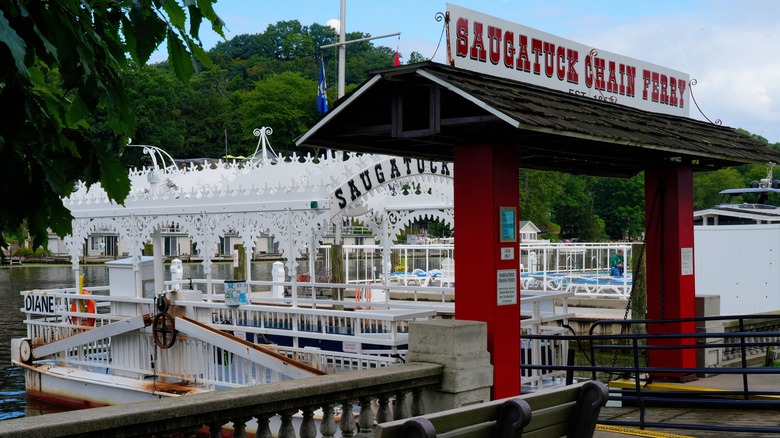
A nostalgic must-stop while you're in town is the Saugatuck Chain Ferry. Dating back to 1838, it uses a traditional crank system to pull riders from a decorated terminal across the Kalamazoo River for just a $3 fare (as of this writing). Alternatively, you could book your own vintage boat rental at the aptly named Retro Boat Rentals dock. The service has 4.9 stars on Tripadvisor and operates a fleet of pink- and baby blue-washed motorboats — and the boats are restored originals from the '50s, given names like Beverly, Betty, and Doris.
After puttering around the water, you could stop at the Drug Store & Soda Fountain for dessert. It's a truly throwback spot that serves old-fashioned sodas, sundaes, and floats in the back of a former drug store. Another one-of-a-kind beatnik site in town is the Douglas Root Beer Barrel, a preserved homage to the beloved mid-century beverage. The giant roadside barrel was first built in 1952, but it's not just a novelty photo-op. Inside, there's a still-operating concession stand that serves hot dogs and (of course) root beer, which you can take over to the Douglas Beach, a two-minute drive away, during the season.
Frankenmuth
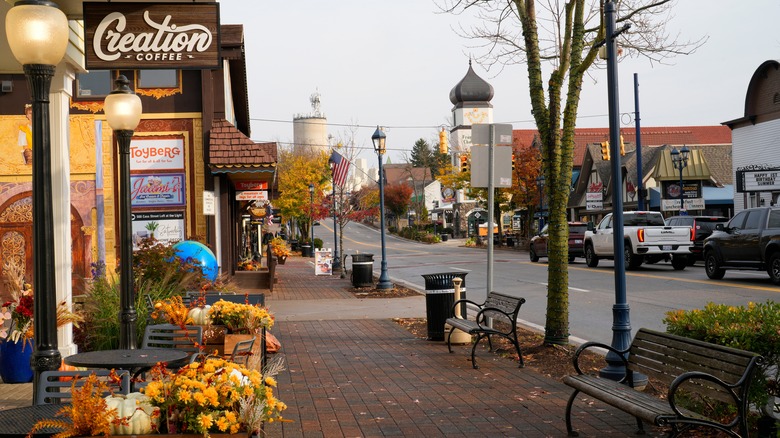
Once an enclave of German immigrants, Frankenmuth (nicknamed "Little Bavaria") saw massive growth in the 1950s, which boiled down to two driving factors: The I-75 was built, which connected the northern city to the rest of the state and beyond, and the Cass River was dammed, which blocked off the area's flooding and allowed expanded development of downtown. The decade ended in the city's formal incorporation in 1959. Today, you can reach it in about a 1.5-hour drive from Detroit's Coleman A. Young International Airport.
Frankenmuth's Main Street is an iconic destination in its own right, if not for its eccentric blend of Bavarian architecture with classic country storefronts, then for being the home of Michigan's largest restaurant and a family favorite, Zehnder's. Though the nine-dining-room restaurant opened in 1929, it experienced a boom after World War II. The owners then bought the neighboring hotel, decked it out in kitsch Bavarian motifs, and opened it as the Bavarian Inn, which still operates today.
Visitors can truly sink into a 1950s fantasy with a stay at a local, Guest Favorite-certified Airbnb that's '50s-themed and has 4.94 stars, as of this writing. Named the Historic Rupprecht Vacation Haus, the stay is located right on Main Street, under a 10-minute walk from Zehnder's, in fact. The house has pink and blue accents, a kitchen styled like a diner with checkered floors and chrome stools, and an attached recreation room that has a bumper pool table and vintage Coca-Cola refrigerator. Despite its retro appearance, the house is equipped with modern appliances, so you can transport to the 1950s without sacrificing the practical benefits of the 21st century.
Charlevoix
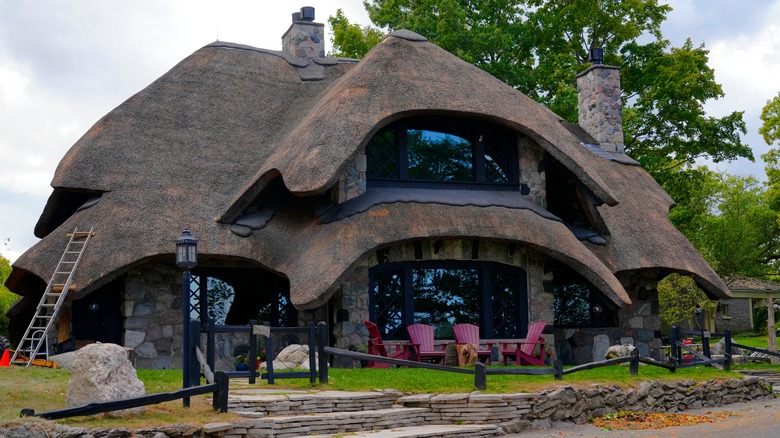
Situated at the top of the Michigan mitten, Charlevoix is a charming beach town sandwiched between three lakes: Lake Michigan, Lake Charlevoix, and Round Lake. Its abundance of lakeside opportunities has, no doubt, made it a top-notch summer getaway, but the town really gained momentum as a vacation destination following World War II, with soldiers returning from war, new highways offering better connections, and Michigan's middle class having more spending power for summer holidays. Much of that mid-century vacation spirit remains intact in the town's lakeside marinas and resorts, like the Hotel Earl, originally built as the Early Young's Weathervane Lodge in 1959.
Some of Charlevoix's best marina-town energy is preserved along Bridge Street, a main drag lined with ice cream shops, a park with a splash pad, and an iconic drawbridge built in 1949. One of the town's most interesting areas, however, is its Earl Young Buildings Historic District, a triangular block of homes along Park Avenue that showcase the more eccentric side of the mid-20th century. The homes are known as Charlevoix's "Mushroom Houses" and were created between the '30s and '50s by local architect Earl Young. The homes are privately owned, but the town's historical society offers walking and step-on coach tours that pass along the outside of them, incorporating a few other important historic sites along the way. For visitors flying in, Charlevoix is about an hour drive from the regional Cherry Capital Airport, which has arrivals from Midwest cities and Florida.
Ludington
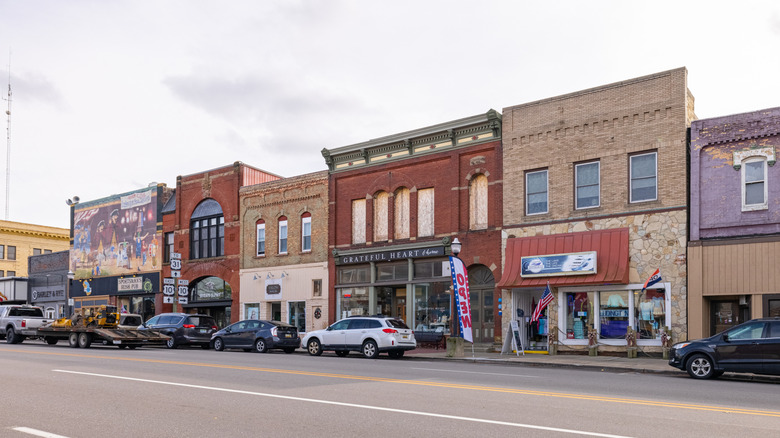
Ludington sits about halfway down the western coast of the Lower Peninsula, about a 1.5-hour drive from Grand Rapids—its location served an important part in its historical prowess. Originally, the town's economy revolved around a local lumber operation, but by the 1950s, a new role emerged: It became an essential shipping port, connected to the Pere Marquette Railroad on one side, and to a new car ferry route to Wisconsin on the other. In the '50s, Ludington was running the world's largest car ferry port, serving as the main link across Lake Michigan. One of the original car ferries, the 1951-built SS Badger, is still in operation today. It's one of only two car ferries that cross Lake Michigan, and it's the last that's coal-fired. You can ride the historic ship across the lake yourself, traveling in the style of our 20th century predecessors (albeit also at an old-fashioned pace—the trip takes four hours to cross the lake).
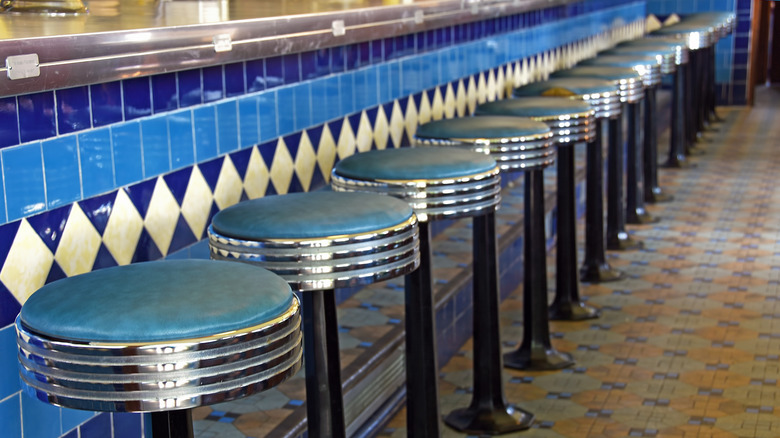
The car ferry is a relic of Ludington's mid-century era, but its downtown has just as much nostalgia. If you walk down Ludington Avenue, the downtown strip, it looks much the same as it did in the 1950s, with low-slung buildings, old signage, and shops and cafés stacked side by side. On West Ludington Avenue, there's even a diner that relishes in a '50s pastiche: Ludington's House of Flavors has a '50s jukebox, checkered floors, and a mosaic of vintage photos and mementos covering the walls. It gets good reviews, too, with 4.5 stars on Tripadvisor. You can stop in for classic American diner food or for a scoop from one of its many eclectic ice cream flavors.
Methodology
We selected five Michigan towns that embody a 1950s atmosphere the best, drawing on local historical society archives, town history pages, and traveler testimonies from reviews or blogs. We looked for things like postwar architecture, classic diners with traditional soda fountains, kitsch flourishes, and lakeside lodges harkening back to the boom years of car culture and lake vacations. The towns chosen are those where multiple of these elements coexist along cohesive downtown strips and marinas, reinforced by positive visitor experiences and a breadth of things to do to fill a trip.