
5 Reasons Portugal Is Such A Popular European Retirement Destination
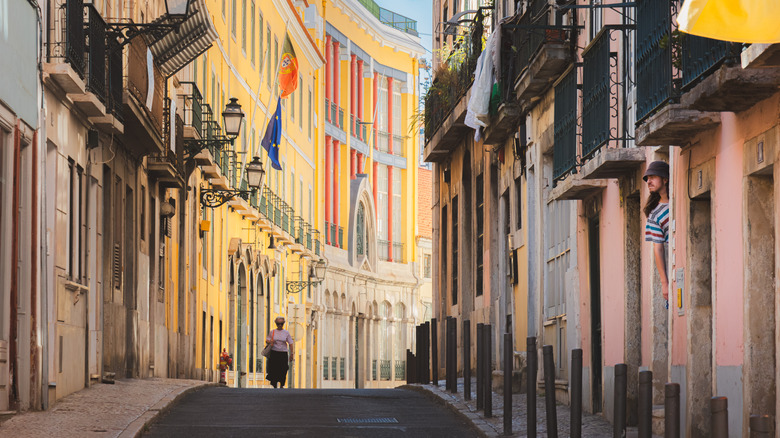
With numerous beach towns, a smattering of historical villages, and an iconic city known as one of the best foodie destinations, Portugal ranks among the most tourist-friendly countries in the world. Data from Statistics Portugal backs this up: In mid-2025, the tourism sector recorded 23 million overnight stays, a 4.2% increase from the year before. But it's not just gap-year backpackers, vacationing families, or digital nomads passing through. Portugal was named the most attractive retirement destination in 2025 by Global Citizen Solutions in its Global Retirement Report, a distinction that boosted the country's popularity among retirees worldwide.
The numbers help explain why. Portugal's Agency for Integration, Migration, and Asylum (AIMA) reported 19,258 U.S. citizens residing in Portugal in 2024. While the agency didn't specify ages, the Social Security Administration noted that 11,359 retired U.S. workers were receiving benefits in Portugal that same year — a significant number that shows Portugal's popularity with Americans in their golden years.
Would-be retirees don't have to choose between pleasant climates, a relatively straightforward visa process, a dependable health care system, and lower living costs — Portugal ticks all these boxes. Plus, English is widely spoken, allowing a gentler cross-country transition for newcomers, though learning Portuguese is still encouraged. "The fact that, in general, Portuguese people have a very good level of English is obviously a disincentive to learn, tbh I could probably live my non-work life entirely through English but I choose not to, to respect the people here," shared a Redditor. Curious to make the move? Here's a closer look at what makes Portugal such a popular retirement destination.
A straightforward visa process

Portugal's D7 Visa — often referred to as retirement or passive income visa –doesn't have any age limits, unlike retirement visas in some other countries. Applicants must show proof of financial stability through a pension, investments, or other forms of passive income. As of this writing, this generally means demonstrating that you have the required minimum passive income of €10,440 (around $12,240) per year, typically supported by funds held in a Portuguese bank account.
Unrestricted travel throughout the Schengen Zone, the ability to bring dependents, and permission to work or start a business in Portugal are just some of the practical advantages of the D7 Visa. Successful applications are initially granted a 2-year residency, renewable for an additional 3 years. After five years, you can apply for permanent residency or even Portuguese citizenship. However, maintaining D7 status requires physical presence in Portugal — any trip outside the country shouldn't take longer than 6 consecutive months during the first 2 years. Another bonus: Portugal allows dual citizenship, so you don't have to give up your U.S. ties.
Adalberto Pucca, in charge of Global Citizen Solutions' mobility services, told Euronews that Portugal's appeal lies in its "combination of accessible entry requirements and a clear pathway to Portuguese permanent residency and citizenship."
Affordability

For retirees wanting to enjoy life without pinching pennies, Portugal's cost of living remains lower than that of the U.S. Between living expenses in the capital cities of Portugal and the U.S., Global Citizen Solutions found Lisbon to be 41.8% cheaper than Washington, D.C. — a significant difference in savings that can't be ignored. Though Portugal isn't immune to rising prices, its inflation rate of 2.2% as of November 2025 is still lower than the 2.7% price hike in the U.S. for the same month, as reported by the Bureau of Labor Statistics.
Rents in Lisbon, for example, can range from $1,300 to $1,700 for a one-bedroom flat. Rental prices drop even lower in smaller cities: You can rent apartments for as low as $350 to $580 in cities an hour north of Lisbon, like Caldas da Rainha.
Algarve-based American expat Veronica shared just how affordable restaurant and leisurely splurges cost in Portugal: "Beers are 1-2 Euros, wine 2-3 Euros and most 'tourist menus' are 11-12 Euros," she wrote in the blog Poppin' Smoke. "I'm shocked every time I get my bill by the low prices in restaurants. It's easier to go out than dine in and about the same price by the time you buy all the necessary ingredients." Nevertheless, should you choose to do your own cooking, groceries still remain affordable. "I buy from a range of shops and it is cheaper than the U.S. Seafood cheap, varied, wonderful. Fresh fruit and veg does not need to be organic, local cheap and is excellent thanks to strict EU rules," another Algarve-based Redditor wrote.
Mild climate

Portugal's climate is a major draw, particularly for retirees seeking to stay active year-round. As one of the world's countries with the mildest climates year-round, the weather encourages more activity, exercise, and socialization.
The country receives between 2,500 and 3,200 hours of sunshine annually. The southern region of Algarve averages more than 300 sunny days per year, making it possible to still enjoy the outdoors during its mild winters, where temperatures average around 61 degrees Fahrenheit. Meanwhile, northern cities like Porto, Braga, and Aveiro experience cooler summers and wetter winters due to their location along the Atlantic coast — perfect for retirees looking for fresher climates. Lisbon, located in the center of the country, balances hot summer days with cool Atlantic breezes. "Many ex-pats prefer the warmth of the southern Algarve area. Others like city life. It's all available here, and you just need to decide what you want and how much you are willing to spend," Alison Rudolph, a São Martinho do Porto-based American retiree, told Kiplinger.
Tempting as it is to jump into Portugal's clear blue waters on a sunny day, know that temperatures along the coastline vary. Expect the waters along the Atlantic coast to be chilly; sea temperatures grow warmer as you head south. The sea stays warm enough through early autumn in the Algarve region, but your best bet for year-round beach days would be the islands of Madeira and the Azores, whose waters are warmed by the Gulf Stream.
Healthcare

The high cost of healthcare in America is one of the reasons why many retirees find the move to Portugal well worth it. Portugal's public healthcare system — the Serviço Nacional de Saúde (SNS) or National Health Service — offers free or heavily subsidized doctor visits, prescribed medication, and other essential health-related services. But there is a catch: full access to the country's public healthcare system is most straightforward for permanent residents, which requires completing five years of legal residency in Portugal. Until then, many retirees pay for private health insurance, which is significantly less expensive than comparable coverage in the U.S. Private plans provide quicker access to medical appointments, English-speaking providers, modern facilities, and dental and vision coverage.
In the U.S., meanwhile, health care costs rise sharply with age. According to the Urban Institute, a 30-year-old's $422 monthly premium, for example, can grow to $1,081 by age 64 — that's almost $13,000 annually before Medicare access. For Americans 65 and older, the Centers for Medicare & Medicaid Services report that the standard Medicare Part B premium is $2,435 annually, with Medigap supplemental plans ranging from roughly $384 to $7,535 a year. Combined, U.S. retiree healthcare costs can range from $2,819 to $9,970 yearly.
By contrast, Portuguese private healthcare typically costs $900 to $2,160 per year. "We chose the middle tier at around 3800 euros for both of us (56 yr & 60 yr). This is still half of what we're paying now in the US (about $8400 a year)," a 56 and 60-year-old couple in Portugal shared on Reddit. Alex Trias, a retired attorney from Washington, D.C., told CNBC that retiring to Portugal saved him approximately $25,000 in healthcare and deductibles per year.
A safe, laidback lifestyle

Peace is something retirees hope for in their golden years, and Portugal delivers. It's no coincidence it ranked among the safest countries in the world in 2025. The U.S. Department of State ranks Portugal as a Level 1 destination — the lowest and therefore safest note among the four-tier system. While petty crimes like theft are prevalent in tourist areas, violent crime and terrorism remain rare.
This sense of safety enables the Portuguese to adopt a more relaxed approach to life. American writer Barbara Grassey, who retired in Portugal, writes on her blog, "The pace is slower here. Family is a priority. No one talks about life balance because their lives aren't out of balance. They work but they also enjoy their time off. People are not driven by the almighty dollar (or Euro)." Retirees have the time and freedom to explore historic towns like Óbidos or Sintra, sample the local cuisine, or learn the local language. Portugal's extensive public transportation system lets you catch a high-speed train to a major city or board a bus to visit a lesser-known town. You could even rent a car and take unforgettable road trips across Portugal, stopping by small villages or bigger cities along the way.
This lifestyle shift manifests in the outlook of American retirees in Portugal. "I have noticed that there are far fewer unhappy Americans here than at home," a Redditor observed. "Perhaps it's because rather than focusing on things they cannot change, these are people who focus on things they can. These are the kind of people who do things rather than watch and criticize."
Methodology

To identify the five reasons for Portugal's popularity as a retirement destination, we reviewed firsthand accounts from retirees living in Portugal, including personal blogs and Reddit threads. These perspectives were supported by data from official and authoritative sources, including, but not limited to, Portugal's Agency for Integration, Migration, and Asylum, Get Golden Visa, Global Citizen Solutions, PortugalCitizenship, the U.S. Social Security Administration, the Bureau of Labor Statistics, and Statistics Portugal. We also consulted websites such as the Urban Institute and the Centers for Medicare & Medicaid Services for average healthcare costs in the U.S. Additionally, testimonials from retirees in Portugal, sourced from sites such as CNBC and Kiplinger, proved to be valuable sources on the American retirement experience in the country.