
Tokyo's 5 Best Neighborhoods For First-Time Tourists
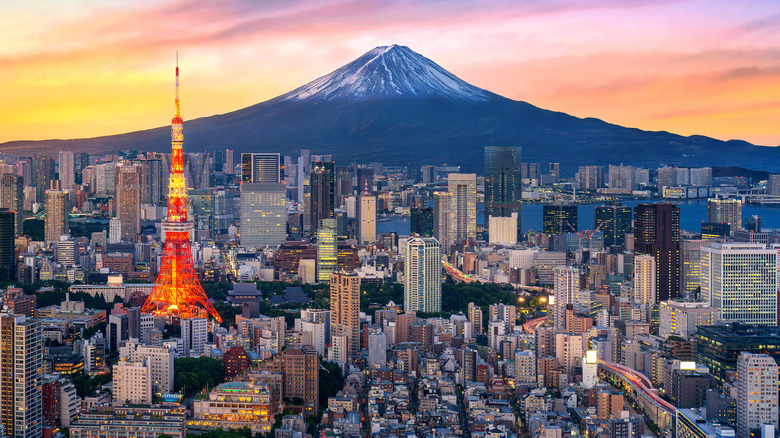
As a first-time visitor, Tokyo may seem intimidating, but it can be really easy to tackle when you know where to go. Composed of a patchwork of 23 wards, each with its own unique flavor, the city buzzes with excitement. These wards actually govern themselves in a move to improve efficiency, making them mini-cities within Tokyo. Many of the areas most tourists have heard of, like Akihabara and Asakusa, are areas within these wards, while others, like Shibuya and Shinjuku are special wards themselves.
By visiting key neighborhoods, you'll gain an appreciation for Tokyo's multifaceted culture. From the neon lights and anime of Akihabara, to high-end art and culture in Roppongi, these neighborhoods will give you a taste of Tokyo that you will never forget.
Named the best overall travel destination in the world at the 2025 TOURISE Awards, Tokyo has so much to offer. While its footprint might be large, it's also surprisingly simple to navigate, whether you are taking advantage of its extensive train system, or exploring on foot — which is easy to do, given that Tokyo is one of the world's most walkable cities. So if you are one of over 35 million international tourists who will likely visit Tokyo this year, check out some of the key neighborhoods you'll want to place on your travel itinerary.
Shibuya
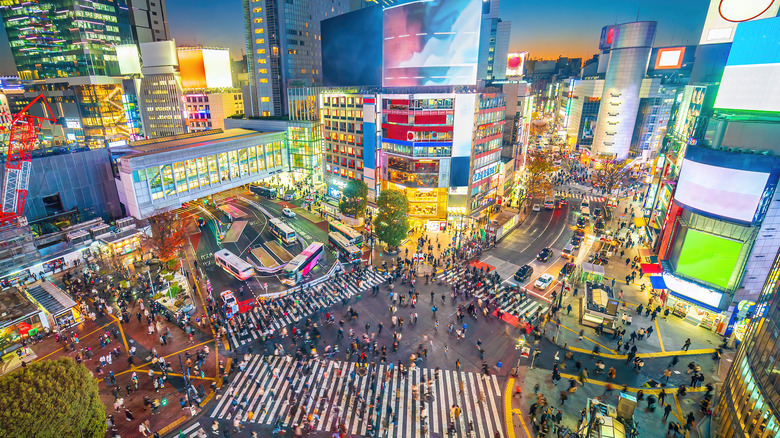
Nothing represents Tokyo's modern energy quite like Shibuya, the trendiest area in Japan. Here, you'll find the famous Shibuya Crossing, where every few minutes, anywhere from 1,000 to 2,500 pedestrians move across the intersection. This large intersection sits right outside of Shibuya Station, which opened in 1885 and remains a major travel hub, servicing 3 million passengers every day. Also outside the station is the famous bronze Hachiko statue, immortalizing the dog that waited there faithfully for his owner every day.
Stepping into Shibuya is immersing yourself fully in contemporary Japanese culture and entertainment. Visitors will discover everything from animal cafes to department stores showcasing the latest trends. Fashionistas will want to visit Shibuya 109, a 10-floor shopping mecca with roughly 120 boutiques known for cutting-edge fashion and for launching youth subculture trends. If you are interested in Japanese design, be sure to visit Hands, a retail chain that sells home improvement, lifestyle, and crafting items.
Once you've had your fill of shopping, take in a sweeping view of the city at Shibuya Sky, an open-air observation deck at top of Shibuya Scramble Square. For a bit of contrast, soak in the calm of a forest in the middle of the city with a trip to the Meiji-jingu Shrine. This large Shinto shrine was built in 1920 to honor Emperor Meiji and Empress Shoken, and is surrounded by over 100,000 trees, making it a welcome historical respite that shows the deep contrast that can be found within Shibuya.
Akihabara
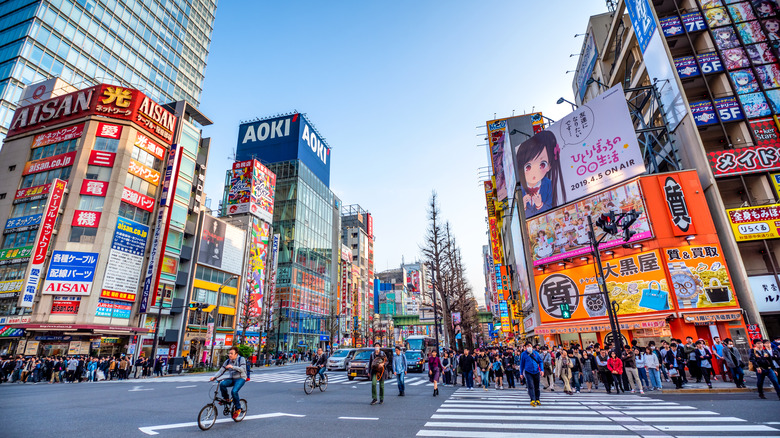
If you want to dive deep into Japanese pop culture — namely anime, manga, and video games — you cannot miss a visit to Akihabara. Located in the eastern part of central Tokyo, it's easy to reach by public transit — Akihabara station is serviced by Tokyo's Japan Railways (JR) lines, as well as the city's subway. You don't have to go far from the station to dive into the action, as Akihabara Electric Town's main street is just outside the station.
The area buzzes with energy, and there are manga shops, maid cafes, arcades, and electronic shops everywhere you look. While modern Akihabara caters to anime and cosplay lovers, its "Electric Town" moniker goes back much further. After World War II, the area became a black market for electronic goods, and its tech-related reputation holds strong to this day. Check out Radio Kaikan, the area's iconic 10-story electronics store turned hobbyists' paradise. Founded in 1950, it reopened in 2014 after a complete renovation — today, it is filled with anime figurines, trading cards, and manga comics, as well as a vast selection of electronics.
Visit Akihabara after dark to see the neon signs light up the streets and experience the area's vibrant nightlife. A quintessential stop is a maid cafe, but you can also experience a gaming cafe, where you can play your favorite video games while sipping a drink and enjoying some food. And, of course, no trip to Akihabara would be complete without stopping into one of the area's multi-level arcades. Namco has six levels of arcade games, two of which feature claw machines, as well as entertainment. TAITO Station, Japan's largest arcade center, is another essential destination for diving into this unique aspect of Japanese culture.
Asakusa
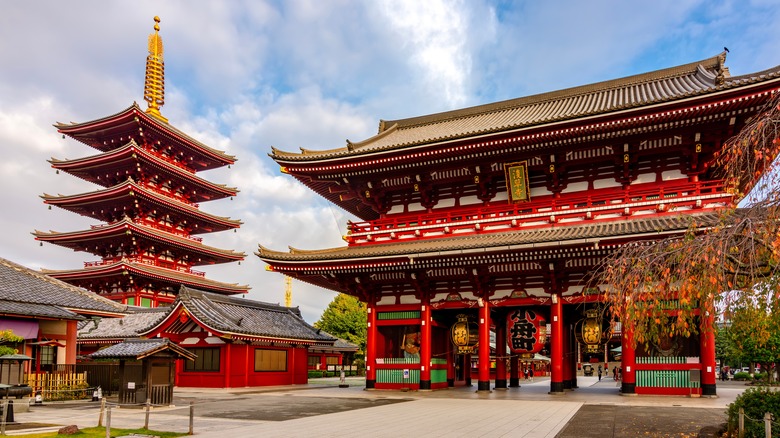
Step away from the modern side of Tokyo and discover the city's history in Asakusa. As one of Tokyo's most traditional neighborhoods, this is where first-time visitors can really step back in time to the Edo era. With its narrow streets, wooden houses, and vast number of temples and shrines, this is where Japanese heritage truly comes to life.
Located in the northeastern part of the city, Asakusa is home to one of the most incredible sites in Tokyo: Senso-ji Temple. Established in 628 AD, Senso-ji is Tokyo's oldest temple. To arrive at the temple, visitors will pass through the iconic Kaminarimon Gate, with its massive red lantern that is nearly 13 feet tall and weighs over 1,500 pounds. This imposing entrance welcomes visitors to one of the city's oldest shopping streets, Nakamise-dori. Traditional handicrafts are sold in family-run shops, along with local snacks and sweets, making it a great place to stock up on souvenirs before heading to the temple grounds.
Senso-ji would be enough of a reason to visit Asakusa, but there's more. The area is also home to the Edo Tokyo Museum, a history museum of the city's past, which is set to reopen at the end of March 2026 after a multi-year renovation. If you are interested in sumo, Japan's national sport, book a visit to the Asakusa Sumo Club, where you can watch a wrestling demonstration while eating a meal. Or, if you happen to visit during one of the seasonal tournaments, reserve a spot at the sumo stadium, Ryogoku Kokugikan, located across the river in Sumida City.
Roppongi
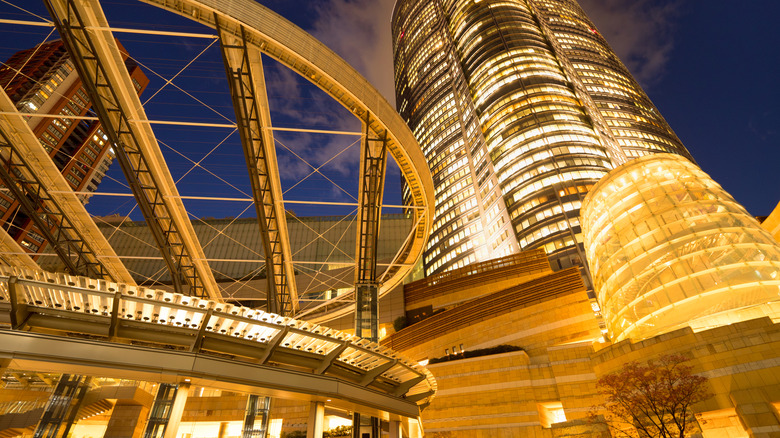
Upscale Roppongi is where you'll want to go to see artsy Tokyo at its best. Located right in the heart of downtown Tokyo's Minato City, Roppongi is filled with world-class museums, Michelin-starred restaurants, and thriving nightlife venues. Its multitude of attractions makes Roppongi an exciting place to visit. Roppongi has its own train station served by the Tokyo Metro Hibiya Line or the Toei Oedo Line, making it easy accessible from other parts of the city.
Once there, you'll emerge from the station onto the iconic Roppongi Crossing. This buzzing intersection draws visitors into the excitement of Roppongi. Those who wish to discover Tokyo's incredible art scene can check out the rotating exhibitions at the National Art Center Tokyo and the 21_21 Design Sight. Founded by legendary Japanese fashion designer Issey Miyake and designed by Tadao Ando, it's a must-visit for anyone interested in architecture and design. Then, hop over to Roppongi Hills, a mecca of fine dining and shopping around the Mori Tower. This skyscraper is also home to the Mori Art Museum, which showcases modern art exhibitions by local and international artists.
While inside Mori Tower, take the time to visit Tokyo City View. This indoor observation deck offers a sweeping view of Tokyo, including the Tokyo Tower and, on a clear day, Mount Fuji. Once you've had your fill of the view, take in the area's exceptional dining with a Michelin meal at L'aube, a French restaurant with a Japanese twist, or Roppongi Rian, which serves seasonal Japanese cuisine. Then, experience Roppongi after dark and dance the night away at popular clubs like V2 Tokyo, or mingle with an international crowd at shotbar Propaganda.
Shinjuku
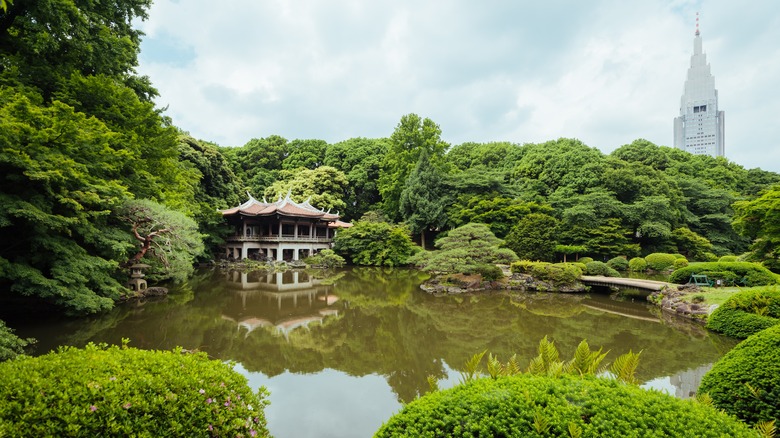
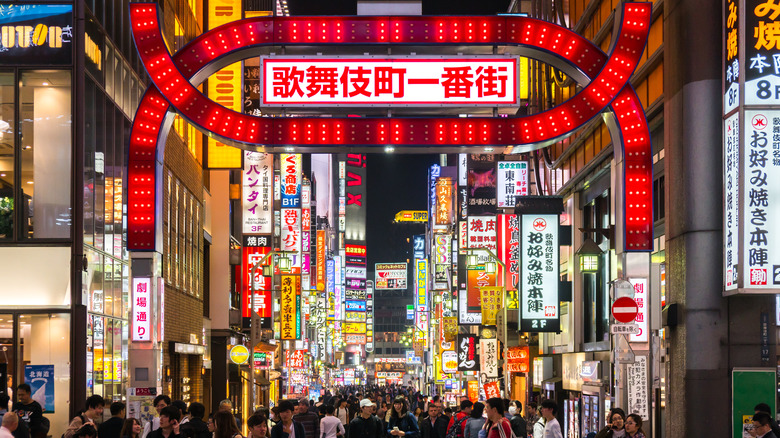
Chances are, as a first-time visitor to Tokyo, you'll be passing through Shinjuku. The neighborhood is an epicenter of entertainment and nightlife and is home to Kabukicho, Japan's largest red light district. It's also a major transit hub — Shinjuku Station is the busiest train station in the world, shuttling around 3.6 million passengers each day. You are likely to pass through this station on any day trip from Tokyo, whether to enjoy hot springs and mountain views in Hakone, one of the best destinations to view Mount Fuji in the winter, or visit seaside temples in Japan's ancient capital city of Kamakura.
But there is so much more to Shinjuku than just its train station. Explore the gritty, narrow alleyways of Omoide Yokocho, also known as "Memory Lane," and sample delicious bites at the evening food stalls, which sell everything from ramen to yakitori. Then, pop over to Golden Gai, another maze of alleyways in Kabukicho, where around 200 tiny bars sit behind doors just waiting to be discovered.
By day, there are also several worthwhile sites to take in, including the Tokyo Metropolitan Government Office, which has an observatory deck on the 45th floor at both towers. These scenic viewpoints are open to the public free of charge, offering an affordable way to soak up the city's beauty. Lastly, spend some time at the Shinjuku Gyoen National Garden, particularly if you are in town during cherry blossom season. Originally serving as an imperial garden, the 144-acre park was opened to the public after World War II and is an oasis in the city. Enjoy a picnic in the Japanese, English, or French-style gardens or wander through its greenhouse to admire tropical flowers.
Methodology
Aside from drawing on personal experience having made multiple trips to Tokyo, the writer conducted online research to see which neighborhoods were repeatedly mentioned as the best to visit for first-time travelers. To narrow down the final list, the types of attractions in each neighborhood were also considered in order to have a well-rounded list that would hit the interests of many different travelers. Information was also gathered from tourism boards like the Japan National Tourism Organization and Japan-Guide.com to ensure accuracy.