
5 American Towns That Feel Just Like Germany
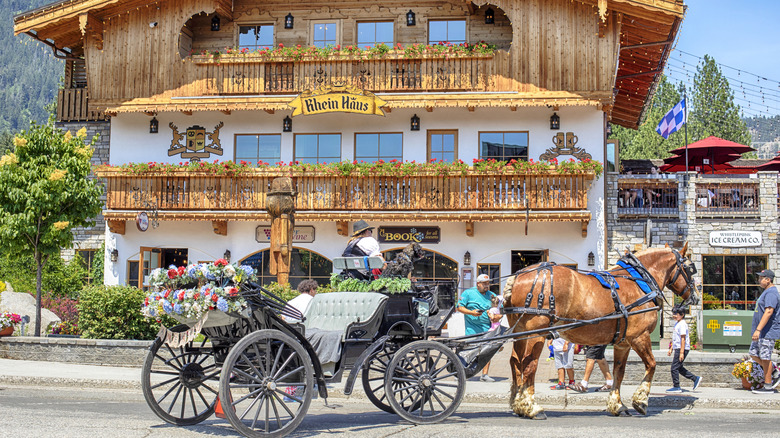
For those in the United States looking to get a taste of Europe, taking time off work and hopping on a cross-Atlantic flight isn't always in the cards. Thankfully, if you're craving some beer and bratwurst in a handsome Bavarian building but can't afford to pop over to Germany, you're in luck.
The United States itself is home to a string of towns that feel just like Germany. This is little wonder: According to the Max Kade Institute for German-American Studies at the University of Wisconsin-Madison, nearly 43 million Americans identify as having German ancestry. From the mid-19th to the early 20th century, millions of Germans emigrated from their homeland to start a new life in the States. And many of the communities they helped build in the following century have maintained a distinct German feel and aesthetic.
These towns are packed with stein-sloshing beer halls, have handsome architecture that mimics the Alps, and throw some of the best darn Oktoberfest parties this side of Munich. They also come with plenty of proper German eating — think more schnitzels and sauerkraut than you could possibly get through in a single trip! But which towns are best for visitors seeking this vibe? After scouring the internet for best-of lists, on-the-ground travel testimonials from tourists on travel platforms and other forums, we've put together a short guide on five of the very best, jumping from picturesque Bavarian villages in Washington to one of the most legendary ski resorts in the whole of Colorado, all in the name of finding the German-themed getaway that's right for you. Head to the end of the article for more on our methodology. In the meantime, get ready to raise a glass and say, "Prost!"
Leavenworth, Washington
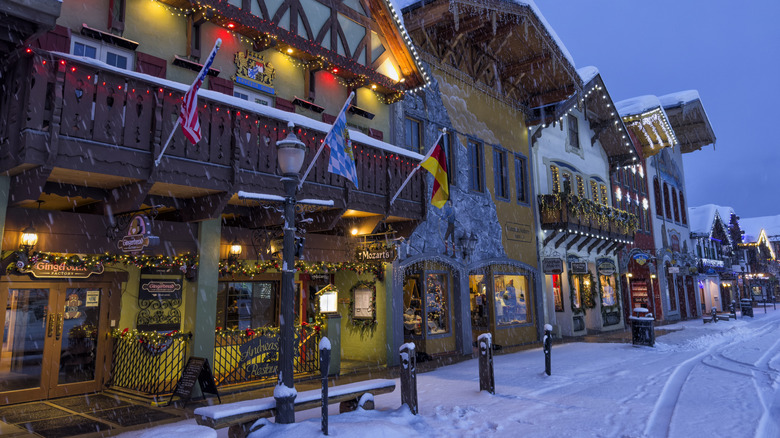
Leavenworth, Washington, reigns as one of the most frequently mentioned German-themed towns in the United States. This is where you go to find a German feel in the Pacific Northwest. Leavenworth brings real Bavarian energy to the forest-covered hillsides of the Washington Cascades, touting all the right ingredients — beer halls, German cookhouses, and architecture that looks like it's been plucked from the Alps.
The town got its start in the late 19th century as a logging and trapping outpost, and soon boomed with the coming of the railroad. However, after the Great Depression, it fell into obscurity and remained that way until the 1960s, when it was reborn as the Bavarian doppelgänger you see today. Buildings were altered and painted; German-inspired festivals were added to the annual calendar. Since then, Leavenworth's city planners have imposed strict rules on what can and cannot be built. Every new construction has to mimic the style of southern Germany, featuring no fewer than three Bavarian design details on building facades. If any lettering is used, it must be in "Old World Bavarian Alpine Lettering" to add to the authentic feel.
The epicenter of this PNW ode to Bavaria is Front Street, which unfolds in a medley of timber-carved buildings and cobbled sidewalks. Go there to appreciate the booming displays of the Christmastown Festivities in winter, when over 500,000 lights adorn the festive trees and market stalls from Thanksgiving to February. And, of course, beer is in no short supply here. Popular watering holes include (but aren't limited to) Munchen House, Doghaus Brewery, and Leavenworth Sausage Garten.
Frankenmuth, Michigan
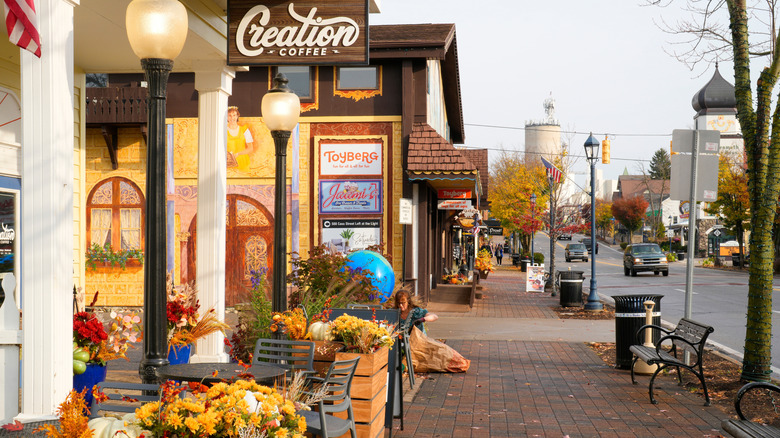
No list of American towns that feel just like Germany could possibly skip out on Frankenmuth. This one has awarded itself the telling tagline of "Michigan's Little Bavaria," and you can hardly miss the German welcome, since a 2018 addition to the highway leading into town came in the form of a huge arched sign bearing one simple message: "Willkommen."
The festive period of the deep winter is when things really hit their stride here. There are plenty of enchanting sights to see up and down Main Street, including a 40-foot Christmas tree located in the town visitor center and an ice skating rink. If you aren't visiting during December, then the fall is a fantastic alternative. For three days in late September, Frankenmuth hosts the first Oktoberfest celebration outside of Munich that's officially sanctioned by the original German celebration. Full of Bavarian charm, beer, music, and old-world cheer, Frankenmuth Oktoberfest is an absolute blowout that involves colossal beer halls (of course) and wiener dog races (naturally).
There are a few iconic Bavarian-themed things to do in Frankenmuth. As one Reddit user sums it up on the r/roadtrip subreddit: "People go to Frankenmuth for the chicken dinner and the Christmas store." These are references to the family-sized fried chicken plates served down in Zehnder's of Frankenmuth, a beloved local establishment that's been in business since 1856. The Christmas store is Bronner's Christmas Wonderland, which bills itself as the world's largest Christmas shop — it stocks thousands of decorations and ornaments.
Helen, Georgia
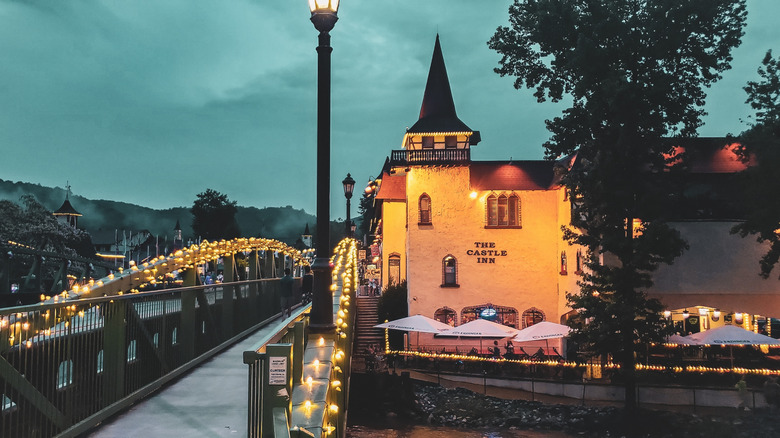
Coming packed with gabled buildings that have steep-sloped red roofs, peppered with beer gardens that sit down tight-knit alleys, and oozing a cute alpine village feel, Helen is an under-the-radar mountain town in Georgia that looks like a German-inspired fairytale. It's not big — Helen counts just 630 permanent residents at the time of writing — but its unique Euro vibes make it the third-most-visited city in the whole state.
Helen's downtown core is laden with more traditional German eateries than you can shake a currywurst at. The Heidelberg is one of the town's original dining halls and features a menu that has a whopping nine variations of the classic schnitzel, not to mention the ubiquitous sides of sauerkraut and bowls of smoky goulash. And it looks the part, too. "I read somewhere this is the most photographed building in Helen so of course we had to visit, wrote one satisfied diner on Google Reviews. "It's so cute outside and the inside looks like a little speakeasy with accordion players!"
The thing about Helen is that it sits in the far northern reaches of the Peach State, right on the cusp of the Blue Ridge Mountains. That means it's more than just a Bavarian impressionist. It's a gateway to the great outdoors to boot. There are tons of hiking trails in the area, with Raven Cliff Falls Trail as one of the best in the vicinity — it's a 4.9-mile trail through dense forests to a waterfall that flows through a cracked wall of granite.
Fredericksburg, Texas
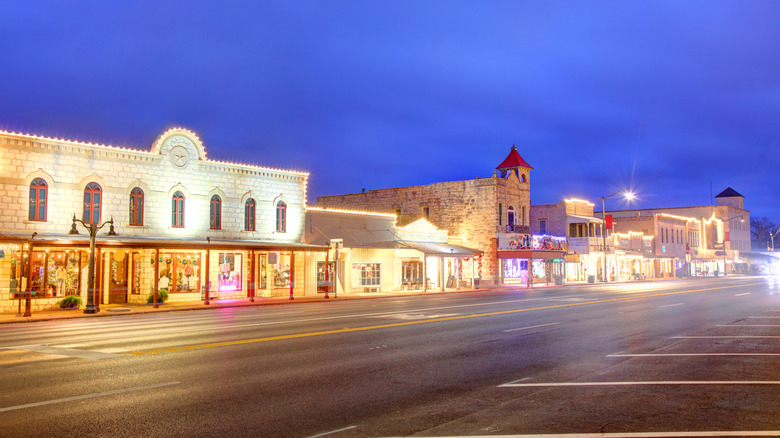
Fredericksburg brings German flair to the Texas Hill Country. Around 1.5 hours west of Austin and a touch over an hour north of San Antonio, it certainly has the history to back up its European looks. It was first settled in the 1840s by German immigrants and was even named in honor of a Prussian prince. What's more, the first newspaper here was published entirely in German.
Fast forward to today, and Fredericksburg fills a few roles — it's a stepping stone to the bucolic countryside and undulating topography of the greater Hill Country region, a major wine hub with cellar doors aplenty, and a chance to get a taste of German heritage in the Lone Star State. Main Street is the place to be. It's a part of the town's National Historic District, has block-built vintage buildings, and loads of German-inspired eateries, like The Auslander and Otto's German Bistro.
One thing you can rely on is that there's always something going on in Fredericksburg. According to the Fredericksburg Convention and Visitor Bureau, upwards of 400 events take place here throughout the calendar year. Of course, that includes one particularly big Oktoberfest shindig, which was named the No. 5 best Oktoberfest in the United States by USA Today's 10Best List of 2025. Expect the usual live music, German street food, and dozens of beer varieties.
Vail, Colorado
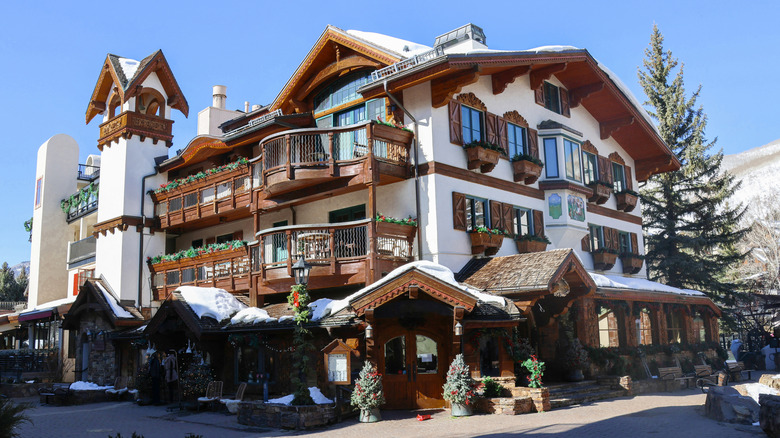
Combine the snow-capped tops of the Rocky Mountains that rise around Vail with a downtown core that's modelled on the alpine villages of Europe, and bingo, this Coloradan ski center comes in as the final American town that feels just like Germany. It's no accident; Vail was planned this way. The town sprang up on ranchland in the 1960s, following a design spearheaded by Pete Seibert and Earl Eaton, who crafted the whole thing in the image of the highland resorts of Austria, Italy, Germany, and Switzerland.
The result? The center is replete with handsome chalets and ski lodges, many with timber-cut balconies adorned with summer blooms, others sporting gingerbread gables and shuttered windows. Tucked within are cozy eateries that channel that Germanic vibe, like the Gorsuch Ski Café, where Bavarian pretzels can be enjoyed right at the base of the ski lifts.
The abundance of winter sports outfitters here belies the fact that Vail is one of the most resilient ski destinations on the planet right now. Yep, beyond the Swiss- and German-themed downtown, you can hitch gondolas into a 5,317-acre ski area that, according to Saville's Ski Resilience Index, offers the single most snow-sure set of pistes on the planet thanks to its high altitude and low temperatures. The ski season in Vail typically runs from November to April.
Methodology
To find the most German-feeling towns in the United States, we looked through travel blogs and magazines that did deep-dive features on towns in America that exude that old-world feel. We also took online ratings on platforms like TripAdvisor, Google Reviews, and more into account. To get a sense of what people really experience in these locations beyond flashy headlines, we combed through Reddit threads and other forums for conversations on U.S. travel.
We then made a shortlist of places mentioned most often across multiple blogs and forum discussions, aiming to represent a wide range of destinations across the country, from Texas to Appalachia to the Pacific Northwest.