
5 Tourist-Friendly, Popular Countries That Will Pay You To Move There
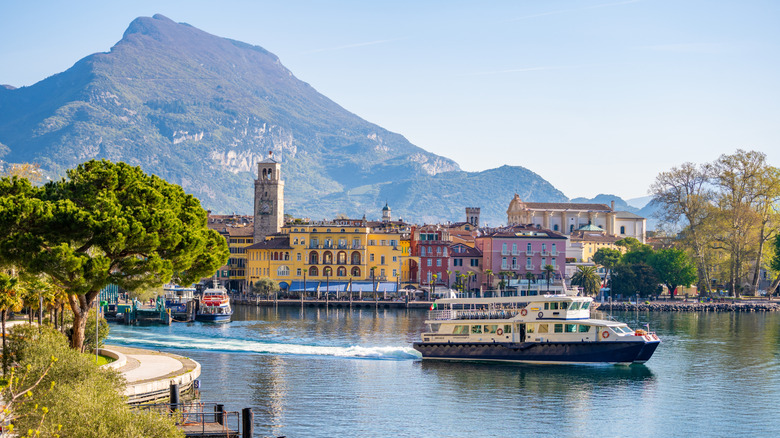
As some countries face population decline, they've taken up an interesting action plan to attract new residents: pay them to move in. In many cases, the countries that pay people to move there are struggling to persist, both culturally and economically, because of aging populations, younger people moving away, and lower birth rates. Government relocation incentives keep certain communities from disappearing. Some incentives come in the form of tax breaks or housing subsidies, others as a straightforward, one-time payment — sometimes even up to several thousand dollars.
"It's a win-win: you get a fresh start and a helping hand, while local economies enjoy a much-needed boost," Wayne Mills of international movers Seven Seas World Wide told the New York Post. The countries that are offering relocation incentives want new residents who can help revive local economies. As such, they might target certain demographics (remote workers, business owners, and families are often the ideal candidates). There are usually conditions in place before you get the money, too. In particular, you may need to prove your contribution to the local economy in some way. The incentives are also regional rather than countrywide — you'll be hard-pressed to find a bustling cosmopolitan city paying you to move there.
However, there are plenty of beautiful, pastoral destinations that offer the incentive, where the offer is a potential foot in the door. We selected five countries that have feasible ways you could move there and get paid, sourced from reputable news outlets and government-backed programs. Each of these countries has something that appeals to someone who might want to make the leap from a tourist to a resident, whether it's the lush landscapes of Tuscany, the tech growth of Chile, or the calm islands of Ireland.
Italy
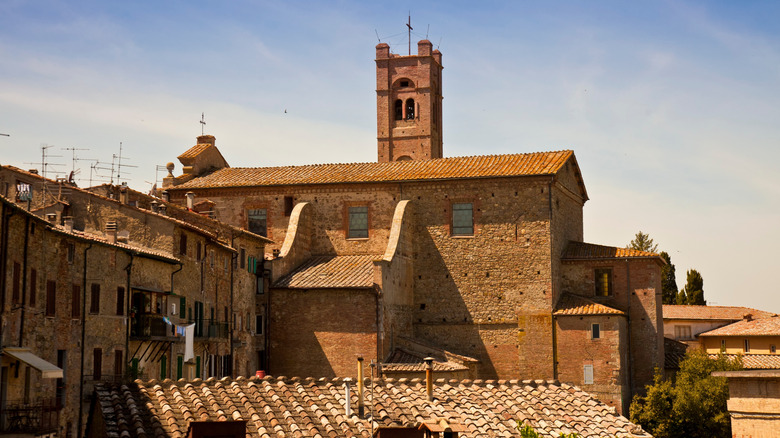
The birth rate in Italy has steadily been on a downward trajectory, from 2.4 births per woman in 1960 to 1.21 in 2023. Paying people to move into abandoned homes and renovate them is one solution the country has come up with to revitalize dwindling communities. The incentives are offered in Italy's more rural regions — from alpine villages to the hillsides of Tuscany — but for the right person, the scenic surroundings, relaxed pace of life, and food culture could make it a great fit.
For example, Trentino is one beautiful province in the Italian Alps that's paying people to move there. The incentive comes in the form of two grants: one (about $87,000) for renovating an abandoned house in the region's villages, and another (about $22,000) to offset the cost of the property itself. You need to be truly dedicated to putting down roots in these villages, though, only qualifying if you live there and rent for a minimum of 10 years. Due to their rural, mountainous locations, "daily life can be more complex due to the distance from the main services," as Nicola Teofilo, writer for Immobiliare News, told CNN.
Another place in Italy that pays people to move there, which might be more feasible if you want to live closer to the city, is Radicondoli. The medieval village sits about an hour by bus from the city of Siena and just under 1.5 hours by car from Florence. New residents can get up to $23,000 to live in one of the town's deserted homes, plus a roughly $7,000 stipend to help cover daily expenses. As with other Italian programs, you need to live there for a certain amount of time: 10 years if buying or four years if renting.
Spain
Spain is widely regarded as one of the best countries in the world for American expats to escape to, beloved for its warm climate, low cost of living, and colorful, relaxed culture. It has also been struggling with depopulation, having one of the lowest birthrates in Europe (second only to Malta in 2023). As a result, the country has proposed some unique financial incentives to bring new life to its countryside. In the past, there have even been whole Spanish villages that you could buy for less than you'd pay for a city apartment.
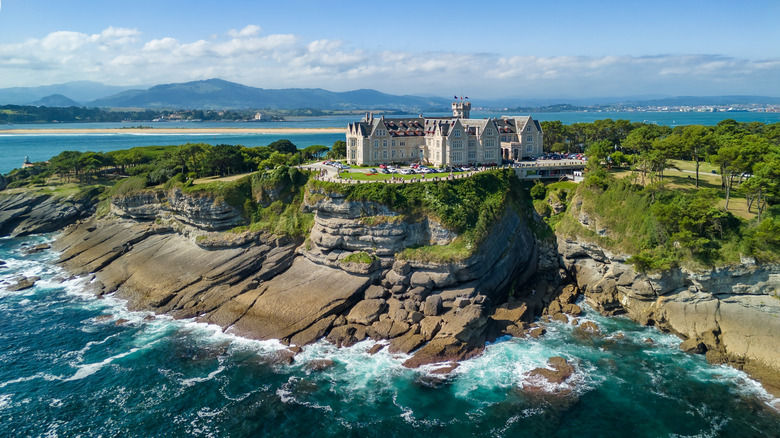
But, for those not in the market to buy a whole village, you can move into certain villages and get paid to do so. One region offering financial incentives for people to repopulate it is Cantabria, located on the northern coast of Spain. The region is known for its historic seaside towns, seafood-based cuisine (clam casseroles are a specialty), and vegetation-rich beaches with few crowds. The main incentive comes not in the form of a direct cashout but rather a 20% income tax reduction. However, you can also get about $582 per year if you rent out one of the villages' vacant houses. The new residents must be under 40 years old to qualify.
Note that several other Spanish villages — like Castilla y Léon — have gotten attention for offering relocation incentives in the past. However, many of their deadlines have already expired (the Castilla y Léon deadline was December 2025, for example).
Chile
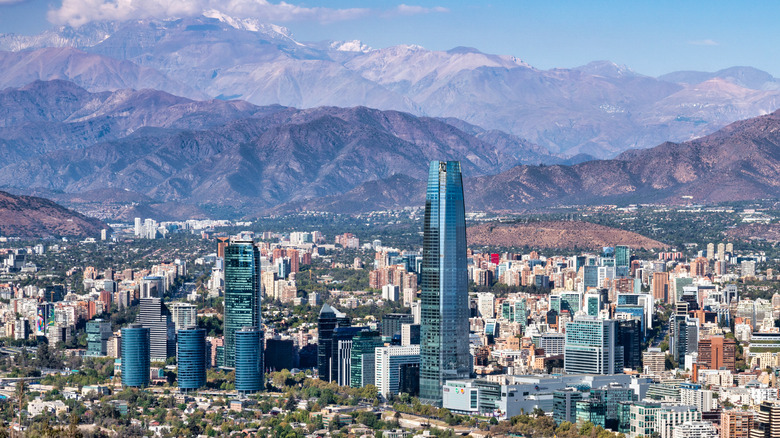
A growing business hub and one of South America's safest countries for visitors, Chile has begun offering some incentives that are aimed especially at global entrepreneurs. Santiago, Chile's capital city, is considered a rising startup ecosystem, according to the 2025 Global Startup Ecosystem Report, ranking the fourth-best city for startups in Latin America. The program offering the incentives to bring your business (or ideas) to Chile is called Start-Up Chile, an initiative of the government-run Production Development Corporation (CORFO).
The program provides between around $16,000 to $80,000 of equity-free funding to entrepreneurs, depending on the program, with some added bonuses. It provides free co-working spaces, legal support, a Chilean bank account, and sponsorship of a two-year work visa, making the transition process much smoother. The program is also committed to gender equality — a minimum of 50% of the base level ventures selected will be women-led.
The criteria for getting awarded with the Start-Up Chile benefits depend on the level you apply for. For the lowest level, the startup just needs to be a validated idea, while the following levels (with more funding) require a product or functional service. As of this writing, only the higher two levels (Ignite and Growth) are open for applications. You need to stay in Chile during the duration of the program (four to six months, depending on the level), but one of the potential benefits of the program, differing from some other countries' incentives, is that there's no requirement to live in a peripheral, rural area. Rather, selected applicants will be based in Santiago.
Ireland
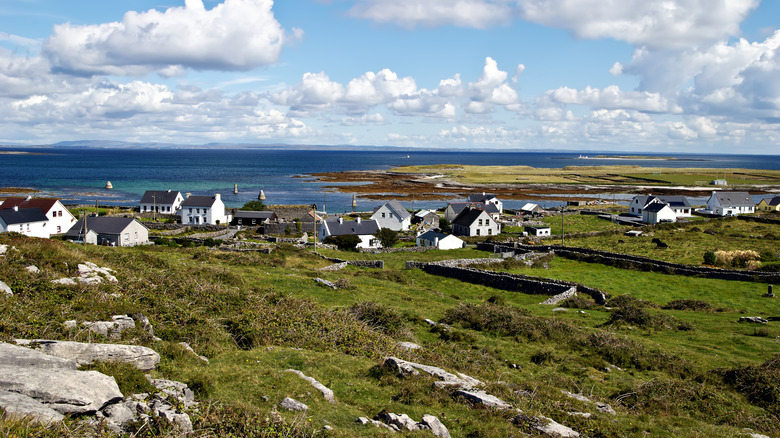
There are several reasons Ireland might appeal to someone looking to move to a quiet getaway. As one of Rick Steves' favorite destinations in Europe, Ireland is known for its friendly people and idyllic landscapes, and English is an official language of the country. Another motive to move to Ireland could be financial: In 2023, the country launched a program called "Our Living Islands," a 10-year policy specifically aimed at revitalizing Ireland's populated islands.
As Ireland's Citizens Information website clarifies, people can receive a grant for refurbishing a vacant or derelict property on one of its populated offshore islands: up to $98,000 for a derelict property or up to $70,000 for a vacant property. The maximum funding limit is boosted by 20% just for living on the island. While the policy is intended to combat depopulation on Ireland's rural islands, Ireland does not exactly consider it a financial incentive for relocation, since the plan doesn't cover any resettlement costs or help you immigrate. The grant can only be used for improving properties. But it's a substantial amount, with an added bonus if you live there, so it could be a strong draw to consider for moving.
The policy lists around 30 islands that qualify, many of which are quite isolated and have very small communities (Coney Island, for example, had just one inhabiting family as of 2024). Among the largest is Inis Mor (Inishmore), which has around 800 residents. Notably, you can also receive a refurbishment grant for other parts of mainland Ireland where there are derelict or vacant homes, except that the funding amount is roughly $12,000 less. Applications for the grant are available through the Citizens Information site.
Switzerland
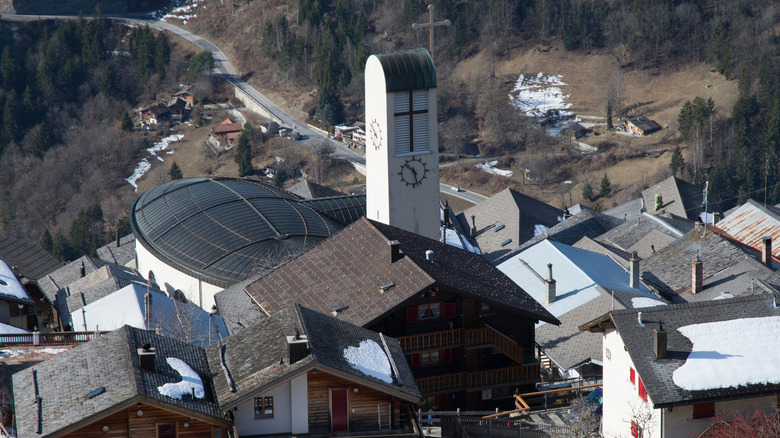
Switzerland made some headlines back in 2017 as one of the early examples of a country paying people to relocate there. Specifically, the Swiss village of Albinen voted in 2017 to provide funding for new people to move in. The village, located in the Swiss Alps, has the distinction of being certified as among the most beautiful in Switzerland, with mountain farms, traditional huts built on the slopes, and thermal springs.
The funding plan means newcomers could receive up to $31,000 if they relocate. There are several conditions that need to be met by the applicant, though: They need to be under 45, commit to living in Albinen for at least 10 years, provide significant investment into a local property, and have legal residency in Switzerland. Because the initiative is especially aimed at having new families in town, it offers an added bonus of up to $12,500 for each child.
The incentive could sound like a dream to some people, and while it is possible to get the funding, it's also important to keep the conditions in mind. Mayor Nicole Köppel said, "We get around a hundred enquiries a day. Most come from abroad and do not meet our conditions. We must still answer them, and that is a lot of work." One of the conditions, later clarified by Albinen in a statement, is that you need to have already purchased an apartment in the village or invested in a valid construction project to be approved. Non-Swiss citizens also need a resident permit C, which is granted after having lived in Switzerland for five years.
Methodology
Many stories circulate online about regions that will pay you to move there, but the information may be outdated or unreliable. We looked for only those countries where programs with a financial incentive for relocation have been confirmed through well-established news outlets, like CNN, or directly from government-backed program sites. Each of the countries chosen falls within the top 40 worldwide travel and tourism sectors, as reported in the World Economic Forum's Travel & Tourism Development Index 2024 (the most recently available index from the organization). The index indicates that the countries are accessible and reasonably safe for outsiders. We picked countries that travelers already love, whether for the landscapes or culture, that might make them more appealing.